Diana Moreno Is Running for Zohran Mamdani’s Assembly Seat
Diana Moreno is a socialist, mother, and Ecuadorian immigrant. And she’s looking to fill Zohran Mamdani’s now-vacant seat in the New York State Assembly. We spoke to her about her campaign.
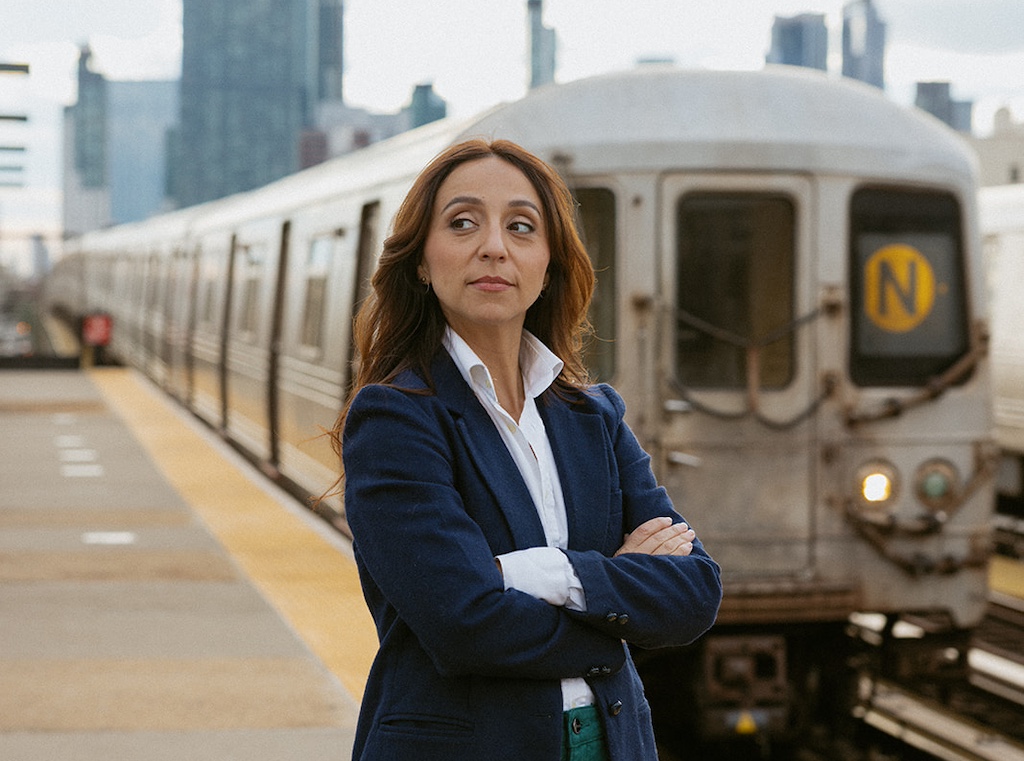
NYC-DSA has endorsed Diana Moreno to run for Zohran Mamdani’s assembly seat in Queens. (Diana for Queens)
- Interview by
- Melanie Kruvelis
Before he ran for New York City mayor, Zohran Mamdani began his political career as a state assembly member in Astoria, Queens. In 2020, Mamdani joined a slate of five socialists running for state office with the backing of New York City Democratic Socialists of America (NYC-DSA). All five won their races and helped cement the chapter’s role in New York politics.
After its victory in the New York City mayoral race, NYC-DSA is assembling its next slate of socialist electeds to take on New York’s political machine and fight for a more affordable New York. On December 8, the chapter endorsed Diana Moreno to run for Mamdani’s assembly seat in Queens.
Moreno’s team will now sprint toward a special election, which will likely be on February 3 (New York governor Kathy Hochul will determine the exact date for the special election in January). According to her campaign, Moreno has raised more than $51,000 from more than 800 donors since declaring her candidacy and knocked on more than 2,400 doors in December.
Moreno, thirty-eight, is an Ecuadorian immigrant who grew up in Florida. In 2019, Moreno moved to Queens, working as an immigrants rights organizer and later as a staffer with the New York State Nurses Association. She also joined NYC-DSA and quickly became a leader in the chapter.
Moreno sat down with Jacobin contributor Melanie Kruvelis to discuss the path to her candidacy and what it means to succeed one of the country’s most prominent socialists in Albany.
Walk me through your involvement in NYC-DSA. When did you join the organization? What has your leadership in the chapter looked like?
I moved to New York as a seasoned organizer. I was politically active in Florida and was ready to find a political home in New York. I saw what NYC-DSA was building after Alexandria Ocasio-Cortez’s victory and the fight against Amazon in Queens.
I wanted to root myself not just in NYC-DSA but in Queens. I chose to move to Queens specifically. I studied Latino studies at the University of Florida and was interested in learning about how undocumented immigrants were building power without the right to vote. This was after 2006 and some of the big immigration protests, like the Day Without Immigrants protest. Learning about that brought me to Queens, because so many of the organizations involved were rooted in Queens.
I interned at [the working-class immigrant organization] Make the Road New York in 2015, and that sealed the deal for me when it came to where I wanted to move. It was the first time I felt like I was home after moving to the United States. It wasn’t just the political activity, it was the sense of culture and immigrant community. After Ron DeSantis became governor and the end of a relationship, I thought, “This is it — I’m moving, and I’m moving to Queens.”

I joined NYC-DSA right after moving and got involved with Queens DSA, where I was hearing about Tiffany Cabán’s race for Queens district attorney. Since I was new to New York and the neighborhood, I was trying to hang out after meetings and meet new people. One of the first people I met was Zohran Mamdani. He was super friendly and gave me context on what the chapter was working on. I remember thinking, “Wow, this is nice — he’s a good comrade who is organizing me.”
I spent my first year in the chapter volunteering on Bernie Sanders’s 2020 campaign, and then Zohran’s state assembly campaign. Zohran’s first race was very unique: it was during the pandemic, so we were writing postcards and doing what we could under the circumstances.
In 2021, I was elected as a cochair of Queens DSA and spent two years in leadership there. I started free English classes for immigrants at the Astoria Food Pantry, which is a mutual aid space in Astoria that came out of Zohran’s assembly race. The story of that space is not told enough. Since Zohran’s campaign office didn’t have much use during the pandemic, we used it as a mutual aid space — and it continues to serve our neighborhood. The English classes we started there continue to this day.
After those two years in Queens DSA, I ran for citywide leadership in NYC-DSA and became the communications chair for our chapter. That was a really pivotal year for our organization. The genocide in Gaza had just began, and the Left had to be really sharp in our communications.
You recently became a parent. How did that shape your organizing?
Halfway through my term in leadership, I got pregnant. I decided to step down from NYC-DSA and receded from a lot of the activity I had been involved in since moving to New York. I gave birth in August 2024 and spent time taking care of myself and my family.
Not long after I gave birth, Zohran was making the rounds about supporting his race for mayor of New York City. I got one of those calls. Zohran made his case and pushed me to be bold and vote yes in the organization’s endorsement of this huge undertaking. A few weeks after the endorsement, he called me to be in his launch video. He said, “We need a mom. Are you down to be the mom in our launch video?” My son was just three months old. Leaving home to be in something like a video takes a lot from a new parent. But I was like, “OK, for my comrade, I’m in.”
Zohran’s campaign pushed me to get back in the ring. Through that phone call and being in the video, I was ready to dip my toes back into the movement. It had to look different, because I’m a mom. But as I started to become more confident in being a new mom, I started coming out again and bringing my child with me. I started showing up to Zohran’s [campaign] events with my baby.

I also started to think about what I could do from home for the race. I saw these online affinity groups popping up on Instagram. So I started the Latinos for Zohran Instagram account. We grew to more than 14,000 followers and worked to make sure Latinos in New York saw Zohran as the next big thing and that [Andrew] Cuomo had to go.
And then Zohran won the primary. People started asking me that night, “We’re going to need someone to replace him — what do you think?” I thought they were crazy. I had a ten-month-old. I didn’t think I wanted to go to Albany six months out of the year. But I started having conversations with NYC-DSA leaders, and other NYC-DSA electeds like Claire [Valdez] and Phara [Souffrant Forrest].
The world kept hammering at us. Zohran’s historic victory happened while fascism was knocking at our door. I thought, “Am I going to close the door on running in this political moment?” I decided I was going to jump in, because I felt in my gut that this was the time to step up.
I quit my job at NYSNA. I’ve never been willingly unemployed in my life, since I started working in an ice cream shop in Florida when I was fifteen. It’s a big risk for me, as someone who grew up working-class and saw my parents work their asses off to start a life in a new country. The threat of financial instability with a kid is real. It felt scary to go without a paycheck for the chance to serve. But I felt I had a movement behind me, and I could afford to take this risk.
You’ve been a part of helping build out NYC-DSA’s electoral campaigns and building its bloc of socialists in office. What lessons have you learned from that work that you hope to bring to Albany?
One race I was closely involved in was Illapa Sairitupac’s race. I was a member of his kitchen cabinet. I helped him prep for endorsement forums, emceed field launches, and held fundraisers. That taught me a lot about what it means to be a socialist candidate for office.
I also worked closely with our electeds through my work, first as an immigrant rights organizer, and later when I worked at NYSNA. I saw how they showed up differently than other elected officials and were focused on showing up at the grassroots level. They don’t just sign on to letters of support — they show up at the picket line.
Tiffany Cabán and Zohran have been some of the strongest models for me. They both represented me in Albany and city hall, and they’ve shown me what it means to be principled and stand up for your values, even when you’re the minority. Tiffany did that brilliantly during the Eric Adams administration.
Zohran has modeled what it means to be a comrade, regardless of his position. When I was working at New Immigrant Community Empowerment (NICE), we had a case of wage theft in his district. Not only did Zohran show up at the picket with the workers who were demanding fair pay, but he also called them personally and worked directly with NICE to advocate for the workers. He really advocated directly for his constituents, which is rare. That’s my model for what I want to do. I want to show up, make those direct phone calls, and put my body on the line when necessary.
Before Zohran ran for mayor, he represented the 36th district in the assembly. You’re now running to replace him once he takes office in January. As a constituent, talk about how you saw Zohran advancing democratic socialism while in the assembly.
Zohran really helped develop and contribute to the health of the Socialists in Office committee [NYC-DSA’s coordinating body with socialist elected officials in the city and state], which was just forming when he won his first election. We were building the bridge while we were walking on it. He worked on making sure our socialists in office were as cohesive as we could be. That is a role I hope to play once we get into office.
Once he was elected to the assembly, Zohran continued organizing and advocating for his constituents not just as a suit in Albany but as someone who is pushing a vision for democratic socialism and expanding our political imagination. Something like the REPAIR Act [Repeal Egregious Property Accumulation and Invest It Right]: it’s like, of course, why don’t we already do this? Why don’t we require private colleges like NYU and Columbia to pay their fair share of taxes to make sure the City University of New York is fully funded?
The Not on Our Dime Act [designed to end New York–based nonprofit organizations’ funneling of tax-exempt donations to illegal Israeli settlements in Palestine] was another example of being bold and brave as an elected official — and not just staying in the frame of what the governor wants. This is about doing what is right and not giving our tax dollars to nonprofits that are displacing Palestinians.
If Zohran had not organized us into the idea that he can and should be the next mayor of New York City, we wouldn’t be looking forward to swearing in a democratic socialist mayor in January. I want to continue that legacy of expanding our political imagination beyond what we think is possible.

A looming threat over New York City is a major escalation with ICE [Immigration and Customs Enforcement]. What should New York’s state leaders do to protect New Yorkers from ICE?
We are in a humanitarian crisis and have to explore all avenues to cut off collaboration with ICE. The New York for All Act starts that, but we must go further. We need to unmask ICE, track who these ICE agents are who are abusing human rights and dignity for New Yorkers, and hold them accountable. We need to use all the resources elected officials have. We should use our offices to host legal clinics, know-your-rights trainings, and bystander intervention workshops.
We also need to put our bodies on the line as elected officials. We need consistent court accompaniment and to patrol our districts. We should show up, especially in areas in our districts with a high concentration of immigrants, to personally introduce ourselves and distribute know-your-rights literature. We should be there to tell people, “I am here to protect you and your family. Here’s what you need to know.” This direct personal intervention can help deter some of the most violent tactics ICE is using in our communities.
We need all hands on deck. We must coordinate with other state offices, such as the attorney general. We need this coordination to prevent what we recently saw in Elmhurst, where ICE broke down the door of a mother and terrorized her four children, who are now so afraid to leave their mother that they won’t go to school.
You come from a working-class immigrant background. Your family’s struggle to find stable work and housing in the US was a big politicizing moment for you. How do you think we bring more folks like you into the socialist movement?
DSA and its current membership have to be present during this immigration crisis. It’s been great to see, for example, the growth of Latinos Socialistas, a NYC-DSA working group that I was a part of starting. I would love to see a more coordinated effort between that group and other parts of NYC-DSA, such as the Immigrant Justice Working Group, to show up in our immigrant-heavy neighborhoods to offer our support. That might look like know-your-rights trainings, helping folks fill out documents ahead of court hearings, and developing plans for immigrants if ICE shows up. Those are things that are really difficult for the community to do on their own. Navigating any bureaucratic system is difficult, and even more so when it’s so emotionally charged. You need encouragement and support.
We need rapid response from DSA members if there is an ICE sighting, using their citizen privilege to get badge numbers, get things on video, and put their bodies on the line if necessary and safe. That consistent showing up as DSA members in those communities with high needs during this crisis is a way to bring people into our movement who know what it’s like to live in fear of your family being taken from you.