As the Ink Fades
Once upon a time, typesetters' unions were strong and militant. But they failed to keep up as technology transformed the industry.
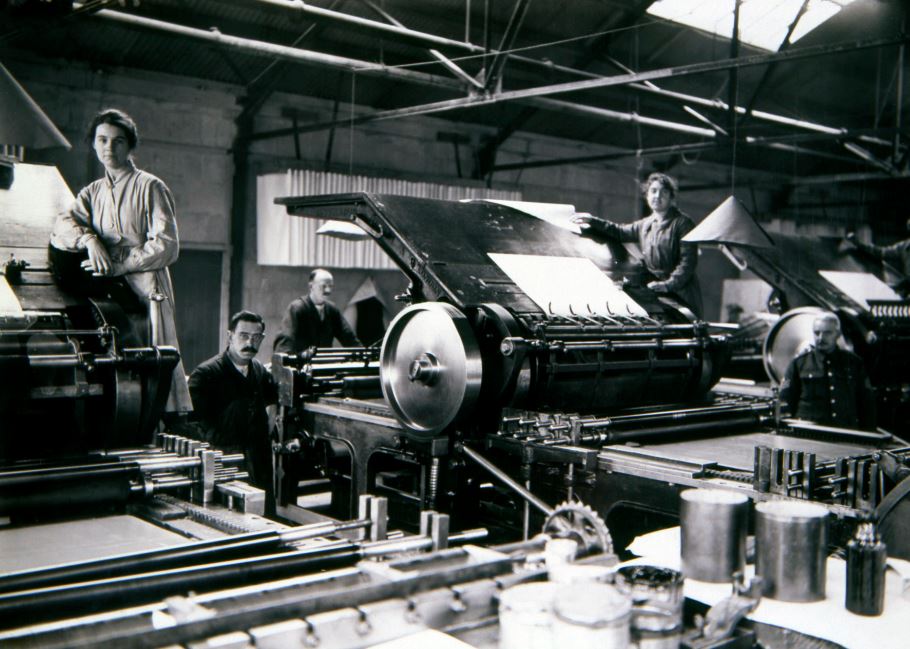
Printing maps during World War I. Library of Congress
Before desktop printers took over offices everywhere, a massive typesetting industry turned magazines’, newspapers’, and publishing houses’ copy into printed matter. For most of the twentieth century, the International Typographical Union set the standards for work in the field — and the standards were high. But the union’s power was eroded by its inability to adapt to rapidly evolving technologies, which brought printing out of the type shop and onto office workers’ desks by the end of the century.
In this interview, design scholar Dakota Brown speaks to Michael Neuschatz about his time as a typesetter in the early 1970s. He served as a shop steward, union insurgent, and labor organizer while typesetting. He discusses how the power of the union underwent dramatic shifts not just because of technological changes, but because of the union’s reluctance to move as nimbly as the bosses.
Dakota Brown
How did you become a typesetter?
Michael Neuschatz