Trump’s Manufactured Crisis
By pulling out of the Iran deal and reimposing sanctions, Trump has invented a crisis that could push the United States toward war.
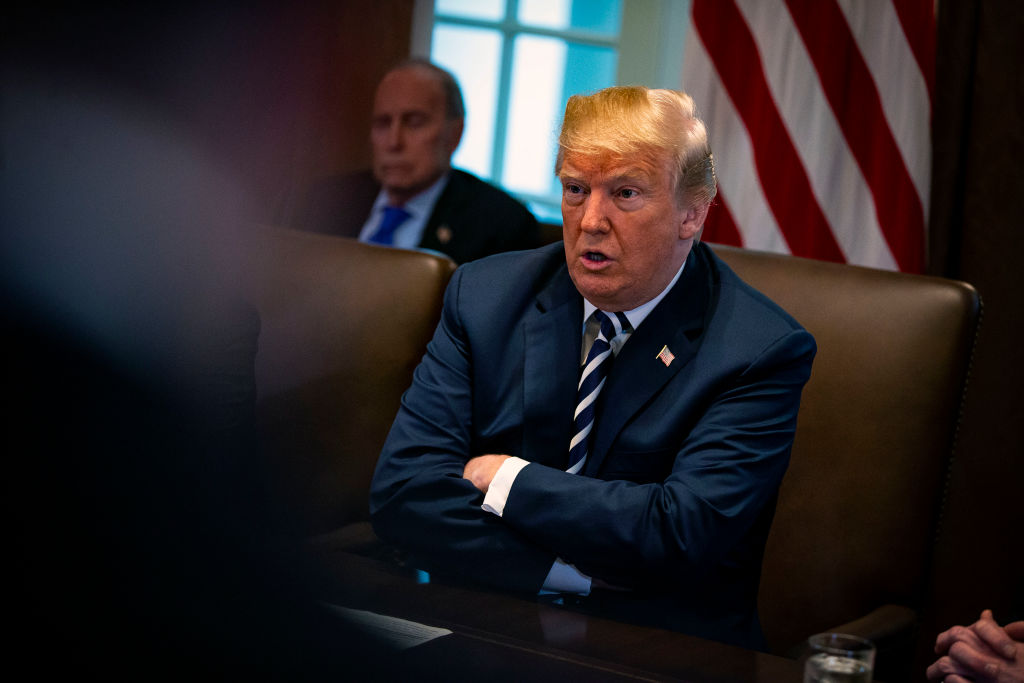
Al Drago-Pool / Getty Images
Donald Trump’s decision this week to violate the United States’s obligations under the 2015 Iran nuclear deal came as no surprise in Europe. French president Emmanuel Macron spent three days in Washington in late April lobbying Trump to leave the accord alone and instead direct his energies toward negotiating a new “grand bargain,” one that would limit Iran’s missile program; penalize its support for Lebanon’s Hezbollah, Yemen’s Houthi rebels, and the Syrian government; and extend some of the deal’s time-limited provisions (its so-called “sunset clauses”). On his way out of Washington, Macron effectively declared that he’d failed to sway Trump. Additional cajoling from British prime minister Theresa May and German chancellor Angela Merkel had no effect either. In the end, all three European leaders reportedly agreed to meet Trump’s demands. It still wasn’t enough.
Yet the way Trump chose to pull out of the agreement — by immediately re-imposing all US sanctions that had been levied prior to the deal’s implementation and leaving the door open for additional sanctions beyond that — may have been a bit surprising. Trump had a range of options. He chose the most extreme. If the New York Times is accurate, when Secretary of State Mike Pompeo contacted his European counterparts late last week to inform them of Trump’s decision, he also told them he was working to convince Trump to delay an announcement for two weeks to give US and European diplomats a chance to keep negotiating on Macron’s grand bargain. They believed that Pompeo preferred a softer withdrawal from the agreement, whereby Trump would take some time before re-implementing sanctions. Whatever their impressions might have been, that’s not what came to pass.
Macron and company’s reaction to Trump’s move matters, because the survival of the nuclear accord now rests with Europe. Both Iranian president Hassan Rouhani and supreme leader Ayatollah Ali Khamenei have suggested that Iran could choose to remain bound by the agreement — which, in return for sanctions relief, restricts the size and scope of Iran’s nuclear program and subjects it to thorough international inspections — despite US violations. Iran has fully complied with the deal to date, according to the International Atomic Energy Agency. But both Rouhani and Khamenei say Iran will remain party to the accord only if it continues to see some benefit from doing so. Russia and, more importantly, China are likely to continue doing business with Iran whether or not the deal remains in place, though Saudi Arabia may be able to pry Beijing and Tehran apart to some degree. So that leaves Europe as the wild card.