Killer Robots and the Fetish of Automation
Fear of killer robots has obscured a deeper shift in warfare: The fetish of automation masks the commodification of combat judgment. Corporate software reshapes war while preserving just enough procedural “human control” to deflect responsibility.
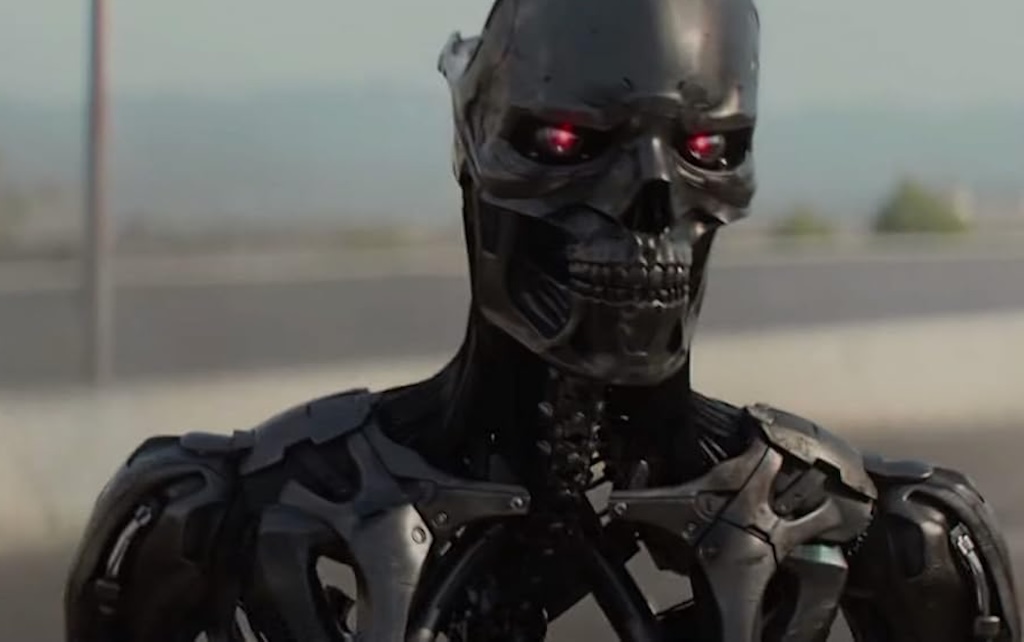
The problem with military AI isn’t simply machines replacing humans. It’s the fusion of tech corporations and warfare, automating judgment, diffusing accountability, and erasing the civil-military divide. (Skydance Media / Lightstorm Entertainment)
For far too long, two specters have been haunting the world of artificial intelligence and warfare, and they both featured in the same movie. The first is Skynet — the specter of general artificial intelligence achieving consciousness and turning against its creators. The second is the Terminator itself — the anthropomorphized killing machine that has dominated our collective imagination about automated warfare. These twin phantoms have served as convenient distractions while a more prosaic but equally revolutionary transformation has unfolded: the gradual automation of the broader organizational and operational structures of the military through the merger of Silicon Valley and the military-industrial complex.
Anthony King’s AI, Automation, and War is sociology that reads like an illuminating intelligence briefing, rich in description and light on both jargon and normative positions. It is based on interviews with 123 insiders across the developing US, UK, and Israeli tech-military complex. His analysis seeks to demystify some of the most egregious forms of “AI fetishism,” while shifting the focus to actual developments and their influence on the social arrangements of war.
His argument is clear: The fears (and hopes) of full autonomy are misplaced. AI is not “replacing humans.” Nor is the idea of human-machine teaming — which places weapons or systems on an equal footing with human agents — accurate. What we are seeing instead are decision-support systems: tools, if transformational ones, that enable planning, targeting, and cyber operations. Such tools are and will be “used primarily to improve military understanding and intelligence.” In the process, civil-military relationships are changing.