The Generational Split Within Jewish Voters on Zohran Mamdani
If you take a closer look at the data, the generational differences within Jewish New York voters’ embrace of Zohran Mamdani looks a lot like the generational differences within black voters’ embrace of Bernie Sanders in 2016.
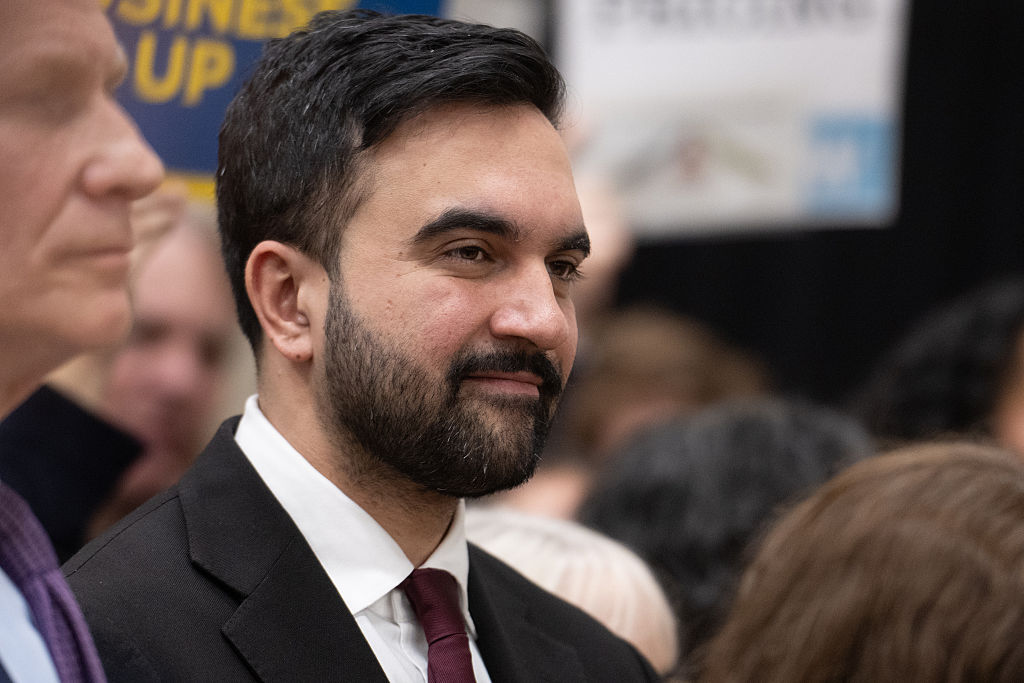
If we start connecting the threads from Bernie Sanders in 2016 to Zohran Mamdani in 2026, we begin to see how particular minority groups become the flash point of an ongoing battle within the Democratic Party and on the Left. (Noam Galai / Getty Images)
The opposition of Jewish voters to Zohran Mamdani has been, and will continue to be, a flash point of commentary and conflict over the mayor. It reminds me a bit of how black voters were often the flash point of commentary and conflict over Bernie Sanders in 2016.
In the last year, Michael Lange has emerged as the sharpest analyst of New York City electoral politics. When it comes to the unlikely campaign and career of Mamdani, hardly anyone has equaled Lange’s record of analysis and prediction.
In his latest post, Lange takes on the question of Jewish voters and Mamdani. Long story short:
[Andrew] Cuomo performed best . . . among wealthier and older Jewish voters, while Mamdani performed best among younger Jewish voters and those less well off. In other words, Jewish voting habits in New York City mirrored the voting habits of non-Jewish voters, and the vote was split along the lines of age and wealth.
Make sure to read his entire post to get all the details.
Though Lange doesn’t say this, his analysis mirrors what we saw during the Sanders campaign in 2016. Where many commentators focused on black versus white voters, a few more far-sighted analysts noticed that an equally relevant, if not more relevant, factor in the Sanders versus Hillary Clinton split among Democratic voters was not race but age. Younger black voters were breaking for Sanders, while older black voters went for Clinton.
That turns out to have been not a one-off among black voters but a major portent of what’s been going on among Democrats and the Left. We’re seeing a similar phenomenon in the Jewish community today, where younger voters are breaking left, particularly over Israel and Palestine, while older voters and their elected representatives try to hang on to old nostrums. And when you consider that many of the Jewish voters in New York who voted against Mamdani also voted for Donald Trump — a factor that Lange makes super interesting use of in his analysis — the generational split becomes all the more interesting and relevant.
If we start connecting the threads from Sanders in 2016 to Mamdani in 2026, we begin to see how particular minority groups, as they used to be called, become the flash point of an ongoing battle within the Democratic Party and on the Left, and how that flash point obscures, to mix my metaphors, the generational earthquake happening beneath our feet.