The Void Stares Back
Has the decline of the mass party caused the decline of democracy itself?
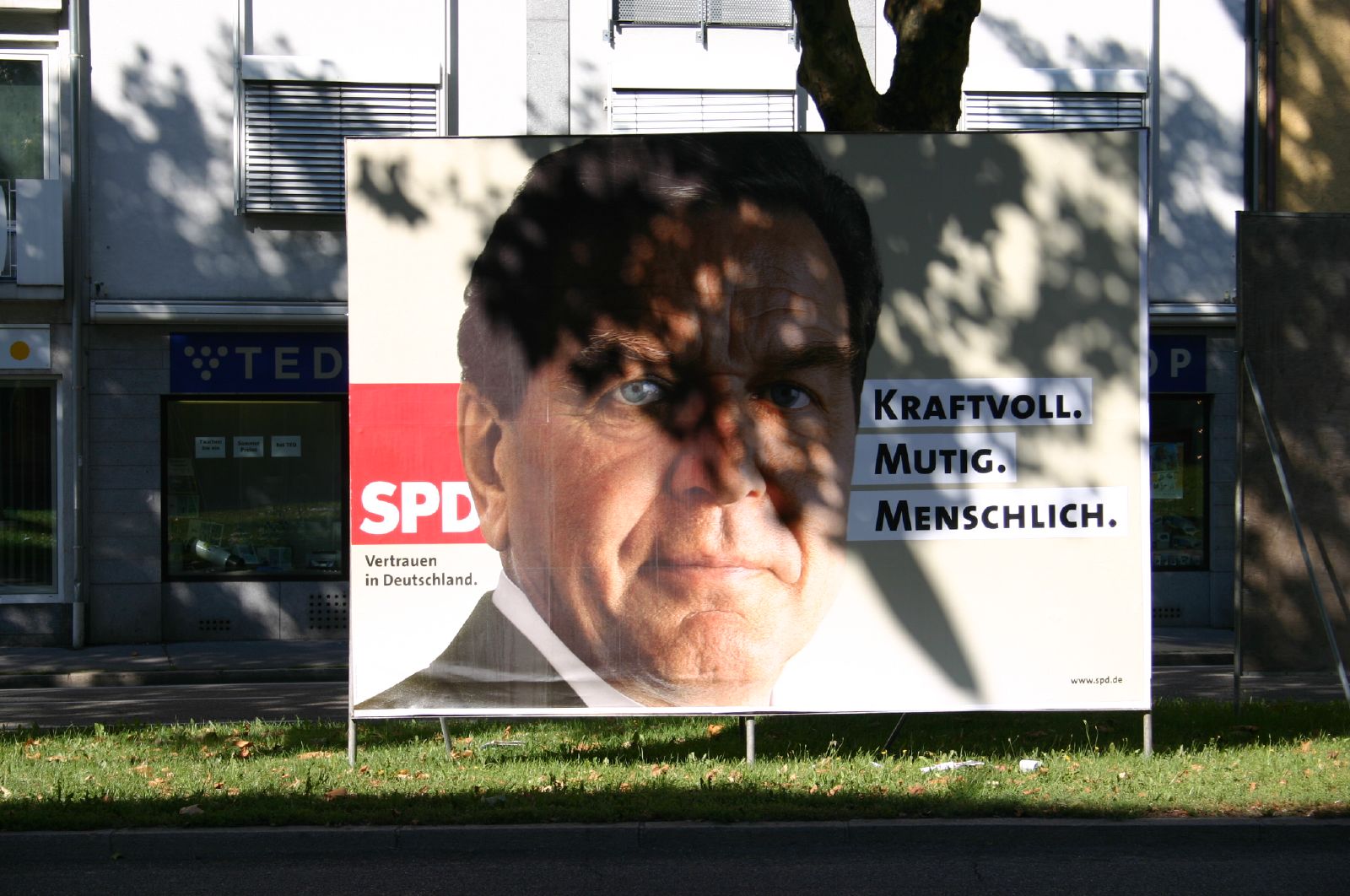
A campaign poster with German Social Democratic Party leader Gerhard Schröder in 2005. Till Westermayer / Flickr
The year was 1997. Bill Clinton was beginning his second term, Tony Blair’s New Labour was coming to power in Britain after a resounding victory, and European Union member states were putting together the Stability and Growth Pact (vowing to keep government deficits below 3 percent and debt below 60 percent of GDP).
Meanwhile, Alan Blinder was asking the readers of Foreign Affairs whether government was “too political” — that is, too much under the influence of elected politicians competing for votes. A respected economist at the top of his game, Blinder had served on Clinton’s Council of Economic Advisers and then as vice chairman of the Federal Reserve Board of Governors.
His time at the central bank had gotten him thinking. While the Federal Reserve made important decisions that affected lives across the country and beyond, it was deliberately isolated from elected officials’ interference. Monetary policy was no field for amateurs, and the central bank had to do things the voting public may not support but which served its long-term interests.