Lab-Grown Blood Vessel Maker Promotes Risky Off-Label Uses

Developers of a lab-grown blood vessel designed to save life and limb in emergency scenarios appear to be promoting its use in surgeries far beyond what the Food and Drug Administration has approved the product for, despite known safety risks.
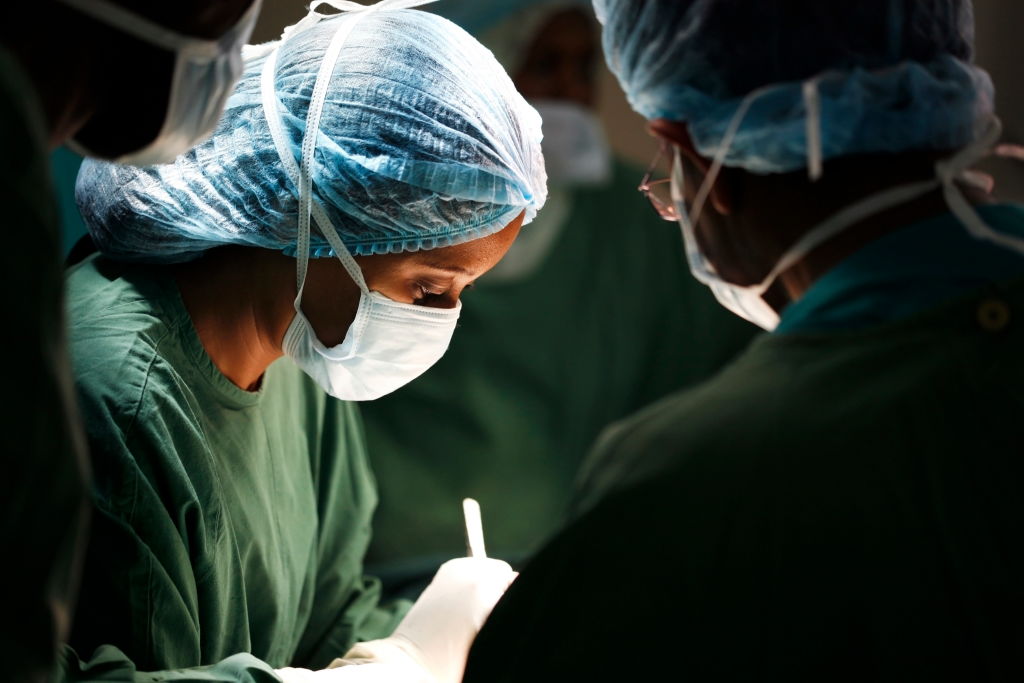
The biotechnology firm Humacyte has developed an artificial blood vessel, called Symvess, that was approved by federal regulators for use in adults with trauma to their arms or legs who urgently need new arteries “to avoid imminent limb loss.” (Universal Images Group via Getty Images)

Developers of a cutting-edge lab-grown blood vessel designed to save life and limb in war zones and other emergency scenarios appear to be promoting its use in surgeries far beyond the product’s approved scope. The “off-label” use of these bioengineered tissues comes despite indications of questionable efficacy and potentially catastrophic ruptures.

The biotechnology firm, Humacyte, has developed an artificial blood vessel, called Symvess, that was approved by federal regulators for use in adults with trauma to their arms or legs who urgently need new arteries “to avoid imminent limb loss.”

But at a premier vascular surgery conference this November, Humacyte promoted research presentations on alternative uses of its vessels from a clinical trial — part of a growing trend of “off-label” uses of medical devices.

One of those presentations focused on off-label use of the vessels in patients’ torsos, which, according to data omitted from a prominent medical article on the product, were unsuccessful in four out of five procedures. In two of those cases, the patient died. The other presentation detailed the use of tissues in surgeries for individuals with kidney failure, procedures that the company previously discouraged the surgeon involved from undertaking.

Humacyte confirmed that both presenters have received compensation from the company in the past, though they were not paid in connection with their conference presentations.

“I find it ethically problematic that several speakers failed to declare from the beginning of their talks that they would be describing usage of the Humacyte graft that was not FDA approved,” said Robert Lee, a vascular surgeon and former medical officer at the Food and Drug Administration (FDA), which attended the November presentations and voiced concerns about the matter during the talks. In September 2024, Lee left the federal agency in protest following a ten-year term, after he’d repeatedly warned that Humacyte’s blood vessels could rupture.

While the FDA went on to approve Symvess three months later for limited uses, it required the surgical graft to be marketed and sold with its most serious type of warning for drugs and medical devices, one that states the vessels can rupture, leading to potentially life-threatening bleeding.

The conference presentations followed a New York Times investigation earlier this year, raising concerns about the safety and effectiveness of Humacyte’s artificial vessels. A patient advocacy group cited this reporting in a citizen petition demanding a full recall of Symvess products, as did a lawsuit by Humacyte shareholders claiming the company concealed product risks.

Despite these warnings and concerns, rather than restricting Symvess’s reach, the company now appears to be touting the product beyond the prescribed limits set by the FDA.

This comes amid growing concerns about off-label use of medical devices, according to Hooman Noorchashm, president of the patient advocacy group that submitted the citizen petition and codirector of the Amy J. Reed Medical Device Safety Collaborative, which advocates for safer medical devices, regulatory transparency, and legal accountability.

“It’s not just one or two products” that are being used for off-label use, said Noorchashm, who has raised safety concerns about a breast reconstruction implant that is now being used for off-label purposes despite patient complications like infection, persistent pain, and hemorrhages. Once a company gets product approval, said Noorchashm, “that’s all it really takes to then initiate this process of suggesting, ‘Hey, maybe we can use it for this off-label purpose, or that off-label purpose.’”

Despite the potential promises of Humacyte’s bioengineered blood vessels, the intervention’s cost, and the contract secured with the US Department of Defense, the biotech company had accumulated losses of $702 million as of this September, according to the company’s financial records. This month, the company received a $77.5 million line of credit from Avenue Venture Opportunities, a global investment firm that specializes in “good companies with bad balance sheets.”

Off-label use of drugs and medical devices can prove valuable as scientists and manufacturers develop new clinical trials to explore the uses and efficacy of novel therapies. But in this case, Lee says Humacyte’s market pressures could be leading the company to push for off-label uses of its signature product for financial reasons.

This type of situation raises “legitimate regulatory and ethical questions if required disclosures are not clear and complete,” said Lee. Regarding Humacyte’s press releases about the conference presentations, he asked, were they “primarily intended to inform the scientific audience attending the conference, or were they directed more towards the investment community?”

In a press release, Humacyte states that Symvess “is an investigational product and has not been approved for sale by the FDA or any other regulatory agency” to treat vascular trauma outside of patients’ extremities.

In response to a list of questions, a Humacyte spokesperson wrote in an email to the Lever that “Humacyte does not, has never, and will not promote off-label use of Symvess,” and that the company “communicates the results of its clinical trials consistent with federal and state law and FDA guidance on communication of product information.”

“Unpredictable, Catastrophic, and Life-Threatening”

When patients’ blood vessels are damaged from severe trauma, like a car crash or battlefield wounds, and transplanting other intact veins isn’t possible, doctors may deploy artificial vessels just a few millimeters thick to restore blood flow. Typical synthetic vessels made of Teflon or polyester can carry a risk of infection and other complications, in part because the human body may react negatively to the foreign materials.

Humacyte’s new vessel, however, is engineered from a polymer tube seeded with millions of human cells. These cells eventually produce a flexible tube made up of collagen and other proteins that can be implanted into patients.

This, according to Humacyte, leads to “low infection, and low amputation” rates, making them safer and more effective than other synthetic vessels. The company’s founder and CEO, Laura Niklason, told Wired earlier this year that Humacyte has enough human cells banked to make between 500,000 and a million artificial blood vessels.

The company’s 2024 FDA approval of Symvess was supported by two earlier clinical trials, including one involving adults with vascular trauma below the neck. According to an article published in the journal JAMA Surgery — a leading academic publication in the surgical field — the trial indicated that the blood vessels had an 84 percent success rate.

However, after reviewing thousands of pages of information, FDA investigators concluded that the vascular-trauma trial suggested the artificial tissues were actually successful only 67 percent of the time, compared to an 82 percent success rate of other synthetic grafts.

Lee, who was then serving as a vascular consultant for the FDA, wrote in a memo that “this observed failure mode of the [vessel] is unpredictable, catastrophic and life threatening.” Thomas Zhou, a statistician at the FDA, also noted that “neither study met the usual criteria for an adequate and well-controlled trial.”

Lee is a founding president of Echelon Development Group, a private consulting firm specializing in vascular devices. Two individuals on Echelon’s leadership team serve as key advisors to Phraxis, Inc., one of Humacyte’s potential competitors, according to a statement by Humacyte.

“None of the firms that I have worked with are direct competitors to Humacyte and their novel biologic graft,” Lee wrote in an email to the Lever. “For calendar year 2025, my medical device consulting income will be around $15,000.”

After the New York Times reported on Humacyte’s questionable success-rate claims, a group of company shareholders filed a lawsuit this May alleging the company deceived investors about the effectiveness of its artificial blood vessel.

“While Humacyte touted the product’s safety and its manufacturing readiness, concealed FDA documents and former employee and whistleblower accounts evidenced a starkly different reality: dangerous product failures, systemic manufacturing deficiencies yielding only 25-40% success rates, and a company burning through cash at an unsustainable rate,” the lawsuit reads.

According to the ongoing lawsuit, FDA investigators also identified safety concerns at the company’s manufacturing facilities in Durham, North Carolina, including “no microbial quality assurance” and “no microbial testing” for certain processes and equipment, in addition to insufficient “quality oversight.”

The plaintiffs also allege that executives concealed those manufacturing problems in Durham, telling investors that Humacyte had a “very successful interaction” with the FDA regarding Symvess’s application, subsequently inflating stocks. Shareholders claim this allowed several directors to sell shares at an inflated price, including CEO Niklason, who made nearly $39 million.

Humacyte has filed a motion to dismiss the lawsuit, which is currently pending in court.

A Business Decision

Regardless of recent controversies, Humacyte announced two presentations about expanded, off-label uses of its product at the recent VEITHsymposium vascular conference in New York. The conference is considered a premier event for vascular specialists, drawing thousands of attendees from around the world.

One talk focused on five patients who had received Humacyte’s vessels in their torsos during the Symvess vascular trauma trial. According to the presentation slides, two of those patients died, another subsequently had their leg amputated, and in a fourth, the blood vessel eventually stopped working. However, the presentation concluded that vessels’ “use in torso arterial trauma is feasible,” and that the deaths and other issues were largely driven by “complications related to the initial traumatic injury” and infections.

One slide noted that “torso subjects are not included in the FDA-approved indication.” Lee, however, argues that “especially when speakers have corporate, financial, or professional ties, a clear declaration of off-label use should be made at the beginning of their presentation with the conflict-of-interest slides,” he said.

According to the Humacyte spokesperson, “Humacyte did not pay Dr. Magee or Dr. Moore in connection with their presentations at the VEITHsymposium but has compensated/reimbursed them in connection with their role as key opinion leaders in the past.”

Notably, the JAMA Surgery article on the clinical trial touting Symvess’s 84 percent success rate failed to include any information about the torso surgeries or their outcomes.

According to Ernest Moore, director of surgical research at Denver Health and lead author on the JAMA Surgery article, Humacyte did not provide him with all of this information prior to publication of the article. Moore is one of several of the study’s authors who’ve reported receiving grants from Humacyte, while other study authors worked directly for the company, including Niklason, Humacyte’s CEO.

“It is true that, according to standard practice, Humacyte did not share the tens of thousands of pages of [the company’s submission to the FDA] with every investigator,” noted the Humacyte spokesperson. “This is because the JAMA Surgery article focused on the extremity patient population, which is the indication that FDA ultimately approved.”

In August, JAMA Surgery issued a correction to the article, noting that had the torso surgeries and other uses of the blood vessels been included in the analysis, the studies’ “efficacy and safety findings could have been attenuated.”

 Moore, meanwhile, led the other Symvess presentation at the vascular conference, during which he described inserting Humacyte’s vessels into four dialysis patients suffering from kidney failure and limited blood flow to their limbs. According to Moore’s presentation slides, the procedures suggested the lab-grown blood vessels “may be a viable alternative” for such surgeries and “demonstrated durable patency, safety, and freedom from graft-related infection or rupture.”

But according to Moore, Humacyte previously discouraged him from using its bioengineered tissues in this way.

“Interestingly, it was Humacyte who, after a number of these [surgeries], reviewed them and said, ‘Ya know, we probably don’t think these really qualify, so I don’t think you have to do these [surgeries] anymore,’ so I stopped doing them,” said Moore.

The four surgeries performed by Moore “were not the primary focus for Humacyte’s commercial strategy,” noted Humacyte’s spokesperson. “As a result, we asked that Dr. Moore not enroll additional . . . patients.”

Such promotion of off-label use could be a precursor to Humacyte’s next business moves.

Humacyte is currently conducting another clinical trial on people with end-stage kidney disease. Next year, the company plans to submit an FDA application for its artificial blood vessels to be used in these patients, according to its most recent financial report.

During an investor call last month, Niklason noted that there is a “high unmet need” for kidney patients who would require Symvess. “These subgroups are not small,” Niklason told investors. “If you combine all women with men having these risk factors, it’s more than half of the dialysis population.”

Noorchashm, codirector of the Amy J. Reed Medical Device Safety Collaborative, wasn’t surprised that Humacyte is marketing its blood vessels for off-label uses.

“The reality is that the government of the United States has provided this company with a license to market this particular device for use in vascular operations,” said Noorchashm, who submitted the citizen petition to the FDA in April requesting a recall of all Symvess products due to the vessel’s “potentially catastrophic outcomes.”

“It takes a long time for companies to get to this point and a lot of investment, so I would fully expect the company and its executives would not want the company to sink,” he said.

Conflicting Stories

Off-label use of drugs and medical devices has been a growing concern for decades and is nearly impossible to track, said Gail Van Norman, a physician and anesthesiology professor at the University of Washington Medicine.

According to an article by Norman on off-label use of drugs and medical devices, such processes can expose patients to treatments that have not been formally tested, increasing potential medical risks and discouraging manufacturers from investing in clinical studies to properly evaluate the safety and efficacy of their products.

“All of this is really arising out of commercial pressure,” Norman said.

While the FDA prohibits companies from explicitly marketing off-label uses of drugs and medical devices, “you can go to a medical meeting and present a study that’s been published in a peer-reviewed journal” as a form of marketing, Norman added.

Meanwhile, Humacyte executives are still telling their investors an encouraging story. In a presentation on Symvess, company representatives noted that in the clinical trials that were used for FDA approval, their lab-grown blood vessel “is durable over 36 months of observation in trauma repair” with “zero reports of late infection, aneurysm, or mechanical failure.”

To date, sixteen hospitals have ordered Humacyte’s blood vessels, generating hundreds of thousands in product sales, according to the company’s third-quarter financial results.

“This active physician engagement is complemented by our steady drumbeat of strong publications that support Symvess and our technology platform,” Niklason said during a recent investor call. “We’re confident that we will continue to see the benefits of this product validated by further research.”

Earlier this year, Humacyte cut the price of its blood vessels from $29,500 to $24,250 per unit and implemented a plan to trim its workforce by thirty employees.

“Could financial pressures resulting from low Symvess sales be a reason why there was a focus on the off-label use of this product?” asked Lee.

Either way, he argues, “physicians and patients should be aware that when a medical product is employed outside of the FDA-approved indications, the agency has not determined that there is an assurance of safety or effectiveness for that new use.”