South Africa’s Freedom Charter Was a Landmark in the Global Struggle Against Racism
The ANC’s Freedom Charter guided the struggle against white supremacy in South Africa, linking the questions of political and economic freedom. The origins of the charter — and the uses to which it was put — are rich with lessons for anti-racist struggles today.
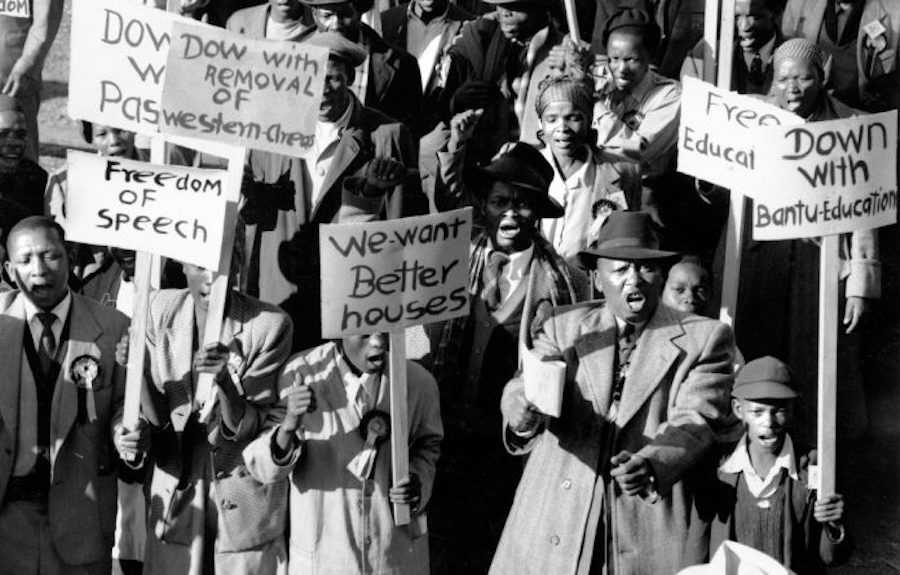
The Freedom Charter was notable precisely for its insistence that economic and political rights were equally important. (Eli Weinberg / UWC Robben Island Mayibuye Archives)
In June 1955, one of the most important events in the history of the South African freedom struggle took place. The Congress of the People assembled in a shabby field in Kliptown, a suburb of what would later be called Soweto. The main purpose of the event was to debate and ratify a “Freedom Charter” — a statement to the world about the character of a future South Africa freed from the shackles of white supremacy.
The document has obvious significance as the creed of the African National Congress (ANC), one of the most important liberation movements of the twentieth century. But the Freedom Charter also offers important philosophical and strategic insights for everyone on the left.
Influenced by the ideas of the liberal Enlightenment, the charter nevertheless transcends liberalism in crucial ways. Insisting on freedom, equality, and universal rights, the document is nevertheless quite specific — just where liberalism is abstract and evasive — about the material conditions that would be needed to make these rights meaningful.