The Anti-Fascist Origins of the Swedish Meidner Plan
Fifty years ago, Sweden attempted the most ambitious democratic transition to socialism ever. Its architect, a Jewish economist who witnessed the rise of Nazi Germany firsthand, was motivated by the imperative to never repeat the horrors of fascism.
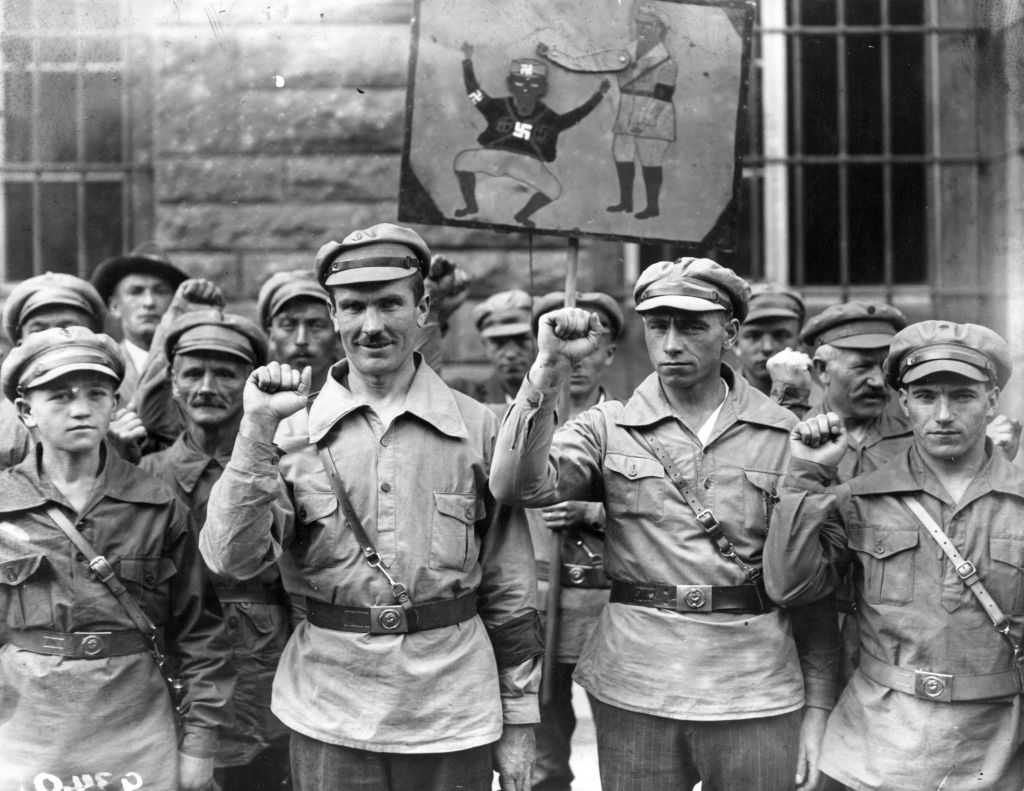
German anti-fascists (Rotfront) give the clenched fist salute. (Fox Photos / Getty Images)
On a chilly Monday in late February 1933, a then eighteen-year-old Rudolf Meidner looked up at the flames engulfing the German parliament building. Moments earlier, he had been dancing in the Kroll Opera House next to the Reichstag, but at around 9:00 p.m., he stepped outside to cool down. Someone shouted: “Look! They are illuminating the Reichstag!” A nice thought until someone remarked: “But it’s burning! The Reichstag is burning!” Fifteen minutes later firefighters arrived at the scene and not long after, German democracy itself went up in smoke.
In recent years, there has been renewed interest in the wage-earner fund plans that Meidner drew up in the 1970s for the Swedish Trade Union Confederation, or LO. While the social democratic economist is the subject of two excellent Swedish biographies, his life remains virtually unknown in the anglophone world. Who was the man behind the wage-earner fund proposal? And what led him to the wage-earner funds?
Though Meidner spent most of his life in Sweden, he grew up in Germany. His upbringing profoundly shaped his outlook and, in turn, Swedish society. To understand the radical proposal he made in the 1970s, it is necessary to understand this upbringing in Weimar Germany.