Power, Not Economic Theory, Created Neoliberalism

Vivek Chibber

Neoliberalism didn’t win an intellectual argument — it won power. In an interview with Jacobin, Vivek Chibber unpacks how employers and political elites in the 1970s and ’80s turned economic turmoil into an opportunity to reshape society on their terms.
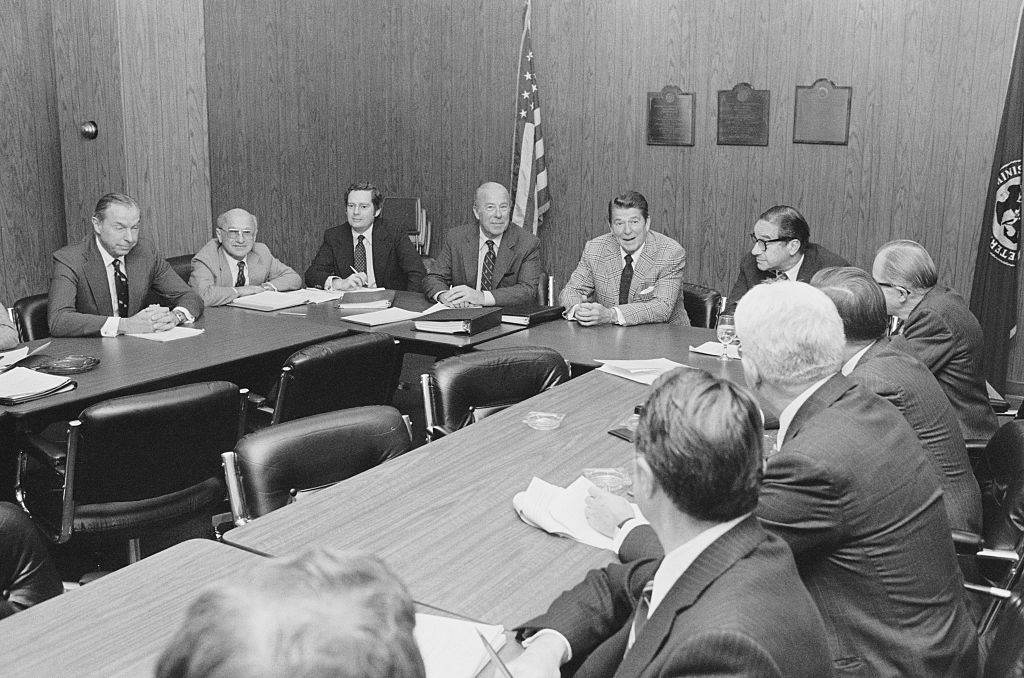
“Ideas become influential when they’re latched to the correct constellation of interests. Without that, they remain in the wilderness forever.” — Vivek Chibber on why capitalism made the neoliberal turn. (Dirck Halstead / Getty Images)

Interview by
Melissa Naschek

Neoliberalism’s victory over Keynesianism wasn’t an intellectual revolution — it was a class offensive. To roll it back, the Left doesn’t need to win an argument so much as it needs to rebuild working-class institutions from the ground up.

On this episode of the Jacobin Radio podcast Confronting Capitalism, Vivek Chibber unpacks how employers and political elites turned economic turmoil into an opportunity to reshape society on their terms.

Confronting Capitalism with Vivek Chibber is produced by Catalyst: A Journal of Theory and Strategy and published by Jacobin. You can listen to the full episode here. This transcript has been edited for clarity.


Melissa Naschek

Neoliberalism in general is a pretty hot topic right now among researchers, and one of the most common lenses is to focus on the role of ideas, theories, and thinkers in establishing neoliberalism.

The last time we talked about this topic, you dispelled a lot of common misconceptions about what it is and what it’s not. One of the questions that we’ve gotten a lot from listeners since then is, where does neoliberalism come from?

Vivek Chibber

Yeah, it’s very topical, but it’s also important for the Left, because getting to the crux of this helps us understand where and how important changes in economic regimes and models of accumulation come from. So it’s good for us to get into it in some more depth.

Melissa Naschek

I think this will be interesting because it lets us come at the question of neoliberalism from a different angle than we approached it from last time, and then also talk about how other people are examining neoliberalism and maybe why they see it differently than you and I do.

To start us off, there are a bunch of people who of commonly associated with and seen as the progenitors of neoliberalism, people like Friedrich Hayek and Milton Friedman. Can you tell us about them?

Vivek Chibber

These two were from different eras. Hayek was a very famous economist, one of the most famous economists of the twentieth century, and he was active in the middle decades of the century. He was famous as being both a critic of the idea of planning and socialist planning in particular but also one of the great critics of John Maynard Keynes, who was the most influential economist of the middle decades of the twentieth century. Hayek was what today we would call a free marketeer, a neoliberal perhaps, and was an advocate of drawing back from the welfare state and of trying to push a regime of free markets within capitalism.

Milton Friedman followed in Hayek’s footsteps in many ways. He was born in 1912 and was very consistent from the start. He was a very influential economist, even in the 1950s and ’60s in the academic world, but in the policy world, he was out in the wilderness. The reason is that the 1950s through the 1970s, when he was in his prime intellectually, were the decades of the welfare state and of significant government intervention. Friedman, like Hayek, rejected that, and because he rejected what was the settled policy regime, he really didn’t get much of an entrée into the halls of power until the 1980s, when he became the patron saint of the Reagan era and the turn to markets.

Melissa Naschek

You mentioned Keynes and some of the things that Friedman was against. Can you just give a quick summary: Who is Keynes, what were his key ideas, and then how does that then relate to these thinkers who were challenging his ideas?

Vivek Chibber

His full name was John Maynard Keynes, and he was a blue blood from the upper crust of British society and arguably the most influential economist of the twentieth century. His major work, The General Theory of Employment, Interest, and Money, was published in 1936. This was when the West was still in the throes of recovery from the Great Depression, and Keynes advocated in that book some kind of government-led, state-led intervention in markets to stabilize capitalism.

Not just the idea but Keynes’s rendering of the idea was revolutionary, because economic orthodoxy very much said that you leave markets to themselves and they will stabilize. Keynes’s theoretical innovation was to show that there’s nothing in the functioning of a capitalist economy that leads to what’s called full-employment equilibrium. The economy can settle at an equilibrium but at less than full employment, and it’ll be self-perpetuating, which means that you can have long bouts of both unemployed people and excess capacity in manufacturing, which means you can have long bouts of wasted human capacity and wasted industrial capacity.

This was a big blow to the existing orthodoxy at the time, because orthodoxy said that if you leave markets alone, you will get both full employment and an investment level that’s consistent with the level of aggregate demand that’s out there. Keynes said, no, there can be a mismatch between those two for a very long period. The reason that argument was so influential was that states were looking for some way of dealing with one of the most severe depressions the capitalist world had ever seen, and they were not coming out of the Depression.

Melissa Naschek

This is coming out of the 1930s?

Vivek Chibber

Yeah. So Keynes was well-positioned. His ideas had an audience who took up those ideas, and you saw governments using Keynesian theory to justify what they were going to do.

Melissa Naschek

So Keynesian theory is the main theoretical backbone that social democrats drew on?

Vivek Chibber

No, actually, that’s an exaggeration. In fact, the most ambitious social democracies of the twentieth century, which were those of the Nordic model, really didn’t like Keynesian ideas and didn’t use them very much.

For us, the main point here is that from about 1936 to the 1970s, Keynesian ideas are the kind of folk wisdom of advanced capitalism. They’re folk wisdom in the sense that there’s a broad mapping of Keynesian ideas onto the policy dynamics of the time, but very broadly, if you get into the mechanics, some social democracies, and welfare states did rely on Keynesian policies; others did not.

Now, there is an important point here that I want to make. It’s not just that Keynes’s ideas were revolutionary, and the right ideas at the right time, and therefore they were taken up. If Keynes had been working at a community college somewhere or a technical institute, nobody would have ever known who he is. What he also had going for him was that he was the editor of the Economic Journal, which was the most influential journal at the time, the key journal of economics. He was also positioned at Cambridge University, which automatically made him extremely influential. And he had been moving in policy circles for twenty years already.

So, this is an instance where somebody who is a blue blood, who was in the halls of power, who has tremendous influence, bolts from economic orthodoxy, and presents ideas that at the time are very iconoclastic, which go against the received wisdom but are very appealing to policymakers who are looking for a way to justify breaking with policy orthodoxy. The combination of his being very well-positioned, very influential already, and then making an extremely elegant argument, put his ideas in a place where they could actually be used. Otherwise nobody would have known who he was.

Melissa Naschek

I want to get back to this idea of the location of intellectuals, because I think that’s also important. But first, I just want to pivot back to the ideas. What were the sort of theories and concepts that these neoliberal thinkers, Friedman and Hayek, were advancing that challenged Keynesianism and are associated with modern-day neoliberalism?

Vivek Chibber

The essence of Keynesianism was to use primarily the levers of the state, and to a lesser extent the monetary authorities, to intervene in markets so as to stabilize them. The justification was that the markets aren’t going to stabilize themselves. This immediately goes against orthodoxy, which insisted that markets do stabilize themselves. That set up the tension between Keynes and what was called economic orthodoxy.

Another way to describe what Keynes advocated for is what’s called demand management, which is when the state uses taxing and spending to smoothen out business cycles. When there’s insufficient demand in the economy for goods, the state spends and therefore injects demand into the economy. When the economy is overheating, there’s too much money chasing too few goods, you take some of the demand out of the system by increasing taxes.

I should say, anytime you get into “What’s the essence of Keynesianism?”, there’s going to be a lot of argument, because there’s a big debate over what Keynes and Keynesianism actually is. I’m giving the conventional account. The conventional account says that Keynesianism relies on fiscal policy primarily to manipulate demand conditions in capitalism, leaving supply largely alone. Now, there are plenty of interpretations of Keynes that say this is mistaken, and I agree.

I actually think if you look at Keynes’s work, he was not at all sanguine about leaving supply conditions alone. In fact, Keynes quite openly advocated for socializing a lot of private property in capitalism, because he thought at the end of the day, capitalists can’t be trusted with the investment decision. The Keynes that I’m giving you is “Keynes” in quotation marks, the way that Keynes was absorbed into the system. You can legitimately say that he was absorbed wrongly.

Many of Keynes’s most aggressive followers, such as Joan Robinson, Nicholas Kaldor, and even people like Roy Harrod, called the conventional version of Keynes “bastard Keynesianism,” because it was a kind of Keynesianism that had been neutralized and had been domesticated to the needs of a very milquetoast bourgeois welfare state.

Melissa Naschek

I feel like this is foreshadowing where we’re going a little bit.

Vivek Chibber

It might be. You can legitimately say that Keynes can be used for a much more ambitious social democratic and even socialist agenda. But the Keynes that we know historically, as he was absorbed into the system, was not that. We could have separate episodes on a proper reading of Keynes and how Keynes might actually fuel a socialist and social democratic agenda; that’s a separate issue.

The answer to your question as to what the tension was between Keynes and these guys is this: whichever version of Keynes we settle on, whether it’s the more moderate, conventional version or the more radical one, both were anathema to economic orthodoxy.

Milton Friedman and Friedrich Hayek represented important elements of that orthodoxy. For them, what was objectionable and simply off the table was the idea that the market is not self-regulating or self-equilibrating and, therefore, needs consistent intervention. Their view was that that intervention is only going to make matters worse.

These were the two poles of the debate in mainstream economics between 1935 and 1985. By 1985, the Friedman–Hayek version had won.

Melissa Naschek

I want to get back to the location question. How did where they studied and the organizations that they worked within influence their ability for their ideas to be impactful?

Vivek Chibber

It influences it. Generally speaking, when economic regimes are out looking for ideas, they don’t go looking in state universities or community colleges. They look at elite institutions because they have this idea that that’s where the best brains are.

Many of the key policymakers already have as part of their staff economists from those institutions. If you’re well positioned in that sense — if you have a job in a key institution like the Massachusetts Institute of Technology, Harvard, Chicago, or in England, Cambridge and Oxford — then you have entrée. The key point is this: Just being in one of those institutions doesn’t give you influence, because there are plenty of debates and disputes within the institutions themselves.

This positions us to get to the heart of the matter, which is, it’s one thing to say that the ideas of Hayek and Friedman were useful in the turn to neoliberalism. It’s quite another to say that the influence of those ideas is what caused the turn to neoliberalism.

Melissa Naschek

Can you expand on that a bit?

Vivek Chibber

At any given moment in the realm of policy, there’s a whole universe of ideas that’s always being floated around. So if you look to the 1960s and ’70s, Friedman and Hayek were around then too. A lot of market fundamentalist ideas were around then too. They were being espoused by people in very elite institutions. Friedman was at the University of Chicago at the time.

They were economists at MIT and at Harvard who were much more market-oriented than the Keynesian orthodoxy at the time. They had no influence. Today, right now, there are economists of a more social democratic persuasion, and there have been for the last thirty years, at MIT and Harvard and Yale and Chicago who have been critical of neoliberalism. But they’ve had no audience or entrée themselves.

The mere fact that such ideas exist does not in any way give them influence. The question for us, for socialists and for the Left is, when do ideas gain influence?

It’s a profound methodological error, I think, when you ask the question, “Where did neoliberalism come from?” to look at the contemporary theorists or the contemporary advocates of neoliberalism and then, because they are influential today, trace the origins of their ideas back to where they first started and say, that is where the origins come from.

Melissa Naschek

How important was this debate in establishing or causing neoliberalism?

Vivek Chibber

Not even the least bit. It was largely irrelevant to it. In other words, even if this debate had never happened, even if Milton Friedman had not existed, even if Hayek had not existed, you would have still had a turn to neoliberalism, and that’s the key. This is what the Left needs to understand.

This does not in any way invalidate the intellectual project of tracing those ideas. It’s intellectually interesting. It’s an interesting fact that those ideas had been around for forty years, and they had no impact on policy. Some historians have done great work tracing these ideas back to their origin, but it’s quite another to say that it was the ideas themselves that in the 1970s and ’80s caused the turn to neoliberalism.

Now, it’s an easy mistake to make because when the change came, the change was justified with a highly technical economic apparatus, and people like Friedman were given the stage to say not just that these policies are desirable for political reasons, but that they make a lot of economic sense and that it’s rational to do it this way. That gives you the sense, then, that it’s these particular individuals and their intellectual influence on the politicians that makes the politicians make the changes.

But in fact, the order of causation is exactly the other way around. It’s the politicians who make the changes based on criteria that have nothing to do with the technical sophistication of the ideas or their scientific validity. They make the changes because of the political desirability of those changes, and then they seek out advice on a) justifying the changes so that the naked subservience to power is not visible or obvious — it makes it look like it was done for highfalutin’ reasons — And then b) of course, they do legitimately say, “OK, now that we’re committed to this, help us work it out.”

Melissa Naschek

Right, especially because as long as you’re still in capitalism, you’re going to be facing constant economic crises. Even if you’re instituting a new regime, you’re going to be constantly looking for new solutions.

Vivek Chibber

Yeah. And even short of crises, you’re going to look for ways of making the policies work smoothly. And you’re going to look for ways of coming up with the correct balance of instruments and policies within them. So you bring in Milton Friedman or you bring in somebody else.

Surface level, it looks like what’s driving the whole thing is these ideas. But I said to you that the ideas actually have no role to play in the turn itself. So that brings up the question, what does? Why did they do it then?

I just said a second ago that what drove it was political priorities, not intellectual feasibility. Well, what were the political priorities? Who were the politicians actually listening to?

There are only two key players when it comes to policy changes of this kind. The key players are the politicians, because they’re the ones who are pulling the levers. But then, it’s the key constituency that actually has influence over the politicians.

The least important part is intellectuals. You might say voters have some degree of influence, but really, in a money-driven system like the United States, it’s investors, it’s capitalists — it’s big capital. They’re the ones who are pushing for these changes.

That means that if you want to understand where neoliberalism comes from, or rather if you want to understand why it came about, the answer is, it came about because capitalists ceased to tolerate the welfare state.

Now, why did they tolerate the welfare state at all? Most people on the Left understand the welfare state was brought about through massive trade union mobilization and labor mobilizations and was kept in place as long as the trade union movement had some kind of presence within the Democratic Party, within the economy more generally, because those unions were powerful enough, employers had to figure out a way of living with them. Part of what they did to live with the trade unions was to agree to a certain measure of redistribution and a certain kind of welfare state. As long as that was the case, politicians kept the welfare state going.

This is why, in that era from the mid-1930s to the mid-1970s, Keynesianism or the economics of state intervention of some kind was the hegemonic economic theory. The theory became hegemonic because it was given respectability by virtue of the fact that everybody in power was using it. Because it’s being used by people in power, it has great respectability.

This is why, in the 1950s and ’60s, Milton Friedman was in the wilderness — same guy, same ideas, equally intellectually attractive, equally technically sophisticated, but he was in the wilderness.

In fact, I’ll tell you a little story. I was in the archives in India when I was researching my first book on planning. And lo and behold, I find a letter from an International Monetary Fund economist. That letter is a three-page letter sent to the Planning Commission of India on how to plan effectively, on how to do price controls correctly, on how to manage demand conditions. It seems like it’s coming from some dyed-in-the-wool Keynesian economist. The author was Milton Friedman.

Why is Friedman writing this letter in the language of a mid-century technocrat committed to state control? He was seeking entrée. He knew that “if I want to be relevant, if I want to be heard, I’m going to have to give them advice of the kind they want to hear.” I’m not saying he sold out. I think he believed what he believed, but he said, “My ideas don’t have a chance in hell right now. So here’s what I’m going to do: I’m going to do the best I can, given the filters that are in place.” And the filters in India at that time were, “We don’t want to hear from you anti-planners. We’re going to do planning. If you want to be of use to us, tell us how to plan better.” Friedman said, “OK, my free market stuff is out the window. I’m going to be as good a planning economist as possible.”

That little story tells you something. What it says is ideas that are going into the halls of power go through certain filters. And the filters are essentially the policy priorities that the politicians have already committed to. Now, what creates those priorities? It’s the balance of class power. Social forces are setting the agenda.

If the social forces, that is, say, trade unions and community organizations, have set the agenda for politicians such that they think the only rational thing to do is to institute a welfare state, then they will bring in economists who help them design a welfare state. That gives intellectual influence to those economists. Economists who are saying “Get rid of this whole thing” are cast out into the wilderness. That’s how it works.

In the 1970s and ’80s, those policy priorities — that is to say, the New Deal as a priority — changed for reasons that have nothing to do with intellectual influence. The change came about when the American government was now committed to rolling back and dismantling the welfare state and giving more rein to free markets.

Once that happens, this little guy who was out in the wilderness for thirty years named Milton Friedman suddenly comes to the center of the halls of power and his ideas now get circulation. They get circulation because politicians now are willing to hear him. That’s what drives it.

Therefore, when I said previously that Friedman had won the debate by the end of the 1970s, I mean that he won out because the political anchor that had sustained the Keynesian economists had come loose. What happened was that the ship was now being redirected in the direction of neoliberalism.

The people who had lots of influence in the 1970s who [subscribed to Keynesianism] found that they did not have anybody willing to listen to them anymore. So they get fewer conference invitations, less grant funding, fewer invitations into the policy halls, and people who had been out in the wilderness are brought into the center. That’s a reflection of the change to neoliberalism, not a causal factor in the change to neoliberalism.

Melissa Naschek

How do theories that focus on this notion that ideas and thinkers caused neoliberalism suggest a certain set of solutions to neoliberalism?

Vivek Chibber

It’s a really good point and a very good question. It gets us back to the issue of, why should we care about this? What does it matter if you misunderstand the factors that go into a change in economic policies? What does it matter if you wrongly attribute influence to ideas, let’s say, over material interests? Well, it can lead you to propose wrong solutions.

This is a very good example of that. If you think that what’s behind dramatic shifts in policy is the influence of ideas per se, the brilliance of those ideas, then, if you think that neoliberalism is a catastrophe and we need to go back to social democracy, then your solution is going to be, “Let’s get some economists or political scientists who are really good theorists of social democracy and give them publicity — put them in newspapers, give them lots of op-eds, maybe try to get them a meeting in the White House or something like that.”

But if you think that what’s really driving these changes is the social balance of power — the power balance between capital and labor, between rich and poor — then you won’t pour your energies into getting the right people entrée into the halls of power. You’ll pour your energies into changing the class balance. That’s the difference between how people on what used to be called the Left approach these issues and the way in which mainstream theorists and thinkers approach these issues.

This kind of ideas-based analysis leads to a great man version of policy change, whereby you get the right person in the right place with the right ideas. And then, counterfactually, the reason we don’t have a desired change is that we haven’t managed to get the right people with the right ideas into the right places. That’s a great man theory of historical change.

But if you are a socialist on the Left, you know ideas get their salience because of the background conditions, the social context, and the power relations. They don’t get their influence because of simple brilliance, at least when it comes to politics. Science is a different matter. But in politics, they get their influence because some agency with social power gives them the platform.

Without that, I mean, if the power of ideas mattered and if the correctness mattered, we’d already have a social democratic government, and we would have had one for decades. Because not only are these ideas, we think in our arrogance, they appeal to everybody.

Zohran Mamdani’s ideas, Bernie Sanders’s ideas, are not radical the way the New York Times is constantly hammering that these are radical fringe ideas. They’re mainstream as can be. They are ideas that appeal to the majority.

Why do they not have entrée? Why do they not have political influence right now? It’s because the balance of class power is such that even though they appeal to the largest number of people, those people have no political organization. They have no way of effectuating their demands. And so, their demands as encapsulated in Sanders and Mamdani don’t have a lot of political influence.

So ideas can matter, but they have to be made to matter.

Melissa Naschek

What I think you’re saying is that ideas can be powerful, but they have to be attached in some way to organizations that have influence in society in order to have an impact.

Vivek Chibber

That’s right. Ideas can have power, but only if they’re attached to agencies with power. In and of themselves, free-floating ideas only have power if people who have an interest in seeing those ideas fulfilled and have the power to then effectuate those ideas take them on.

These are the two key things. They have to be attached to agencies of some kind: social forces, organizations, institutions with power. And then those institutions and agencies have to see their own interests as being expressed and aligned with the ideas.

So let’s go back to neoliberalism. How did the free-market ideas attain influence? It’s because capitalists and wealthy people in the United States pushed for a shift away from the welfare state for reasons that had nothing to do with the appeal of the ideas.

Why did they do it? It’s a response to a decade of economic stagnation in the 1970s. Under that stagnation, American businesses came to the conclusion that the only way they could come out of the economic malaise was by doing two things: rolling back the welfare state and dismantling the trade union movement. Why? The welfare state imposed a lot of costs on business along with the regulations that came with it, such as the demand for good pensions, the demand for safety, and the demand for a level of corporate taxation that could fund all the government programs.

When your margins are going down, when your rate of return on investments is being squeezed, now every little cost that you’re having to incur has a marginally greater impact on you than when you had high profits and high margins. And back then, you felt that you could absorb all the demands that the welfare state was making on you as a business.

Now, when your profit margins are shrinking, you’re desperate to reduce your costs. And the welfare state imposes a lot of extra costs on your normal business operations. So you’re trying to now strip down all your costs so it’s just the business operations.

The problem is, if you’re going to do that, you come up against the trade union movement, which has a place in the Democratic Party and has workplace power. If you try to take away the welfare state, you’re impacting and hurting workers. So they’re going to fight back.

This means that if you want to roll back the welfare state, you’ve got to dismantle the agency that’s been supporting it, which is the trade union movement. If you put this into economic language, you can say, “We want to return to free markets.”

How? First, you don’t want the regulations of the welfare state. You don’t want the demands that it’s making on you. You don’t want all the prohibitions that it’s put on your investment activity. And you don’t want high taxation.

Second, you want to free up the labor market. What’s the key word? “Flexibility.” You want labor market flexibility. That’s the justification; that’s not the reason you’re doing it. You don’t care about labor market regulation per se. What you care about is cheap wages and freedom to hire and fire.

Melissa Naschek

Right. So the real battle is happening between these class forces, not between the academics.

Even though there is a battle going on between academics that is related in some way to this. But it’s not the causal force. Who wins is decided by this battle between these other forces.

Vivek Chibber

Yeah. This is also because we have a particular definition of winning. Winning in academia means who’s got influence and power. Epistemologically, Keynesianism had won decades ago. Keynes was right, and the free marketeers were wrong.

But when we say “win,” we are not using it in the sense of the scientific correctness of a theory, but rather its influence. In that sense, the free marketeers won. But they won because businesses had decided they wanted to roll back the welfare state and they succeeded. Had they not succeeded, the Keynesian orthodoxy would have continued apace.

So the key point here is that the ideas become influential when they’re latched to the correct constellation of interests with the appropriate level of power. Without that, those ideas remain in the wilderness forever.

Melissa Naschek

So maybe we’re a broken record, but it always comes back to the fact that what matters is the balance between class forces and who holds power and power through institutions in our society.

Vivek Chibber

That’s right. If you think, as virtually everybody on the Left does, that the most powerful agency in capitalism is capital itself, but then you promote this notion that it was the power of ideas that brought about neoliberalism, what you’re essentially saying is that economists are able to sell their ideas to capital regardless of how it impacts the interests of capital. It becomes effective because of the correctness of the ideas. That’s very hard to imagine.

Capital cares about one thing and one thing only, which is its bottom line. So the ideas themselves are always filtered through, “How is this going to affect our interests?”

If those ideas around neoliberalism were not hegemonic in the 1950s and ’60s and ’70s, it wasn’t because business didn’t know about them — it knew about them. It was because business thought, “We can’t turn to these ideas right now without a lot of social disruption, which we don’t want to see.”

I want to make this point really clearly. Even though Friedman and all these people were building their theory in the 1930s and ’40s, the ideas of what we today call neoliberalism were hegemonic in the 1920s and ’30s. Keynes, when he comes up, doesn’t draw his theories onto a tabula rasa [as if] he’s the first influential economist. He had to fight back against an existing orthodoxy, which was expressed in the work of another Cambridge economist, named Arthur Pigou.

Pigou was basically a proponent of the exact same ideas that Friedman and Hayek are associated with in the 1960s, ’70s, and ’80s. Those ideas have always been around — by those ideas, I mean neoliberal ideas.

They were around in the 1930s, the 1940s, the 1950s, the 1960s. So if you want to figure out why the change to neoliberalism occurs in the 1970s and ’80s, it’s not because those ideas became influential. They were the most influential ideas in the early parts of the century, and they retained influence, even though they weren’t hegemonic, in the 1950s and ’60s. So they were always there for the taking if the people in power wanted them.

The key issue then is, why did the halls of power become interested in them in 1979 and 1980? They became interested in them because the constituency that really matters to politicians saw that as the moment when they could push their agenda, and that constituency was the business class. And it pushed the agenda because its interests enabled them to do so.

So it always comes back to the interest of the key actors, not free-floating ideas that somehow magically find influence at a key moment.

Melissa Naschek

On the Left today, we’re living under neoliberalism, which means that we’re living in a regime that’s openly hostile to our ideas. What you’re saying is, we’re never going to succeed if we treat this as just a clash of our ideas versus theirs. How then can we make our ideas, our vision for society, politically relevant and potentially powerful?

Vivek Chibber

By housing those ideas in a social actor and social organizations that have real power. So in other words, we should always be honing our theory and our analysis as best as possible. But we shouldn’t make the mistake of thinking that if we just get ourselves an audience with the mayor or the governor or something, they’ll listen to us.

They know what they’re doing, and they’re not going to listen to left-wing ideas unless they’re forced to. So the first order of business, the first task, is to build power. The first task is to organize, to get the working-class organizations up and running, to get neighborhood organizations up and running, to get some kind of political organization, some kind of party, whatever that might be, and then use that to mobilize people. Once you’ve got the power, now your ideas can get traction in the halls of power.

In fact, I’d say something even stronger, which is, if you get the power, the ideas will come. Intellectuals crave recognition. They crave what they call relevance. And relevance for an academic is being around powerful people. They don’t really even care what the ideology is in particular, outside of extremes like fascism and things like that. They’d be happy to come to what today they call communists or socialists, as long as it gives them prestige and power. Intellectuals are very easily co-opted.

If you look today for the socialist economists in academia, it’s a handful of people. And you might think, God, if we ever actually gain the power to build an egalitarian setup, a genuinely redistributive economy, who are we going to turn to? What I will tell you is, if you build it, they will come. If you just get the power, people who until yesterday were espousing abolishing price controls and rent controls and all that, will turn on a dime and help you figure out a way to make it work, because that’s what academics do.