What Is Socialist Feminism?
Barbara Ehrenreich on why we need socialist feminism to fight patriarchy.
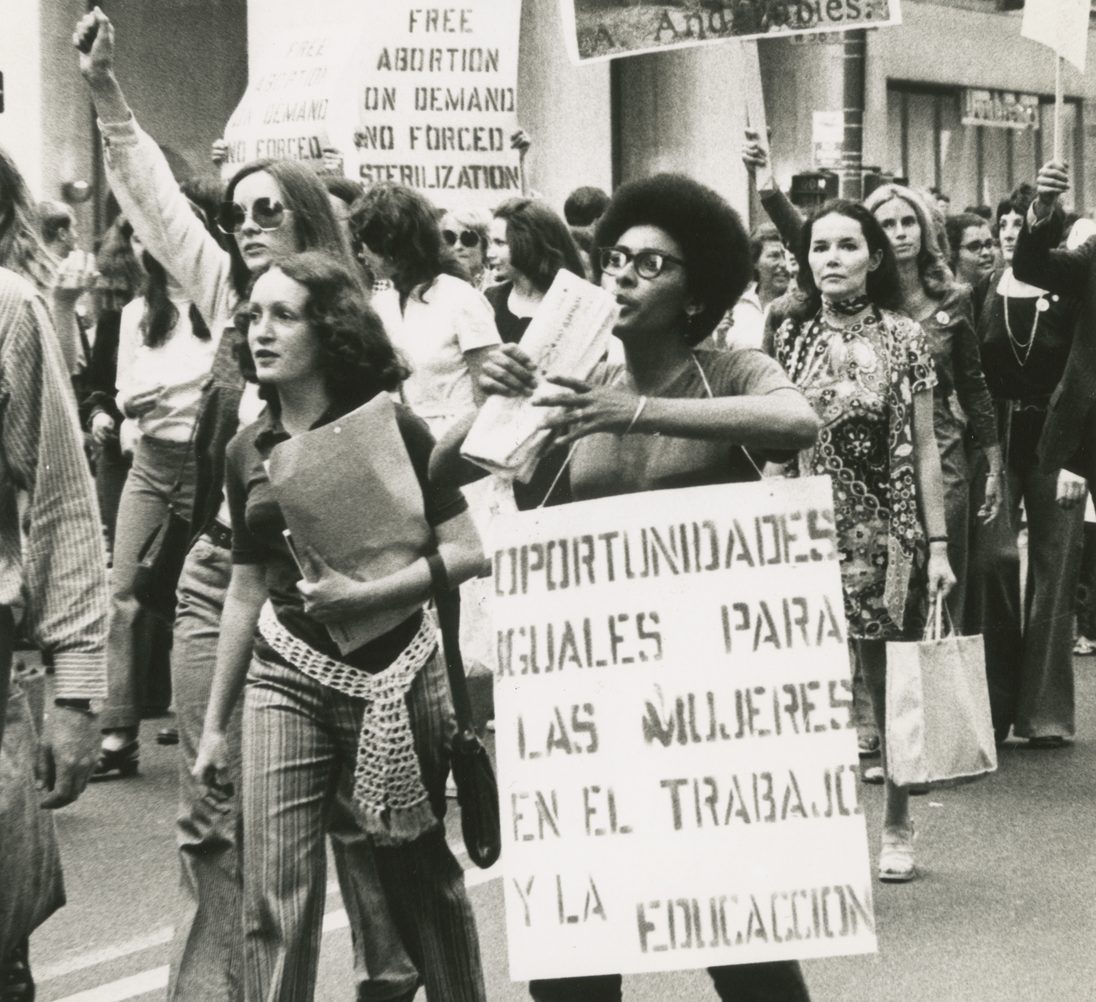
New York Historical Society
The following essay is best read as a core sample drilled from the radical thought of over fifty years ago, when both feminism and socialism were still novel ideas to most Americans. Many young white, formerly middle-class, women like myself embraced both of these abstractions and struggled, if only out of some sense of theoretical tidiness, to see how they are connected. I would never undertake such a project today. It seems too quaint, too open to divergent answers, too “ahistoric,” for my present-day tastes.
The only thing about this essay that makes me wince when I read it now is the casual postponement of issues like race and homophobia to some later, more all-encompassing, stage of socialist feminist theory. My only excuse is that capitalism and male domination seemed at the time to possess the dignity of being “systems,” while racism and homophobia were easily mistaken for more transient “attitudes.” But this is a feeble excuse. A half century later I am no longer so entranced by abstract “systems” and far more tethered to the concrete, which includes sickening amounts of cruelty to LGBTQ people and people of color. Anyone who is into theorizing needs to theorize those facts too.
There is also, I will admit, a bit of historical sloppiness in this essay. I seem to date capitalism from the Industrial Revolution, which makes it a relative newcomer on the human scene, no more than a couple hundred years old. What I should have been interested in is not capitalism but class societies — or “stratified” societies — which arose roughly five thousand years ago in the Mesopotamian world, along with archeological indications of rising male dominance, warfare, and slavery. How these things “arose” is a story encoded in thousands of geographically specific myths, bas-reliefs, and other forms of narrative; the challenging question is how they managed to persist through so many millennia and changes in the “mode of production.”