The Pitfalls of Radical Feminism
Fighting capitalism remains the only path toward women’s full liberation.
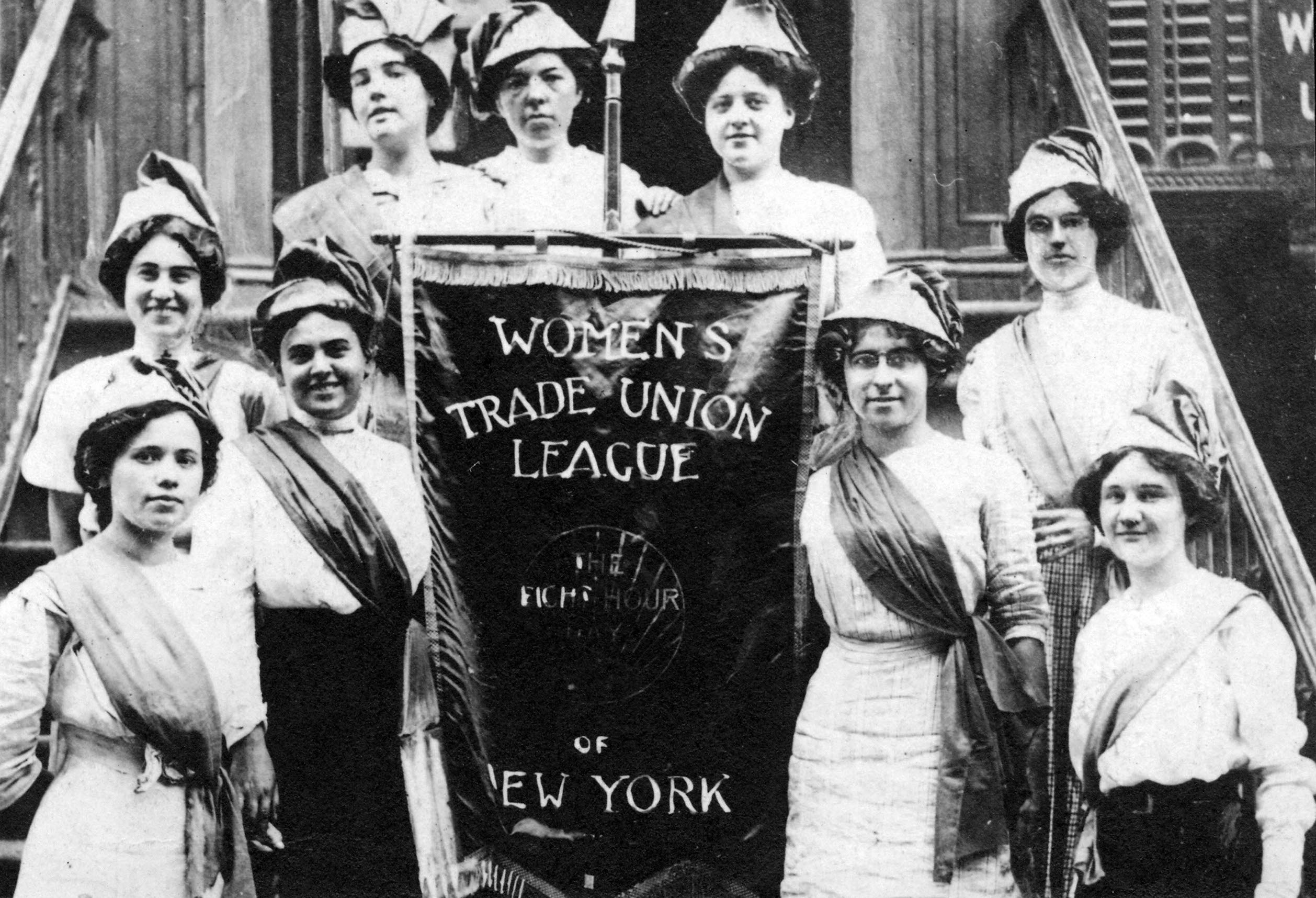
Members of the Women’s Trade Union League of New York pose with a banner calling for the eight-hour day in 1910. Kheel Center / Flickr
For many socialist feminists, critiquing liberal feminism is easy. Many of us came to socialism from liberalism and have a clear understanding of its limits and flaws.
However, the history and substance of radical feminism is less well known. While the “radical” in radical feminism seems to suggest a politics that socialists would embrace, a closer look reveals an ideology that’s incompatible with socialist feminism. Plagued by a narrow understanding of gendered oppression and a misguided strategy for change, radical feminism ultimately fails to offer women a clear path to liberation.
Radical feminism arose out of second-wave feminism in the 1970s, alongside, but mutually exclusive from, socialist and Marxist feminism. Nonetheless, they share some commonalities. Like socialist feminists, radical feminists take issue with the individualism of liberalism and argue that personal choices and individual achievement are not enough to transform society. And they locate women’s oppression in a broader, societal context.