Silk Stockings and Socialism
The hosiery workers of Philadelphia created a vibrant union by mixing Jazz Age culture with militant socialist politics.
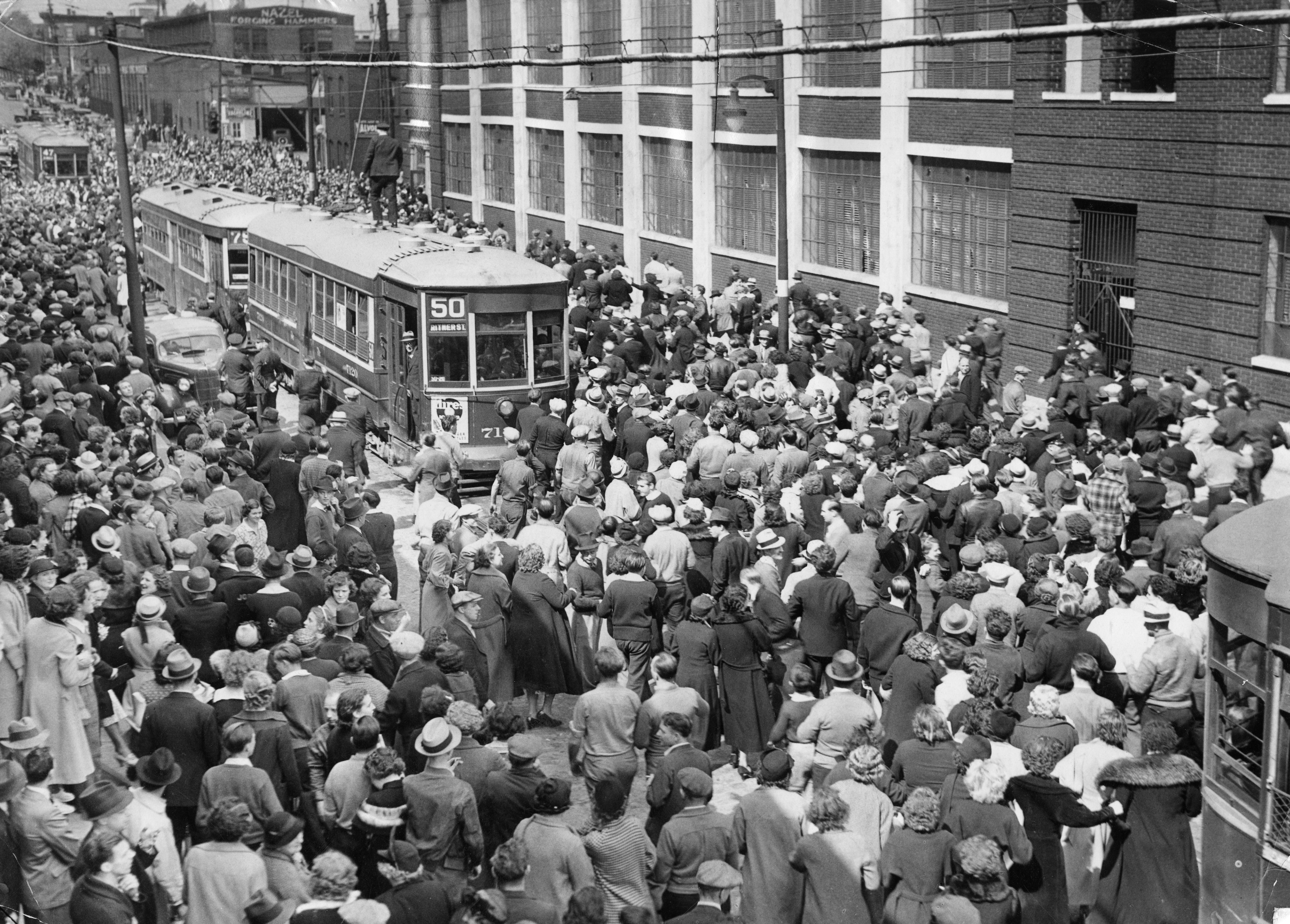
Strike sympathizers tie up traffic at the Apex Hosiery Mill on May 6, 1937. George D. McDowellPhiladelphia Evening Bulletin Photograph Collection / TempleUniversity Libraries
“However calm the remainder of America may seem to be,” the magazine Labor’s News reported on February 21, 1931, “Philadelphia has been giving the impression of being on the brink of revolution.”
The epicenter of the convulsion was the city’s industrial district, where hosiery workers — organized by the socialist-led American Federation of Full-Fashioned Hosiery Workers (AFFFHW) — were on strike against thirty nonunion mills in the city. In the initial hours, over a dozen mills were completely closed down. Police violence, mass arrests, and worker retaliation were the order of the day.
The arrests swept up large numbers of young people, especially young women, who fought police on the picket lines and filled the jails, all while wearing stylish “modern” apparel and silk stockings. Neighborhood residents streamed out of their row houses in a militant show of solidarity, only to be detained as well.