Completing the Feminist Revolution
In the 1960s and ‘70s, feminists began to transform society. Today, we need to finish the job.
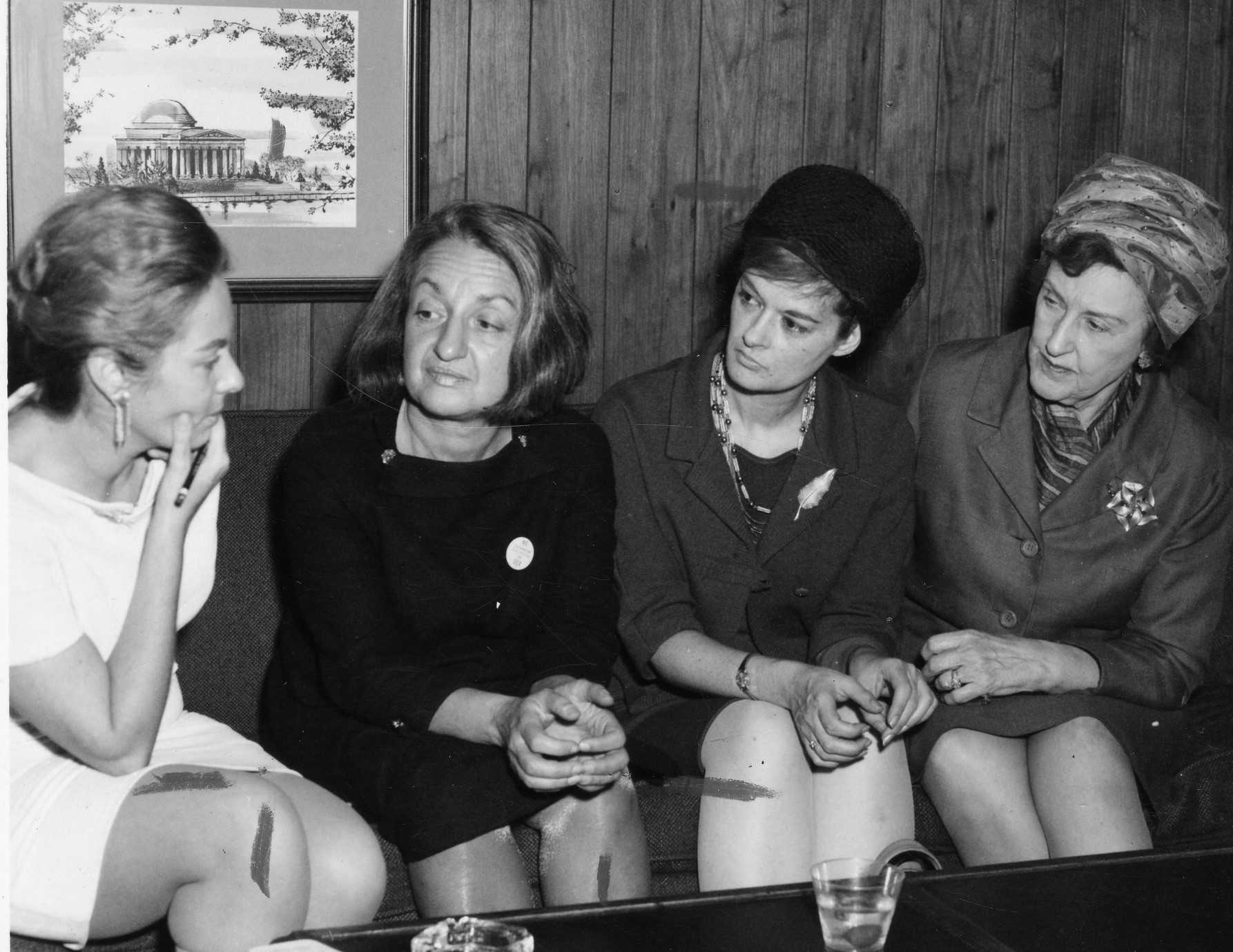
A Ms Billington, affiliation unknown, with National Organization for Women (NOW) founder and president Betty Friedan, NOW co-chair and Washington, D.C. lobbyist Barbara Ireton, and feminist attorney Marguerite Rawalt.Smithsonian / Flickr
Second-wave feminism doesn’t have too many defenders these days. From the left, the movement is often remembered as too white, middle class, and heterosexual; it principally functions as a warning of what feminists today shouldn’t do. From the right, the movement is seen as demanding too much for women, setting them up for disappointment by insisting they could “have it all” when, in fact, they can’t.
In Feminism’s Forgotten Fight: The Unfinished Struggle for Work and Family, Kirsten Swinth challenges both of these narratives, brings together the disparate strands of the second wave to focus on how the feminism of that era transformed women’s personal lives, upended sexist notions of biological determinism, and tried — successfully in some cases, unsuccessfully in many others — to win policies that could ease the burden of social-reproductive labor that fell disproportionately on women. Jacobin managing editor Micah Uetricht talked with Swinth about the book.
Micah Uetricht
What exactly was the “forgotten feminist fight,” and what are the implications of that fight being forgotten?
Kirsten Swinth