The Bad Kind of Unionism
When police unions have widened their gaze beyond issues like compensation and working conditions, it’s been almost exclusively to conservative ends.
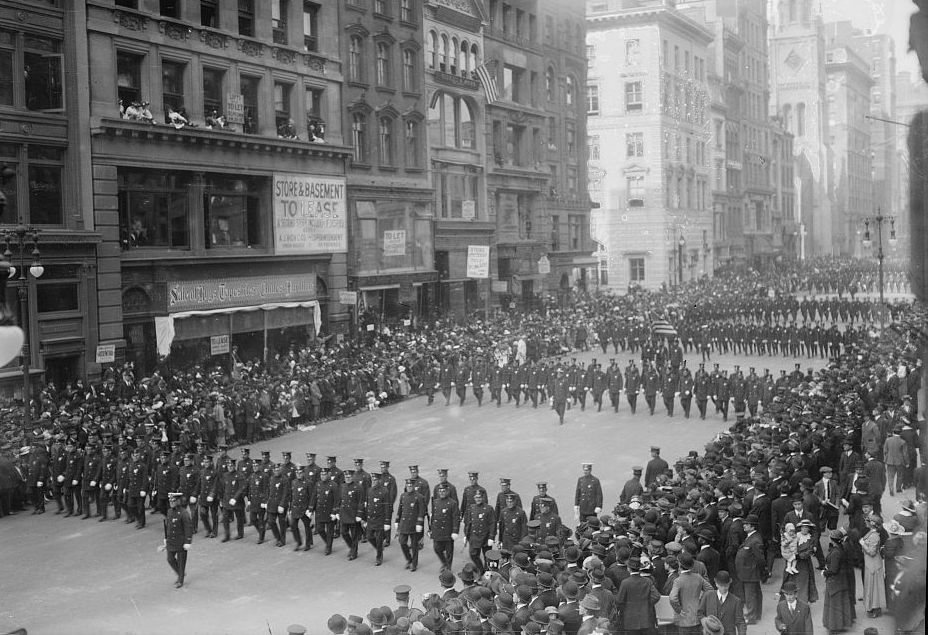
A police parade in New York City in 1915. Bain News Service / Library of Congress
Their profession is heavily unionized. Culturally, they have more in common with bus drivers than business executives. Many come from working-class backgrounds.
Yet on the beat, police come in contact with — to question, to arrest, to brutalize — the most disadvantaged. This presents a problem for radicals. If the Left stands for anything, it’s worker emancipation and labor militancy. But police and others in the state’s coercive apparatus, workers themselves in many respects, are the keepers of class society. Their jobs exist to maintain social control and protect the status quo.
The introduction of unions to this portion of the state raises additional concerns. Can “coercive unions” ever advocate for the broader working class, rather than members’ narrow self-interests? Or are police unions irredeemably reactionary?