A British Suffragette in America
British suffragette and socialist Sylvia Pankhurst didn't just want to talk to "society ladies" about the right to vote. She wanted the women's movement to be part of a broader emancipatory project.
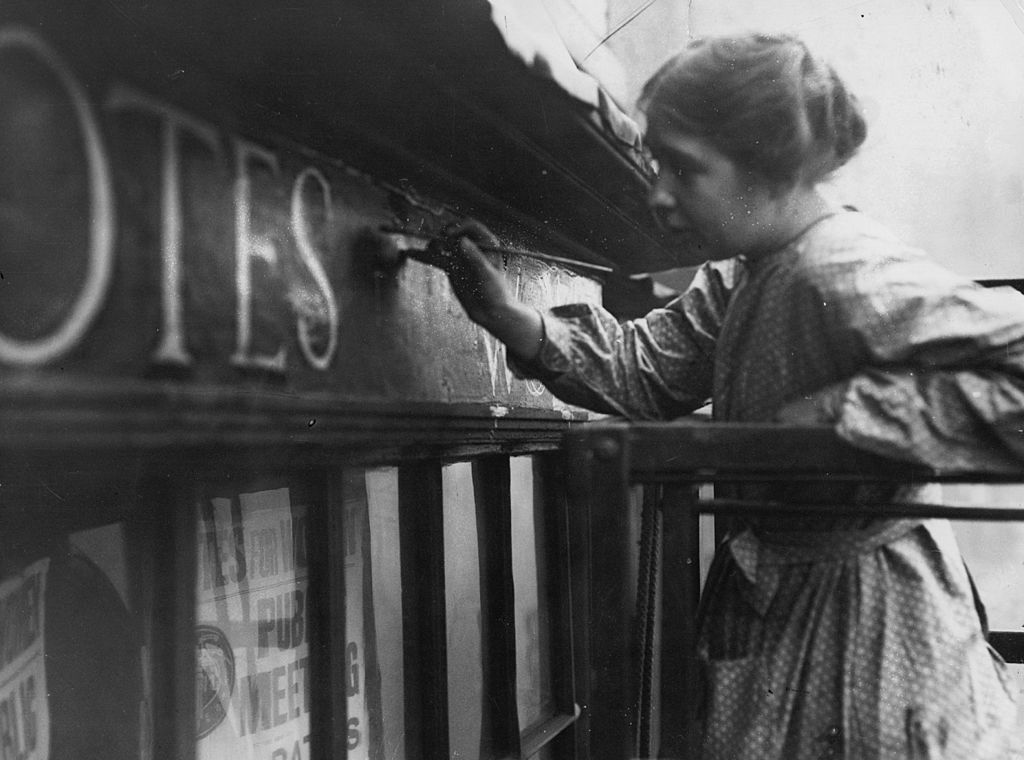
Sylvia Pankhurst at work on the new East London Federation headquarters of the WSPU in Bow Road, London, October 11, 1912.Hulton Archive / Getty
In the period of World War I, Sylvia Pankhurst was one of Britain’s most prominent socialists. Daughter of the suffragette Emmeline Pankhurst and herself a leading light in the Women’s Social and Political Union (WSPU), she insisted that the fight for voting rights must also be part of a broader emancipatory project. Expelled from the WSPU for her militant socialist positions, in 1914 she founded the East London Federation of Suffragettes, eventually becoming the Workers’ Socialist Federation.
Sylvia Pankhurst’s affinity with labor had already been evident in her two tours of the United States in 1911 and 1912. Indeed, while she visited the United States in order to promote her book on the recent history of the suffragette movement in Britain, she did not just want to tell society ladies about the fight for the vote. Hers was also an activist journey in which she made contacts with striking garment workers and antiracists.
While she was in America, Pankhurst sent a series of letters back home, mostly addressed to Labour Party founder Keir Hardie. The resulting texts, which included reflections on such varied themes as labor militancy, socialists’ activity in local office, and conditions in the jails, appear in a new book, A Suffragette in America: Reflections on Prisoners, Pickets and Political Change.