The Equifax Way
From its inception, Equifax has helped make discrimination a cornerstone of the American economy.
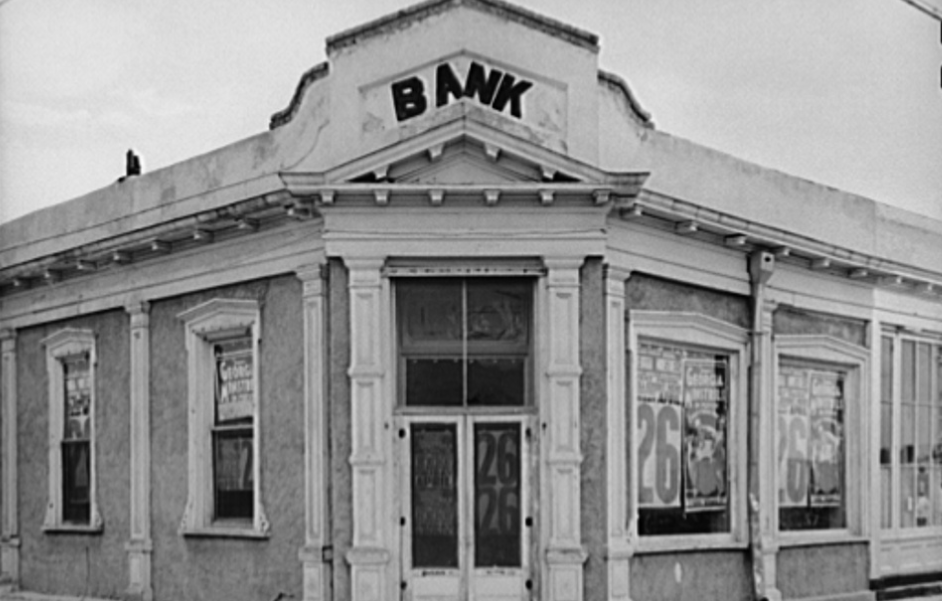
A deserted bank in Bisbee, AZ, 1940. Library of Congress
When cyber hackers breached Equifax’s consumer databases this past summer and ran off with the personal information of over 143 million people, or approximately half of the adult population of the United States, in many ways, they were doing unto Equifax what Equifax had done unto others for its entire history.
Equifax Inc., founded in 1899 in Atlanta, Georgia as the Retail Credit Company, reaped huge profits over the course of the twentieth century by taking people’s personal information without their knowledge or consent, and repackaging it for sale to other commercial institutions including insurance companies, credit lenders, and employers.
Equifax’s data practices were historically justified by the company as a kind of quid pro quo. In his recent history of consumer surveillance and financial identity in America, scholar Josh Lauer details how US credit bureaus such as Equifax legitimized their programs of surveillance and data storage by promising to “democratize” credit access. According to this logic, more readily available consumer information ensured that lenders, insurers, and employers were able to distinguish between financially safe and unsafe individuals, expanding economic security to the millions of Americans who needed loans, insurance, and jobs, but could not get them without the easy flow of consumer information. In reality, Equifax’s executives reinforced preexisting social inequalities and rationalized “fair” discrimination as a cornerstone of the capitalist economy. For women and poor African Americans, for example, a Retail Credit Company report did not open doors to financial security. It just recorded how society already saw you: as a bad risk.