The New York City Nurses’ Strike Was a Historic Victory

The largest and longest nurse strike in New York City history concluded last month. A rank-and-file nurse leader writes in Jacobin about how the 15,000 striking nurses beat giant hospitals to win major victories on safe-staffing and other issues.
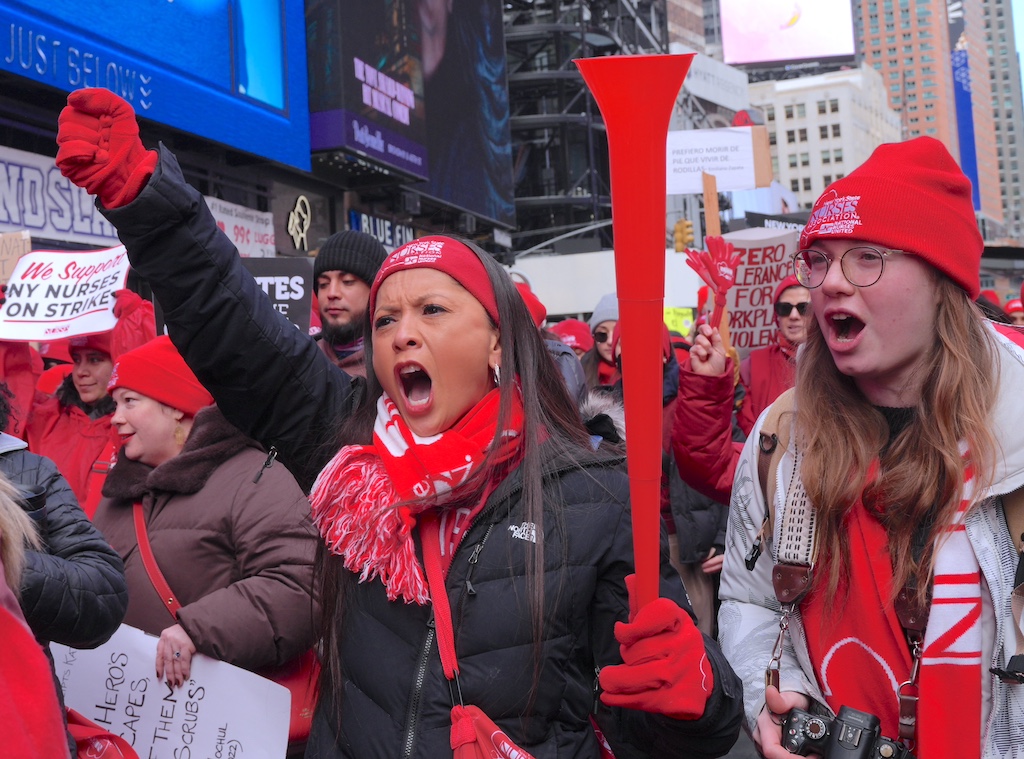
Some of the richest hospitals in New York City worked together to stall, delay, and push nurses out on strike. (Selcuk Acar / Anadolu via Getty Images)

I am one of the nearly 15,000 New York City nurses who went on the largest and longest nurse strike in New York City history. I work at Mount Sinai Morningside hospital in a surgical step-down unit and a medical surgical unit that sees a mix of patients with different needs. It can be a challenge to safely staff a mixed unit like this when patients need different levels of care. Hospital understaffing was the main reason I got involved in my union, the New York State Nurses Association (NYSNA), several years ago.

I came to Mount Sinai Morningside in 2018, but I was a nurse long before then; first in the Philippines and then in Florida, where you can’t even say the word “union” or talk to your coworkers about forming a union without getting reprimanded. When Morningside nurses negotiated a contract in 2022, I gave my colleagues support by attending the open bargaining sessions on Zoom.

In that last contract, we won improved and enforceable safe-staffing standards. Nurses finally had the tools to hold our hospital accountable when they overloaded nurses with too many patients at a time, putting our patient’s safety at risk.

Last year, Morningside nurses won more than $1 million in pay for nurses who worked chronically understaffed on two different units. In two separate arbitration rulings, including one on the eve of our contract expiration, we used our contract to protect patient care and compensate nurses for being overworked. The neutral arbitrators looked at the evidence and ordered the hospital to recruit, hire, and staff more nurses to keep patients safe. That’s the kind of accountability that our hospital administrators tried to take away from us during this round of bargaining.

During this contract negotiation and strike, I was part of the executive committee and the negotiations committee at my hospital. Even though I had a front seat during the last round of negotiations, I was not prepared for management’s change in attitude during bargaining this time around. Starting in September, we began negotiating to make more safe-staffing improvements, preserve our health benefits, protect nurses and patients from workplace violence and artificial intelligence, protect our most vulnerable patients and staff, and achieve raises to help us afford to live in New York City and recruit and retain more nurses to the bedside.

On a typical day, nurses work hand in hand with management to improve care and address problems when they come up. But during negotiations, it was shocking to see how hostile management was to the nurses and our demands. They treated us like the nurses don’t do anything for the hospital — like we’re just an added expense. They seemed more than willing to pay expensive travel nurses to replace us and even bragged about it, rather than negotiate over staffing, safety, pay, and benefits with us.

When it became clear that our hospitals were refusing to continue our health benefits and negotiate in good faith over other priority issues, Mount Sinai Morningside and West nurses were forced to strike, along with the nurses at Mount Sinai Hospital, Montefiore, and NewYork-Presbyterian. Some of the richest hospitals in the city worked together to stall, delay, and push us out on strike.

I remember the first days of strike — I was just really hyped up and ready to fight for our rights. It was so cold, but seeing my colleagues from all units across the hospital come together was so heartwarming. We were always a family before, but the strike made us feel like a bigger family. We were talking every day and really understanding one another and the different challenges nurses from each area of the hospital face. We marched and hugged each other on the strike line, and that communication and solidarity has continued after the strike ended.

The strike made us different. We were in the fight zone and ready to stay on the line together because we knew that our cause is worth fighting for.

Another thing that kept us going after weeks out in the cold was the support of our community. Even when things were going slowly in the negotiations and we felt discouraged, it gave us encouragement and hope to know our patients and community support and trust the nurses. The patients and patients’ family members that came by during the strike always cheered and had kind words for us.

I remember all the honking, especially from bus drivers. I live close to the hospital and often walk to work, but one day I got on the bus with my red NYSNA beanie and scarf. I pulled the cord to get off on the stop closest to the hospital, but the driver said he was going to drop me right where I needed to go for a big entrance. He dropped me off directly in front of the hospital and beeped so much that everyone cheered when I got off the bus and joined the picket line. It felt so empowering that people understood that the nurses weren’t striking just for better pay but also to improve the safety of our patients and the health of the city.

Nurses have gotten a warm reception since our first day back to work on Valentine’s Day. All our coworkers — like physical therapists, transporters, secretaries, and attending surgeons and doctors — said they missed us so much and are glad to have us back. We know we have fights ahead of us — from dealing with issues returning to work to enforcing our new contract. We’re ready to support our union colleagues in their fights too. But for now, it just feels good to have survived and come back standing tall.

This was a fight that was necessary and worth it. We would not have kept our good health benefits if we did not go on strike. We would not have kept safe-staffing enforcement language or gotten our hospitals to hire nearly fifty more nurses to keep our patients safe. We would not have won new protections against workplace violence and artificial intelligence — two major threats to health care workers everywhere. And we would not have won the nondiscrimination protections for transgender staff or the wage increases we did in the face of the well-funded anti-union campaign against us.

Our strike was important for New York City nurses and the communities we serve, but I also believe we empowered a lot of nurses in other cities and states. We showed the world how tough and strong New York City nurses are — willing to sacrifice so much and put ourselves out on the line in the middle of one of the coldest winters in New York City history. We showed that New York is a union town. We showed how powerful nurses can be if we strike, and we gave nurses everywhere hope that when we fight for our rights, we may not win everything we want, but we can achieve what nurses and patients need.