Everyone Is Missing the Point of SCOTUS’s Tariffs Decision
The Supreme Court’s rejection of Donald Trump’s tariffs will likely have little effect on the administration’s tariff regime. It will, however, further empower the conservative legal movement and its favorite deregulatory tool.
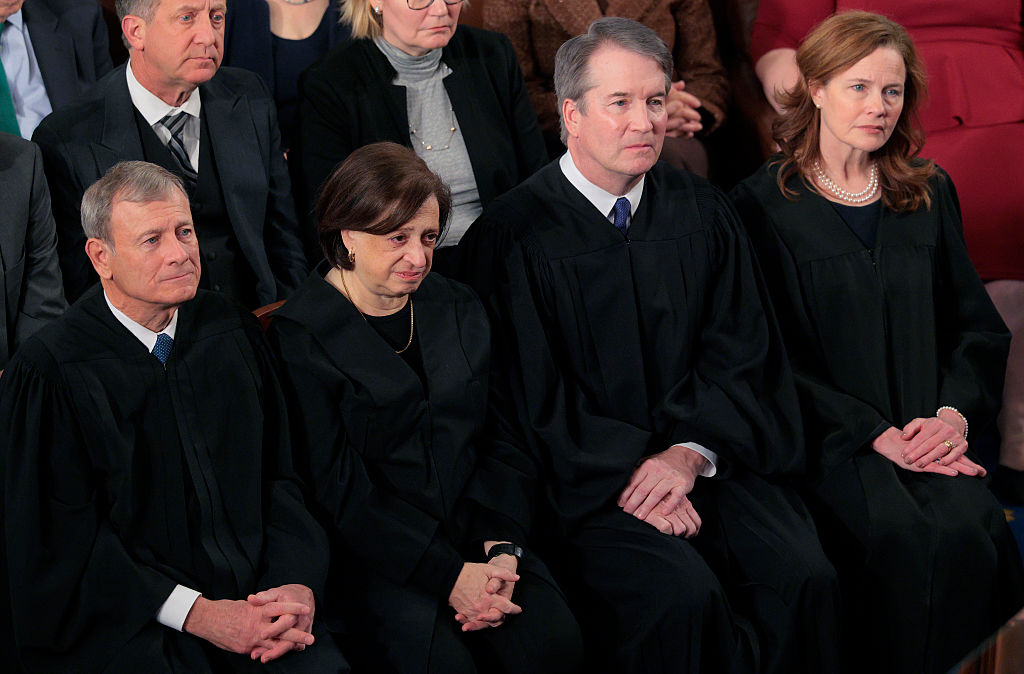
Observers from both left and right have rejoiced over the Supreme Court’s ruling against Donald Trump’s tariff regime. But only the latter have reason to celebrate.(Chip Somodevilla / Getty Images)
Last month, on February 20, the long-anticipated tariffs decision finally landed. As we predicted in a previous article, the Supreme Court ruled against the Trump administration in Trump v. Learning Resources, Inc., holding that the president lacked the authority to impose his sweeping “Liberation Day” tariffs under the 1977 International Emergency Economic Powers Act (IEEPA).
In a 6–3 decision, the majority comprising three of the court’s conservatives and all three of its liberals, the court concluded that the president had improperly usurped a power that really belongs to Congress — a constitutional allocation, Chief Justice John Roberts wrote, that reflects the framers’ deliberate choice to vest control over trade and taxation in the legislative branch.
The reaction to the decision was immediate and, as expected, loud and partisan. Trump called justices in the majority a “disgrace to our nation” and described them as “very unpatriotic and disloyal to the Constitution.” Vice President J. D. Vance, decried the ruling as “lawlessness from the Court, plain and simple,” while pundits and other conservative commentators accused the justices of exceeding their constitutional authority, engaging in judicial overreach, and delivering an activist ruling.