Democrats Are Facing a Moment of Reckoning

The Democratic Party has split: one faction masks corporate capitulation as necessary moderation, and the other refuses to tell voters to ignore their experience, admitting that Democrats have long bailed out the ultrarich at workers’ expense.
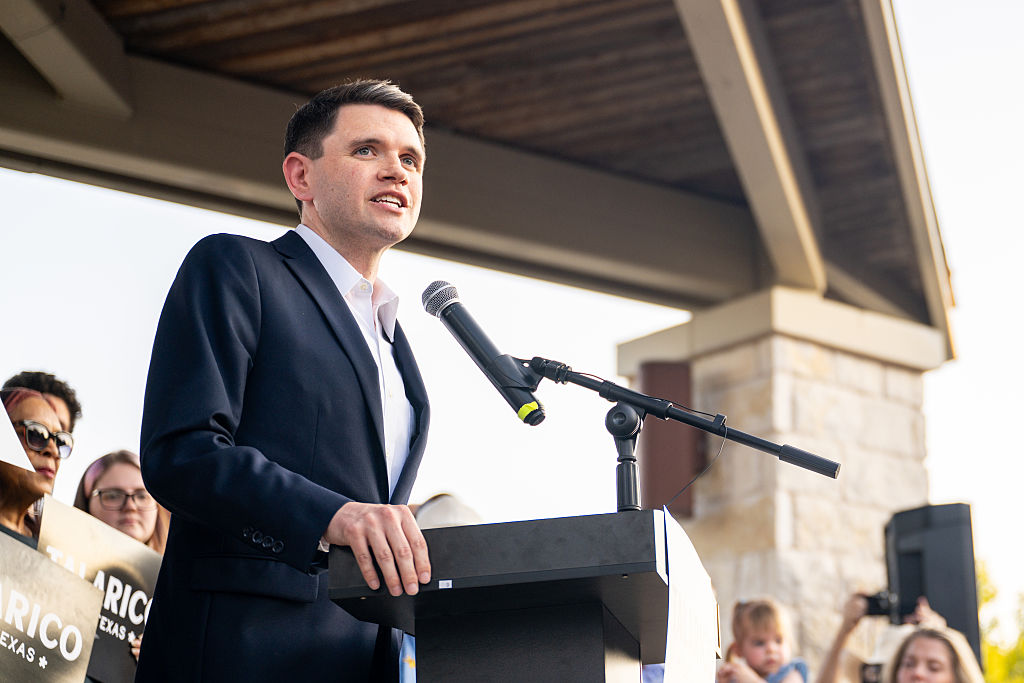
Democrats can only be that opposition and become a majority party over the long haul if they come to terms with their party’s past. (Brandon Bell / Getty Images)

A decade after Bernie Sanders almost tore the presidential nomination out of the decrepit hands of the Democratic establishment, the party’s old guard, ancient political formulas, and outdated corporate politics seem to finally be facing a moment of comeuppance. The long-overdue reckoning appears to be happening not just in a few predictably liberal locales but across varied swaths of the country that seem ready to embrace populist politics.

First, it was Zohran Mamdani’s underdog mayoral victory against the billionaire class in the capital of global finance. Then it was Sanders’s former staffer, Analilia Mejia, winning an affluent New Jersey suburb that had once been the territory of country-club Republicans. Now this week, it is James Talarico who has won an explicitly anti-billionaire, anti-corruption campaign for the Democratic Senate nomination in Texas.

These are just the bold-faced names so far — but there are sure to be more. Party leaders are reportedly enraged that more than thirty incumbent House Democrats now face primary challengers who have raised competitive money, and many of those upstarts are running on the same populist themes that Clinton- and Obama-era Democrats had successfully marginalized. Meanwhile, corporate and billionaire front groups like Third Way are left-punching, desperately trying to remain relevant in an era they fear is passing them by, frantically trying to call the manager on the unruly mutineers — and not realizing there’s no longer anyone to call.

History may not repeat itself, but it may be rhyming. In the 1960s, Republican senator Barry Goldwater’s ideological campaign pressing his party to turn the page on its insipid centrism ended in a crushing presidential election defeat — but only sixteen years later, Goldwater’s acolytes brought about the Reagan Revolution.

A version of that same saga may now be unfolding in the Democratic Party on a faster timetable. The Sanders campaigns pressing the party to discard the corporate appeasement of Bill Clinton and Barack Obama may have failed to win the presidency, but the crusades appear to have resuscitated New Deal–esque populism among a new generation that understands voters have been radicalized by Donald Trump’s authoritarianism and by the opposition party’s constant capitulations to oligarchy.

Whether or not any of these particular candidates are true believers or ideologues doesn’t really matter — if politicians are more thermometers than thermostats, then what matters is that this new crop of politicians realize the temperature has changed, and understand their success lies in a very different kind of politics than the Democratic Party has been mired in.

A Battle Over the Past Is the Battle Over the Future

William Faulkner famously wrote: “The past is never dead. It’s not even past. All of us labor in webs spun long before we were born, webs of heredity and environment, of desire and consequence, of history and eternity.”

In light of that truism, whether or not this moment is a fleeting spasm or the beginning of a transformative trend relies, in part, on what lessons the next generation of Democrats internalize from their party’s recent history — and, in particular, the financial crisis that not only destroyed the economy but pulverized the Democratic Party and birthed the Trump presidency. A conversation this week hosted by the leading aggregator of liberal conventional wisdom shows that the fight over those lessons is intensifying.

The exchange unfolded on Pod Save America between former Obama speechwriter Jon Favreau and Maine Democratic Senate candidate Graham Platner — perhaps the most high-profile of all the insurgent candidates aiming to rip power away from the Democratic establishment.

The discussion was superficially polite and almost easy to miss if you weren’t listening carefully. But it was a profoundly important illustration of the divide still roiling the Democratic Party, and of the increasingly cartoonish lies still being peddled by the party elite. The back-and-forth encapsulated how even now, the elite still doesn’t really understand — or doesn’t want to understand — what has happened in this country.

The key part of the conversation began with Favreau asking Platner a simple question: “Where specifically has the party gone wrong in the last decade in terms of policies, decisions, positions?”

Platner had an obvious answer: “Absolutely, the financial crisis, bailing out the banks, bailing out the big industries, letting people walk away with golden parachutes, while those banks still turned around and foreclosed on people’s homes, while the average working person saw their retirement savings just disappear. And then we watched the political apparatus back up the people that broke the thing in the first place. I think that was huge. That broke a lot of trust.”

That’s where things got interesting and revealing.

Favreau responded by pretending that his old boss and the Democratic Party leadership of the time had nothing to do with the obscene bailout of bankers who were foreclosing on millions of Americans. Of course, Obama most certainly did have a lot to do with that no-strings-attached bailout that saved his bank donors. He wasn’t reluctant about that savior role, either. He flaunted it, reminding those bankers that “my administration is the only thing between you and the pitchforks” — a line that was reprised to big donors by Hillary Clinton in her “deplorables” speech just before she lost the presidency to Trump.

Favreau also claimed Obama made “sure that the banks pay all the money back with interest,” which is a flagrant lie. Favreau recalled “talking to Larry Summers about” bankers’ bonuses and being told, “It’s contract law, we can’t claw back the bonuses, that’s illegal,” and somehow not mentioning that Obama had his aides throw cold water on Democrats’ House-passed legislation to claw back said bonuses.

And Favreau insisted that at the time of the bailout, Obama decided, “We can’t let the banks fail because the whole system goes under” — which even if you believe that hypothetical, it hardly justifies giving bank executives get-out-of-jail-free cards, letting them keep their same high-paid jobs, and using taxpayer cash to make bank shareholders whole while everyone else in America is immiserated.

Favreau then recounted being in the White House and hearing his Obama administration colleagues lament that, “Well, we’d love to bail out people who lost their homes in this, but what about how we don’t want to bail out the people who bought second and third homes that they knew they couldn’t afford because then we’re rewarding people who acted irresponsibly.”

Except it was Obama who helped his Wall Street donors block the promised bankruptcy reforms that would have allowed working-class Americans to get the same debtor protections for their primary residences as the wealthy owners of second and third homes already get. Obama was the one who promised that reform — and then made sure it didn’t happen, despite Democrats having massive majorities in both houses of Congress. You don’t have to believe me on that; we have the tape right here.

“If you have a second home, if you’ve got a vacation home, then the court in bankruptcy is allowed to work that out so that you can keep it, but if it’s your first home, you can’t,” Obama said in 2008. “If you’re rich and you’ve got a vacation home, then you can work that out in bankruptcy. If you’re a working family and it’s the only home you have, you can’t work that out in bankruptcy. That makes no sense, and it’s going to change when I’m president of the United States of America.”

Soon after, Obama helped kill the Democratic legislation to fix that discrepancy, which could have prevented hundreds of thousands of foreclosures.

Favreau expects us to forget this, which is a misanthropic but not altogether dumb bet in a goldfish-brain culture that forgets its entire world every fifteen minutes. He expects us to forget the possibility that a Democratic president watching his Wall Street allies throw millions of families out of their homes while he betrayed such an explicit bankruptcy reform promise (and other housing-related promises) might have had at least something to do with 200-plus previously Democratic counties going to Trump.

Beyond the lies and omissions, Favreau soon stumbled into some even more telling assertions.

For instance, he insisted Obama got “in trouble for calling (bankers) fat cats” — which is one of those rare “accidentally screamed the quiet part” admissions, because who exactly did Obama “get in trouble” with? Not average voters, who were pissed at those fat cats. No, Favreau had inadvertently let slip that Obama got “in trouble” with the people who really matter to the Democratic elite: big donors.

Then Favreau insisted the Obama Justice Department had decided it “won’t prosecute (bankers) because the laws aren’t there” and asserted that Democrats of the time “want(ed) to make sure the Justice Department only goes after people who actually broke the law.”

This is a real chef’s kiss of cynicism. Yes, eighteen years later, in the middle of flagrant oligarch-driven lawlessness that goes unprosecuted and is therefore portrayed as totally legal, the Obama elites and their wing of the Democratic Party are still asking everyone to believe a fairy tale. They are still asking us to presume that after all the revelations of rampant mortgage fraud and banks paying settlements to make prosecutions never happen and Attorney General Eric Holder suggesting banks were too big to jail and Democratic senator Carl Levin referring charges to the Justice Department — somehow here in 2026, after all of that, we’re still asked to think nobody on Wall Street broke any laws.

Pod Did Not Save America, and More People Now Know It

But now here’s the good news: fewer and fewer people buy this nonsense — and that includes Platner, Maine’s Democratic Senate front-runner, who politely called bullshit.

“People should have gone to prison,” Platner said in response to Favreau’s insinuation that nobody on Wall Street broke any laws. “Iceland put people in prison. . . . I honestly don’t think the American people would be angry if the Justice Department went after folks who destroyed their retirement savings or kicked their neighbors out of their homes.”

And then came the crescendo, the exchange that really shows the schism still being fought over inside the Democratic Party.

On one side of that divide is Favreau and his ilk channeling the pretend powerlessness vibe, insisting Democrats are always “try(ing) our best to solve the problem and then it’s not going to be good enough and then everyone’s going to hate us and say that we are tied to corporate interests.”

In this faction’s telling, corporate Democrats — who prioritized their donors over their voters and helped create the backlash conditions for Trump’s ascent — are innocent victims always doing their best and then being unfairly blamed. They are still relying on a sleight of hand: They camouflage corporate capitulation as sensible and necessary moderation — and then cast themselves as honorable realists unduly persecuted for their pragmatism.

Theirs is a fable whose faction has tons of cash, power, and media cachet. With polished brands like Third WayAbundance, and Searchlight, this faction’s sponsors seem varied and multidimensional — but at all their fancy conferences, they are all still selling this same anesthetizing pity story that liberals have told themselves for the last two decades as Democrats have played Washington Generals to the Republicans’ Harlem Globetrotters. Backed by billionaires and corporate sponsors, this cadre of corporate Democrats assume that if they verbalize their McKinsey-style slide deck enough via Pod, it will Save America.

On the other side of the divide is a more clear-eyed crew: new-generation populists and outsiders like Platner who are being brutally honest, which is probably why he’s surging in the polls.

He and his wing of the party are refusing to tell Democratic voters not to believe their lying eyes and their lived experiences — they are admitting what actually happened in this country. Some, like Talarico, are telling that tale implicitly by simply giving voice to America’s loathing of oligarchy. Others, like Platner, are more explicitly saying that yes, it started with the Obama administration not putting anyone in jail for the crimes of the financial crisis.

Taken together, they are rejecting the Obama/Clinton notion that Democratic politicians’ job is to be a bulwark standing between oligarchs and their victims. In a country whose largest swing electoral bloc is anti-system voters, these candidates’ primary campaigns are tapping into the anger of Democrats who finally — belatedly — realize that their party leaders have too often turned hope and change into more of the same, which has played a role in creating the meltdown we’re now living through.

And in telling taboo truths in blunt language, this faction is effectively acknowledging that the ongoing refusal by Democratic Party leaders, pundits, operatives, and influencers to be honest and principled has created the party’s biggest political problem of all — one that goes unspoken.

That problem isn’t any one policy position in or out of step with mainstream public opinion. No, the Democratic Party’s biggest problem is the massive credibility gap created by its betrayals, equivocations, and corporate fealty. That credibility gap prompts many voters to assume that no matter what the party’s politicians and media icons say about any given issue at any given time, Democrats won’t try to follow through on their promises because they have already proven themselves to be completely full of shit.

“That’s why we need to kind of change the political will of the Democratic Party to go a little bit further,” Platner said in response to Favreau’s notion that Democrats try their best, deliver enough, and are then wrongly blamed. “The only way to regain the trust of the American people as Democrats is to be radically different than what we’ve had.”

Exactly.

Of course, I don’t know whether Platner or any of the other primary challengers will win. I don’t know what kind of legislators they might end up being. I’ve worked in journalism and politics long enough to not make such predictions — and I’m old enough that my internal narrator has evolved from “never meet your heroes” to “just don’t have heroes.”

But this isn’t about any one particular candidate. It’s about the larger divide in the party that depicts itself as the opposition to authoritarianism. Democrats can only be that opposition and become a majority party over the long haul if they come to terms with their party’s past participation in the nightmare we’re now immersed in — and then start making different decisions.