We Can’t Income-Tax Ultra-Elites. We Must Tax Their Wealth.
To tax the richest Americans, we need to go after their wealth, not just their income. Two proposals — one in California, one in Congress — could finally do it. The alternative is an ever-more-powerful billionaire class that threatens democracy itself.
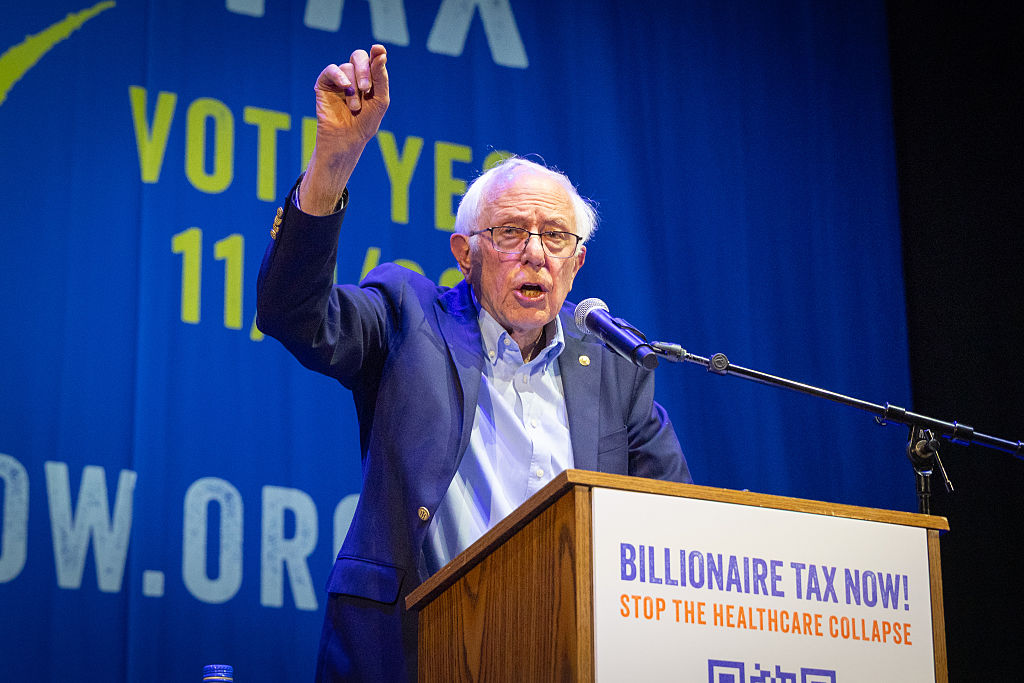
Three-quarters of the ultrarich’s true economic income will never be subject to income taxes, even very progressive ones. That’s why a California ballot initiative and a national bill from Bernie Sanders and Ro Khanna aim to tax wealth directly. (Jason Armond / Los Angeles Times via Getty Images)
Last year’s Republican tax bill, the self-styled Big Beautiful Bill, continued a decades‑long trend in which the top 1 percent have seen their tax burdens decline steadily from the high levels of the mid-twentieth century.
Since tax-cutting became the raison d’être of the Republican Party in the 1980s, the tax rate paid by the richest Americans has fallen sharply. According to research by economists Gabriel Zucman and Emmanuel Saez, during the postwar era — when top marginal income tax rates hovered between 70 percent and 91 percent, and the statutory rate on corporate profits ranged from 48 percent to 52 percent — the wealthiest households paid an effective rate of around 50 percent. Today, they pay about half that.
The further up the economic pyramid one goes, the more the effective tax rate tends to decline. In a paper published last summer, Zucman and Saez found that the total effective tax rate paid by the four hundred richest Americans now averages 23.8 percent — down from an already low 30 percent before the Trump tax cuts were first passed in 2018. In addition to lower marginal income tax rates, the drop in the corporate tax to its lowest level since before World War II cut the top four hundred’s tax payments by roughly one‑third.