The Rise of the Billionaire Lobby

California’s Proposition 40 would tax roughly 200 billionaires to fund health care for millions. Google cofounder Sergey Brin and friends have responded by inventing a new kind of pressure group: a lobby whose only client is the billionaire class itself.
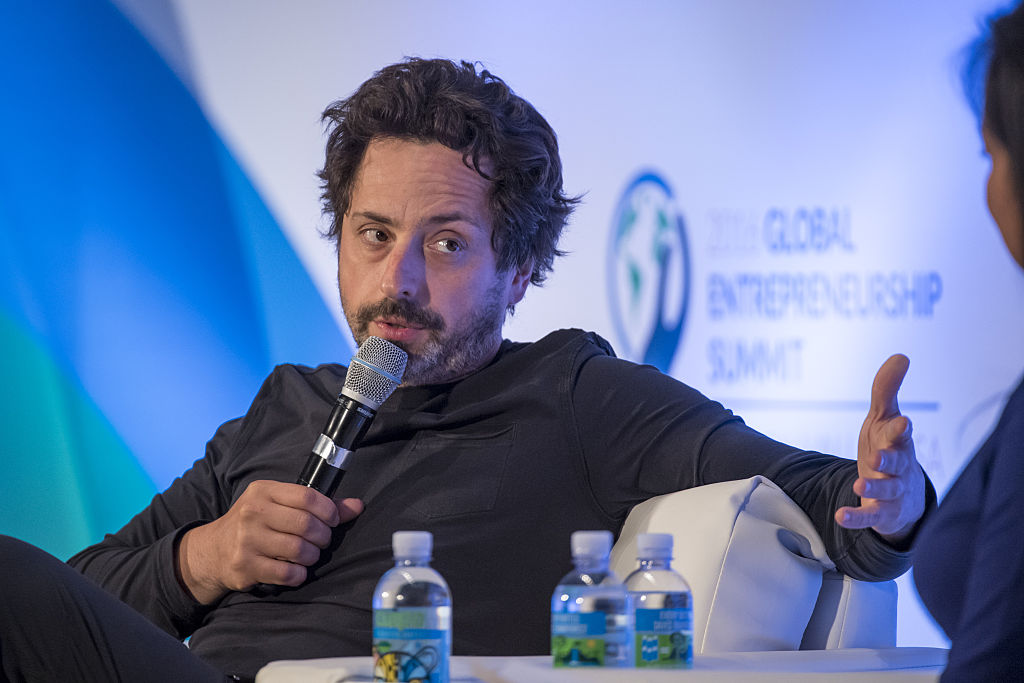
Sergey Brin, cofounder of Google, speaks during the 2016 Global Entrepreneurship Summit at Stanford University on June 24, 2016.

By putting a billionaire tax to a majority vote, California has forced the superrich into the public argument they most want to avoid: whether their fortunes, and their power over everyone else’s lives, should exist at all. (David Paul Morris / Bloomberg via Getty Images)


You’ve heard of the oil lobby, the tobacco lobby, the Israel lobby, the charter school lobby. Behind all of these are billionaires who benefit from the underlying industries or sectors, and whose corporations use their resources to lobby the government for favorable policies. Now, in reaction to a California ballot initiative for the world’s first billionaire tax, we have an innovation: a lobby for billionaires themselves.

Self-advocacy by wealthy people is nothing new, of course. But faced with the prospect of persuading voters to reject Proposition 40 — a temporary tax on roughly two hundred unfathomably rich individuals to fund health care for millions of people — billionaires must make the case to the public that forcing them to share a small amount of their fortunes would do more harm than good. At a time when half of American families can’t afford basic necessities, and 95 percent of the country understands that we’re in an affordability crisis, that’s going to be a tough sell.

A handful of billionaires led by Google cofounder Sergey Brin are out to prove that money can buy anything. They are pouring unprecedented resources into a political campaign to convince — or if that doesn’t work, to trick — California voters into prioritizing billionaires’ wealth over their own livelihoods.

When Billionaires Don’t Get Their Way

In October 2025, a labor union of California hospital and health care workers announced their intention to qualify a billionaire tax initiative for the state ballot. Written in collaboration with leading progressive economists like Emmanuel Saez and Robert Reich, it would levy a onetime 5 percent tax on the net assets of billionaires residing in California as of January 1, 2026. The tax would raise $100 billion in one shot, $90 billion of which would be used to fund Medi-Cal, the state’s Medicaid program, which is otherwise facing a dire fiscal cliff thanks to Donald Trump’s One Big Beautiful Bill. The remaining $10 billion would go into public education.

By December, before the campaign was even circulating petitions, billionaires like Peter Thiel, Sergey Brin, and Larry Page were rushing to move assets out of state. Whether or not they’d end up avoiding the tax (or actually stop spending time and money in California), they’d jump-start the narrative that taxing billionaires would chase them away — a story the billionaire lobby would lean heavily on.

A small cohort of billionaires began organizing to undermine the billionaire tax and keep it from reaching voters. They flooded the market for paid signature-gatherers (which all large initiative campaigns use even if volunteers do the bulk of the work) and allegedly even attempted to buy out a key canvassing firm. These efforts multiplied costs for the billionaire tax campaign, while the glut of clipboard-wielding canvassers on the streets made the job of billionaire tax volunteers significantly more difficult.

The billionaires also enlisted the help of Governor Gavin Newsom. Shortly after chatting with Brin about the matter at a crypto mogul’s holiday party, Newsom took a stand against the billionaire tax, vowing he’d defeat the campaign one way or another. Following the lead of Newsom and billionaire donors, a handful of liberal nonprofits and labor unions came out against the billionaire tax as well, joining forces with Republicans and business groups to defeat it — all without an alternative plan to fund Medi-Cal once Trump’s cuts kick in next year.

So far, all these efforts have come to naught. The billionaire tax qualified by submitting over 1.6 million signatures, more than double the required number, becoming Proposition 40 on November’s ballot. It’s since been endorsed by the California Federation of Labor Unions and a host of other labor groups, the California Nurses Association, and recently the state Democratic Party. Now Brin and his billionaires must convince a majority of voters that closing hospitals, clinics, and emergency rooms is preferable to taxing billionaires who won’t miss the money.

Behold a Billionaire Lobby

Brin’s anti–Proposition 40 organization is called Building a Better California. It’s the kind of innocuous and unmemorable name given to so many political nonprofits, in this case also seeming to hint at Joe Biden’s bygone Build Back Better infrastructure bill, perhaps to remind us of the billionaire lobby’s bipartisan nature. Building a Better California has already raised more than $150 million, most of it from Brin himself. The group recently dropped its first major advertisement buy, a working-class-centered commercial that also highlights Newsom’s opposition to Prop 40. The ad mentions neither the billionaires themselves nor the fact that Newsom is a longtime personal friend of Brin’s.

Brin’s group is expected to spend upward of $90 million on ads, an airtime spending advantage eleven thousand times that of Prop 40’s current budget. The group has already blanketed the terrain with mailers, sending colorful foldouts to every California household warning that the billionaire tax will destroy the state.

The purpose, it seems, is to spread confusion and misinformation, and most of all to divert attention from the jaw-dropping profits billionaires have been raking in as day-to-day life gets harder for most Americans. Brin alone, who theoretically would owe something like $9 billion should Prop 40 pass, grew his net wealth by around $100 billion in the past year alone.

Billionaires do themselves few favors when they pull back the curtain, giving the public a glimpse of their personalities and priorities. Take, for example, Peter Thiel’s obsession with the Antichrist and Elon Musk’s “transhumanist” desire to implant AI in your brain. Consequently, rather than appealing to the public outright, they know it’s smarter to throw the public off the scent, which is Building a Better California’s raison d’être.

The most rational argument against a billionaire tax is that the superrich will relocate to other states, as Thiel, Brin, and Page claim to have done (though some argue the moves were only on paper), depriving California of both the jobs and the taxes these individuals supposedly supply. But this idea has been roundly debunked, from academic studies to recent examples like the 2022 Massachusetts millionaire’s tax, after which the number of millionaires in the Bay State actually increased, with the tax generating billions more in revenue than anticipated.

The fact that the billionaire flight argument is still rolled out makes it clear that it is not an evidence-based statement but a threat, albeit a relatively empty one. Texas billionaire Mark Cuban voiced this directly when he said he’d refuse to invest in any California company if Prop 40 passes. The billionaires are essentially saying to the public: “You can’t tax us, otherwise we’ll leave, and then you won’t be able to tax us.” The inherent flimsiness of this argument enhances the need to keep fearmongering, sans credible evidence or details, that the tax will collapse the economy.

Evasions abound. Interviewed about Prop 40 on California Insider, Stanford economics professor Joshua Rauh began with the capital flight argument, but before long his commentary took a revealing turn. “There is a principle here of protecting private property,” he said. “It’s a very slippery slope, because who is actually wealthy?” The question was asked with an air of Socratic profundity, even though Prop 40 very clearly defines the taxable group as individuals who own more than $1 billion in assets. “From a philosophical standpoint,” Rauh went on, “would you want the same treatment as what we’re doing to billionaires?”

The billionaire lobby needs to convince voters to identify with them — despite the fact that, aside from cellular-level processes like the Krebs cycle, a working person has nothing in common with a tech oligarch worth $258 billion. But Rauh came dangerously close to saying the quiet part out loud. The very point of redistributive proposals like the billionaire tax is that everyone else wants some of the same treatment given to billionaires. Most people pay a much higher real percentage of taxes than billionaires do and yet still struggle to get by. Most people can’t afford to pursue their dreams and passions like billionaires can. And politicians don’t prioritize most people’s needs the way they do billionaires’.

Perhaps anticipating their persuasion falling short with the public, even with the money they’re planning to burn on it, the billionaire lobby has a backup plan. Brin personally donated over $100 million to qualify two poison pill initiatives, Propositions 41 and 42, which at a glance appear unrelated to Prop 40 but would nullify the billionaire tax if passed with a higher vote count. To the billionaire class, voters are nuisances to be interfaced with only when strictly necessary. If an unwanted issue can be kept off the ballot, all the better. If not, try to convince people it will spell destruction. Failing that, simply trick them into voting contrary to their own wishes.

A Mask-Off Moment For the Superrich

The billionaire lobby as it’s being constructed in California is a reaction to Proposition 40, but it’s also reflective of a moment when there are more billionaires in and around the White House than ever before. Billionaires have grown their personal wealth by orders of magnitude as daily life grinds down just about everyone else. The recent acceleration is part of a half-century-long class war offensive in which nearly $80 trillion has been siphoned from the working and middle classes to the superrich.

The California billionaire tax is an attempt to protect health care for millions and health care sector jobs for hundreds of thousands. It also says, in clear and concrete terms, that billionaires have taken too much, and that it’s time to use some of that wealth for the public good. And because it is being put up for a majority vote as a ballot initiative, the billionaires are being forced to have a public conversation about their wealth. The billionaire lobby’s purpose, then, is not only to defeat Prop 40 but to justify billionaires’ existence and their place as society’s ultimate decision-makers.