This Billionaire Is Calling Taxes Soviet Oppression

Sergey Brin’s family fled Soviet authoritarianism, an experience he’s now invoking to portray a proposed wealth tax as Soviet-style tyranny. Ironically this sort of rhetoric is more likely to bring the US closer to today’s Russia: an unabashed oligarchy.
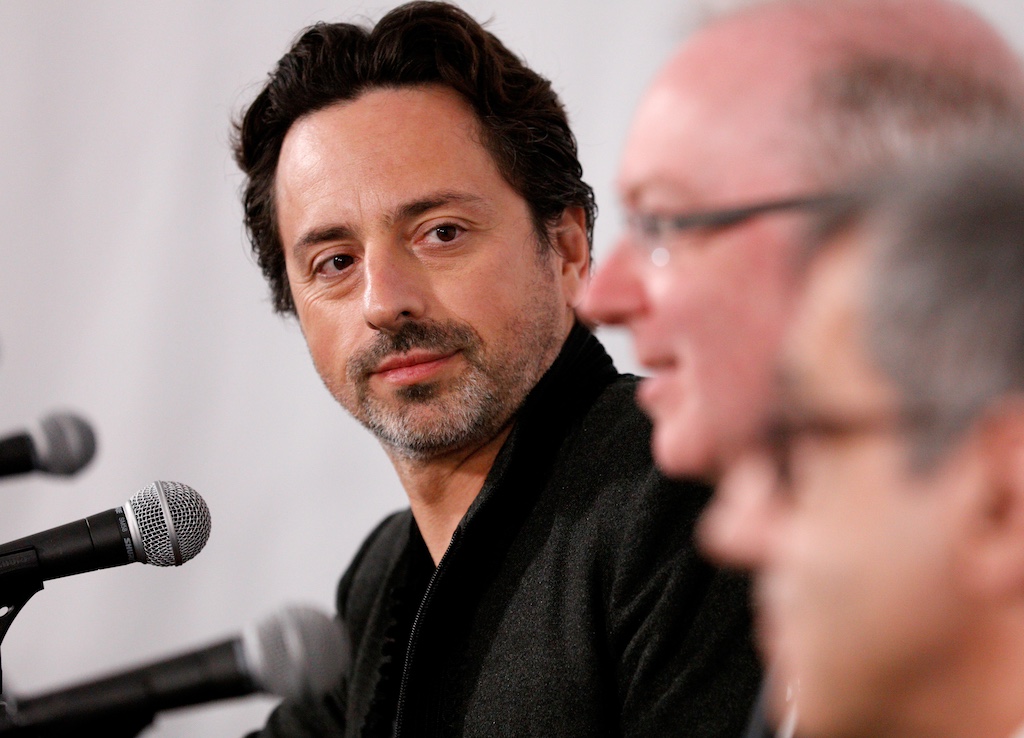
Sergey Brin in front of a microphone looking on as another person sitting next to him speaks.

Sergey Brin attends the 2019 Breakthrough Prize at NASA Ames Research Center on November 4, 2018. (Kimberly White / Getty Images for Breakthrough Prize)


Google cofounder Sergey Brin says he knows what socialism looks like. He was born in Moscow in 1973 and left the Soviet Union with his family at the age of six, an experience he recently invoked to attack California’s proposed tax on billionaires. “I fled socialism with my family in 1979,” he said, warning that he did not want California to “end up in the same place.” He has spent at least $57 million fighting the tax.

But Brin is looking at the wrong Russia.

The danger facing the United States is not that California will become the Soviet Union because one of the richest men on earth is asked to pay more tax. The danger is that America is drifting toward something far more familiar from Russia’s recent history: an authoritarian oligarchy in which vast private fortunes coexist with weakened democratic institutions and a corrupt political leader who rewards wealthy loyalists and punishes dissenters.

There are several other telling flaws in his logic. Brin casts himself as defending freedom from the overreach of the state. But a tax proposal debated and voted on by citizens is not authoritarianism. It is democracy. Brin is free to argue against it, criticize its design, or warn about its unintended consequences. But when one of the richest people on earth spends tens of millions to stop voters from imposing even modest obligations on extreme wealth, the real threat to freedom begins to look rather different. It is not “socialism,” as he claims, but an example of how in America today, wealth can bend democratic decision-making before the public has even spoken.

Public Assistance for Masters of the Universe

Brin’s complaint also rests on a commonplace myth about Silicon Valley: great fortunes are the natural reward for individual brilliance. This is the self-congratulatory story told by many of the Valley’s loudest libertarians, such as Marc Andreessen, Elon Musk, and Peter Thiel.

Google’s own history tells the real story. The company did not emerge from Brin and cofounder Larry Page’s genius but from government funding. Its foundational search technology was developed at Stanford, inside a public research ecosystem built over decades by federal funding, elite universities, skills-based immigration, and the thick institutional ecology of Silicon Valley. Stanford’s account of the search engine giant notes that the development of Google’s algorithms ran on computers “mainly provided” by the National Science Foundation and other governmental funders. One of Brin’s own papers even acknowledges this support.

This is not simply hypocrisy. It is denying the economic history of Silicon Valley: public institutions absorb the risk, workers and researchers build the infrastructure, and then private owners capture the upside. Public investment helped create the foundations of the modern technology economy: the internet, GPS, touchscreens, voice recognition, semiconductors, artificial intelligence research, biomedical tools, and countless other commercial breakthroughs. But after those investments are converted into private fortunes, the wealthy beneficiaries ignore the source, denounce taxation as theft, and cast themselves as victims of “socialism.”

This arrogance would be irritating enough on its own. But in the current political moment, it’s outright dangerous.

At the same moment Brin and his fellow tech bros are raging against billionaire taxation, they are supporting an administration that is actively attacking the research system that made companies like Google possible. The Trump administration has sought deep cuts to science agencies, canceled or threatened grants that no longer align with its political priorities, and moved to impose political and ideological screening on research funding.

Its proposed 2027 budget included major reductions across the scientific state, including cuts to the National Science Foundation, NASA science programs, the National Institute of Standards and Technology, the Department of Energy’s Office of Science, and the National Institutes of Health. Most dramatically, it recently dismissed the entire National Science Board, the independent body that oversees the National Science Foundation. Subjecting science to ideological loyalty tests is not how free societies govern knowledge. It is a hallmark of authoritarian systems, from Russia to China.

Mistaking Democratic Taxation for Despotism

That is why Brin’s “socialism” language is so tone-deaf and historically illiterate. It purposefully confuses democratic taxation that creates vast public benefit for tyranny — while also ignoring the authoritarian forces actively corroding the public foundations of American prosperity that Brin himself has benefited tremendously from. Taxes fund the institutions that make markets possible in the first place: not just America’s unparalleled universities and research system but also courts, schools, infrastructure, and social protections. It is the basic premise of a democratic political economy that Brin conveniently ignores.

A serious debate can be had about the design of a billionaire tax. There are legitimate questions over whether it should be administered by state or federal governments, how assets should be valued, and how revenue should be used. But calling it Soviet-style socialism is farcical. A billionaire tax does not abolish private property, nationalize Google, collectivize farms, seize factories, or place production under state planning.

Brin, of all people, should understand this. The lesson of the Soviet Union and Russia is not that billionaires should pay fewer taxes. It is that freedom depends on institutions strong enough to constrain concentrated power, whether that power sits in the state or in private fortunes large enough to bend democracy itself.

By attacking taxation as tyranny while aligning with forces that weaken universities, politicize science, and hollow out the public sphere, Brin is helping normalize the erosion of democratic life. His family fled one version of authoritarianism. He should not use that history to defend a politics in which the wealthy are trying to do the same through different means. If he really wants to honor the lesson of Russia, he should stop mistaking democracy for socialism — and stop helping turn America into an oligarchy.