Tax the Rich and Slash the Military Budget
The Left is often asked how it proposes to pay for programs like universal childcare, Medicare or All, and a green jobs program. Here’s how: tax wealth and capital the same way we already tax wages, and slash our bloated and destructive military budget.
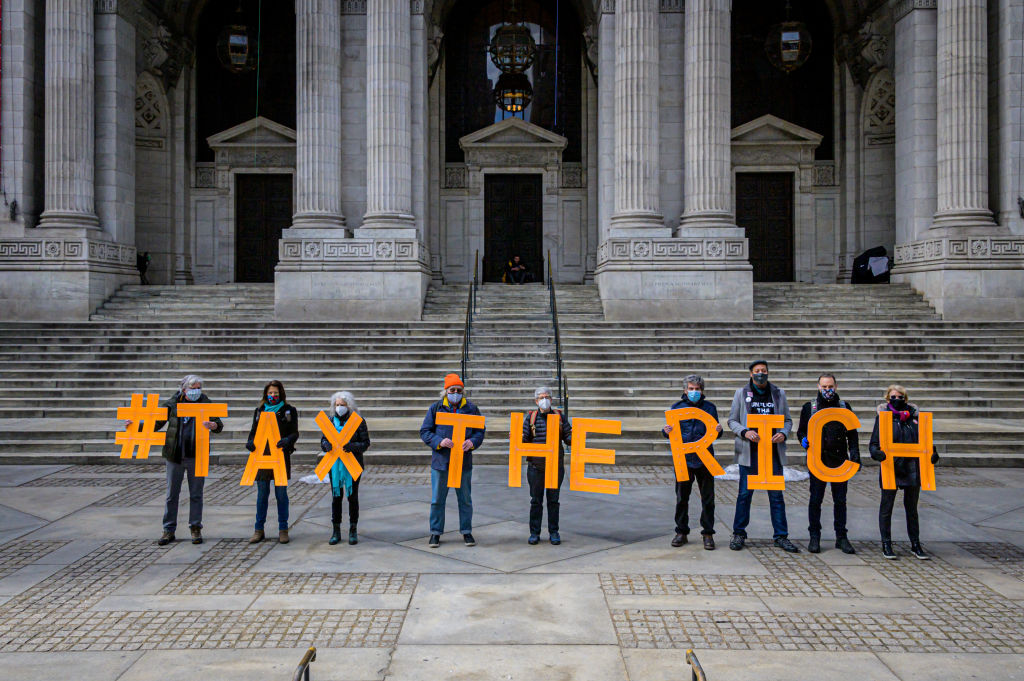
Funding a fairer economy and shrinking inequality aren’t competing goals: we can pay for universal childcare, social housing, and more by raising taxes on corporations and the wealthy. (Erik McGregor / LightRocket via Getty Images)
Here’s a question progressives get asked constantly: Fine, you want universal childcare, Medicare for All, and a green economy — but how are you going to pay for it? As part of the Game Changers project, economists Gerald Epstein and Aaron Medlin just answered it with a full accounting. They price out the thirty policies in the Game Changers initiative and show, line by line, how to fund them without adding a dime to the deficit — by taxing wealth and capital the same way the United States already taxes wages and by shrinking a military and immigration-enforcement budget that is both bloated and destructive. The burden of the increased taxes they propose would fall most heavily on those in the upper reaches of the top 1 percent.
The Underlying Problem
Let’s start with the scale of inequality that these thirty policy proposals are responding to. The top 1 percent of American households hold about a third of the nation’s wealth and roughly half of the stock market. In income terms, that same 1 percent takes home twice as much as the entire bottom half of the country combined. The effects ripple outward: stagnant demand drags down growth, upward mobility stalls, and a small elite ends up with political influence wildly out of proportion to its numbers. Meanwhile, ordinary families get squeezed from both sides — wages haven’t kept pace with productivity, and housing, health care, and childcare keep getting more expensive. At the same time, advances in AI threaten to make even stable jobs feel precarious.
Epstein and Medlin’s sharper point is that this isn’t just about how wealth is distributed — it’s about how the government pays its bills. The way Washington currently finances itself is a driver of inequality. Labor income gets taxed heavily and reliably; wealth and capital income get taxed lightly and unevenly. Whatever isn’t collected gets borrowed instead — mostly from the same wealthy households who weren’t taxed for it, who then collect interest on the loan, year after year. It’s a system that manufactures inequality twice: once by under-taxing fortunes, and then again by paying those fortunes interest on the resulting debt.