The Year of the Billionaire Tax

California billionaires are terrified of a proposal to save the state’s health care system by taking 5% of their wealth. They should be: a billionaire tax to fund health care is too simple, too necessary, and too plainly popular to be easily beaten.
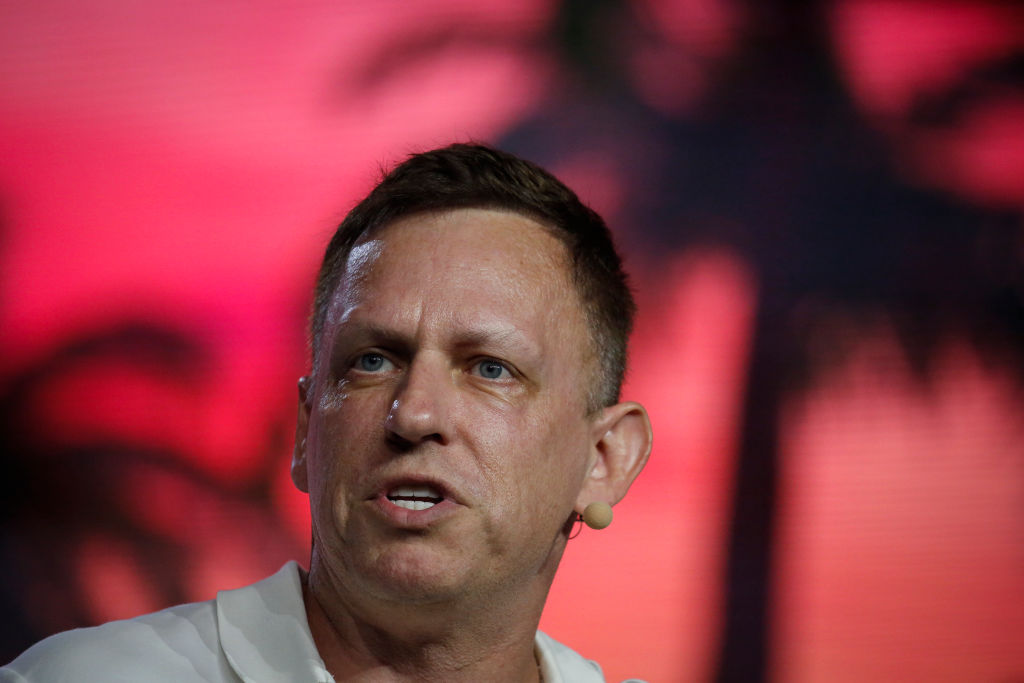
Peter Thiel has already made his largest campaign donation in years to fight the California Billionaire Tax. (Marco Bello / Getty Images)

In 2025 alone, the six richest men in the country (and world) became $476 billion richer. During that year, the Trump regime cut back Medicaid — the federal medical assistance program relied on by over seventy million Americans, including four out of ten children — in order to bankroll lowering taxes for the rich. The bulk of the cuts are expected to hit Medicaid programs following the 2026 midterm elections, and they will hit ordinary Americans hard. Donald Trump’s 2025 One Big Beautiful Bill Act will raise out-of-pocket costs dramatically and kick millions of people off insurance, many of them children, as well as nearly a third of young people between the ages of eighteen and twenty-four.

For California’s state medical assistance program, Medi-Cal, federal cuts are expected to drain $100 million over the next five years, potentially collapsing the state’s health care system. That means millions of people losing coverage and families needing to make hideous choices between food, housing, and medicine, as so many are already forced to. It means hospitals and clinics closing and tens of thousands of health care jobs evaporating. For a state already struggling with vast inequality and a homelessness crisis, it would have a catastrophic impact.

Fun fact: there are 214 billionaires residing in California worth a collective $2 trillion. If you carved out just 5 percent of that hoarded wealth for public use, you could fill the Medi-Cal gap and fund the state’s health care system. That’s precisely what a proposed ballot initiative aims to do.

The Policy for Our Populist Moment

The California Billionaire Tax Act is the first serious foray into a proper wealth tax. It was launched by United Healthcare Workers West (UHW), a local of the Service Employees International Union (SEIU) representing over 120,000 hospital and health care workers across the state, along with progressive economists Emmanuel Saez and Robert Reich.

For years, UHW has been at the forefront of experimenting with ballot initiatives as tools of working-class politics. California’s ballot initiative laws are among the country’s most permissive, frequently leading to a glut of initiatives on all kinds of topics. UHW has leaned into the relatively low bar for entry, using the initiative tool both to pass pro-worker legislation and to strengthen their local labor organizing.

The underlying tax policy is simple yet thorough. The measure would levy a onetime, 5 percent wealth tax on the 2025 net worth of the roughly two hundred individual billionaires living in California on January 1, 2026, making it retroactive. It is projected to raise $100 billion over five years, 90 percent of which would backfill Medi-Cal over the next five years, while the remainder would go to public schools and food assistance programs. While it would be the first wealth tax of its kind, the proposal is distinctly moderate in the context of the economic crisis Americans are facing — it even includes significant accommodations for the superrich, such as exempting real estate and up to $5 million worth of personal property.

As California Federation of Labor Unions president Lorena Gonzalez put it in an X post: “Well, some of us have been saying ‘Eat the Rich’ for a while now. But it’s pretty mainstream to say ‘Tax the billionaires’ now. And anyone who cares about maintaining a democracy will recognize why this is necessary.” Bernie Sanders, who has long advocated raising taxes on billionaires, eagerly endorsed the initiative, as did California congressman Ro Khanna.

On the other hand, most of the political establishment has been gearing up for class war. Days after the billionaire tax was launched, California governor Gavin Newsom was speaking at the New York Times DealBook Summit, where he mocked Silicon Valley for bending the knee to Trump. When moderator Andrew Sorkin asked what he thought about the billionaire tax, suddenly Newsom’s tone toward the superrich changed: “I want to be a big tent party,” he said. Despite not having an alternative plan to save Medi-Cal, Newsom made it clear he was “adamantly” against taxing the billionaires, adding, “it’s about addition, not subtraction.”

In the weeks that followed, Newsom vowed to defeat the initiative, claiming that the billionaire tax would force the rich out of state, thereby reducing the tax base and hurting California in the long run. Setting aside the long-term tax base argument for a moment, it is worth pausing to reflect on the governor’s initial response, because it gets at the heart of what’s wrong with institutional politics and what’s right about the billionaire tax initiative.

Newsom is a front-runner for the Democratic Party’s presidential nomination in 2028 (assuming there are still serious elections two years from now — but then again, knowing the Democrats, they’d spend millions fielding an unlikable candidate even if there weren’t). Strong majorities of Americans want to tax the rich to pay for basic social needs. According to one poll, nearly 95 percent of Democrats support increasing taxes on the wealthy. Yet here is the leading alternative to Trump saying out loud that he worries more about “adding” billionaires to his team than “subtracting” thousands of health care jobs and medical coverage for millions of Californians.

Confronted with these kinds of choices, as voters so often are, it is no wonder that working-class Americans are sick and tired of political charades. The California Billionaire Tax cuts through the noise and says loud and clear what so many have been thinking. The rich have taken too much; it’s time to take some of it back to pay for the things that regular people need to survive. And it does so with a concise, workable policy proposition aimed over the heads of the politicians, put directly to voters.

“Oh No, Billionaires, Don’t Go!”

The California Billionaire Tax campaign went public in October 2025. By December, Peter Thiel, Larry Page, and Sergey Brin were working to move their operations out of state, hoping to put enough pieces in place by New Year’s Day to exempt them from the tax — or at least to plant the seed of a narrative that could rally allies in the press and politics against the bill. Their haste betrayed their alarm. A Bloomberg headline put it succinctly: “Silicon Valley Rich Fear Union That Could Cost Them Billions.”

So, is there any truth to the idea that taxing billionaires will destroy the tax base? Capital flight is a common story in mainstream political thinking, wielded as a realist cudgel against any suggestion that economic policies could be made to favor people over profit. Notably, both the New York Times and New York Post have been particularly attentive to this story around the California Billionaire Tax proposal, no doubt with an eye on their local government. Sorkin’s initial question to Newsom at the DealBook Summit was specifically framed around what Zohran Mamdani’s administration might do. Once a billionaire wealth tax is out of the bag in a place like California, it won’t be easily stuffed back in anywhere.

First, it is important to remember that when there is capital flight or a capital strike in response to new taxes, these are not passive, inevitable consequences of changing cost-benefit analyses. Instead, they are the structural power that capitalists wield over the economy, attacks designed to weaken governments that are insufficiently subservient to capital.

In this case, however, only a couple of billionaires actually moved to leave California by the January 1 deadline (and their moves may prove to be no match for California’s strict residency requirements). There has never been a billionaire wealth tax before, but a great deal of evidence suggests that simply raising taxes on millionaires has often not resulted in capital flight. In 2022, Massachusetts voters passed a millionaire tax via ballot initiative; since then, the state actually gained millionaires, bringing in $2 billion more than anticipated. After all, part of the appeal of being rich is living where you want, and states with large high-net-worth populations are also usually desirable for many other reasons.

The biggest threat is not necessarily that California’s billionaires leave, but rather the money they could put into distorting the democratic process to defeat the initiative. The campaign is early in the signature-collection phase, and Thiel has already made his largest campaign donation in years to fight the billionaire tax.

Back in 2022, Uber, Lyft, DoorDash, Instacart, and Postmates spent $200 million to pass Proposition 22, a ballot initiative that barred their drivers from unionizing. To achieve that win, the campaign not only spent an unprecedented amount of money on a state ballot initiative but went so far as to threaten drivers and pressure riders into voting yes. The ballot initiative process isn’t much more insulated from manipulation by big money than the rest of the electoral system, and in many circumstances, vast sums of cash can shift public perception to the point that it makes or breaks popular votes.

Peter Thiel will surely try to argue that his maneuvers in December exempt him from the billionaire tax, should it pass. But California has especially strict residency requirements, and it may not work. His next best hope is stopping the initiative altogether, hence his donation. Its size means that he understands the political climate as well as UHW does. A billionaire tax to fund health care is too simple, too necessary, and too plainly popular to be easily beaten.

Therein lies the true power of the California Billionaire Tax. It puts its finger on the pulse of American populism, not by throwing up distractions or scapegoating the vulnerable, but by naming the problem and providing a real solution in terms that everyone can understand: a handful of billionaires have taken far too much from everyone else, and at the bare minimum the public needs to take some of it back to pay for things like medical care, education, and food.

Tax the Superrich

When Elon Musk became the world’s richest person in 2022, the president of the World Food Programme (WFP) publicly congratulated him on his $221 billion, noting that about 2 percent of that could save forty-two million people from starvation. Musk tweeted back a challenge — if WFP could explain how $6 billion could solve world hunger, he’d fund it. Two weeks later, WFP published a plan, and Musk never replied.

Musk did donate $5.7 billion that year — to the Musk Foundation, which largely works with his own projects and businesses. That kind of philanthropic loophole is common practice among the world’s wealthiest as a means to avoid paying taxes. The Musk–WFP episode made news headlines and was widely shared on social media, mainly to ridicule Musk. It also begs a simple solution: stop asking billionaires to pitch in and just tax them.

If they had either the scruples or sense, California’s billionaires would volunteer the money to stabilize Medi-Cal. Billionaires across the world brought in record profits last year; even if they paid the proposed 5 percent tax all up front, which they aren’t required to, the loss would set billionaires’ net worths back to where they were sometime last spring. Imagine the goodwill it would create — not only are these people wildly successful, the public would think admiringly, but they truly care about their fellow Californians. All talk of taxing billionaires would quiet down, replaced by a trust in benevolent billionaires. But that kind of self-interested magnanimity is not on the table, for this is a moment of reckless short-termism and unprecedented greed.

The California Billionaire Tax puts the billionaires around the country on the defensive. In doing so, it captures the essence of our political moment. Does it achieve in one shot the kind of redistribution that could tip the scales in working people’s favor? Of course not. But it could forestall disaster for millions of people while setting the terms of the national economic debate a lot closer to where they should be. Neither Gavin Newsom nor Peter Thiel are wrong to fear that the billionaire tax could spread, while Bernie Sanders is right that it should: this is a policy to emulate.