Britain’s Troubles, Ireland’s Pain
Fifty years ago, British troops were deployed on Northern Irish streets in the name of keeping the peace. But their actions simply worsened the crisis — fueling a conflict that still casts a shadow today.
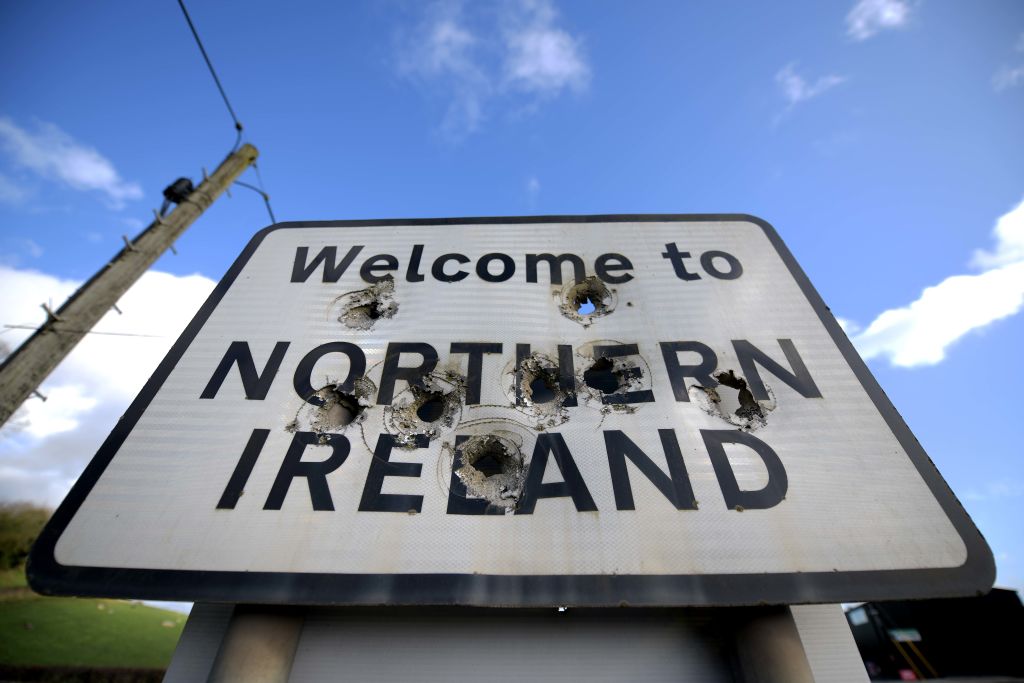
A Welcome to Northern Ireland sign is marked with bullet holes on February 17, 2019 in Ballyconnell, Ireland. (Charles McQuillan / Getty Images)
August 14 marks fifty years since British troops were first deployed on the streets of Northern Ireland. Initially seen as a short-term venture, Operation Banner became one of the British Army’s longest and most lethal engagements since 1945. Tens of thousands of soldiers went on to serve in the region over the next three decades. There were 722 soldiers killed, the vast majority by the Irish Republican Army (IRA) — more than the casualty rate for British forces occupying Afghanistan and Iraq.
In total, more than 3,500 people died before the “Troubles” came to an uneasy halt in the late 1990s. Adjusted for population, that would be the equivalent of a conflict in the United States killing 600,000 people and injuring almost 9 million.
The Brexit crisis has exposed some of the fault lines running through the postwar settlement in Northern Ireland. The legacy of the Troubles still casts a long shadow over the region. However, predictions that Brexit will lead to a fresh round of conflict are often based on a superficial, impressionistic view of Northern Irish politics. If we’re going to judge the likelihood of another war, we need to understand how the last one started.