Labour and the Fight for a United Ireland
The border controversy is just the latest episode in the epic of Britain’s political establishment and their willful ignorance of Ireland.
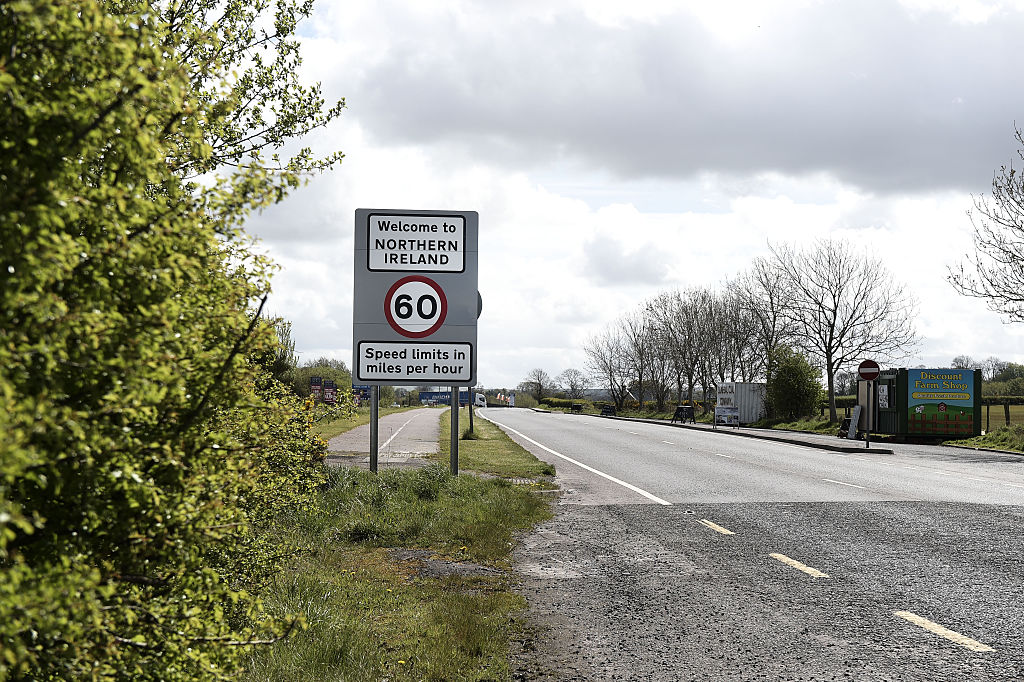
A welcome to Northern Ireland road sign signalling the crossing of the border between north and south can be seen on May 4, 2016 in Ireland.Charles McQuillan / Getty
A recent YouGov poll found that 38 percent of people in Britain reckoned they knew “a fair amount” or “a great deal” about the issues surrounding the Irish border (also known as the British border in Ireland). 49 percent reported themselves to be “not very much” or “not at all” informed.
In itself, the fact that one person in two had to plead ignorance about the most important factor behind the current Brexit impasse is a woeful indictment of the British media — not to mention the country’s school system. But there’s also reason to doubt that 38 percent figure. While just 29 percent of women reckoned they knew at least a fair amount about the border question, 47 percent of men had the same faith in their grasp of the subject. That probably says more about the gendered distribution of self-confidence than it does about the uneven spread of historical education.
We shouldn’t expect the right-wing, hard-Brexit media to help public understanding. But some of the anti-Brexit liberals who claim to be deeply concerned about peace in Northern Ireland are just as guilty of using Irish history as an exotic foil for their own parochial agendas. Take, for example, Gavin Esler, the former BBC journalist who ran as a candidate for Change UK in this year’s European elections. On the eve of the vote, Esler claimed in the Evening Standard to have “often asked prominent members of the IRA what they made of [Jeremy] Corbyn” during his time as a reporter in Northern Ireland: “They repeatedly used the same phrase: he was, they said, a ‘useful dupe.’”