Mariátegui’s Heroic Socialism
José Carlos Mariátegui was Latin America's most original Marxist. And his work is strikingly relevant for confronting the continent's right-wing backlash today.
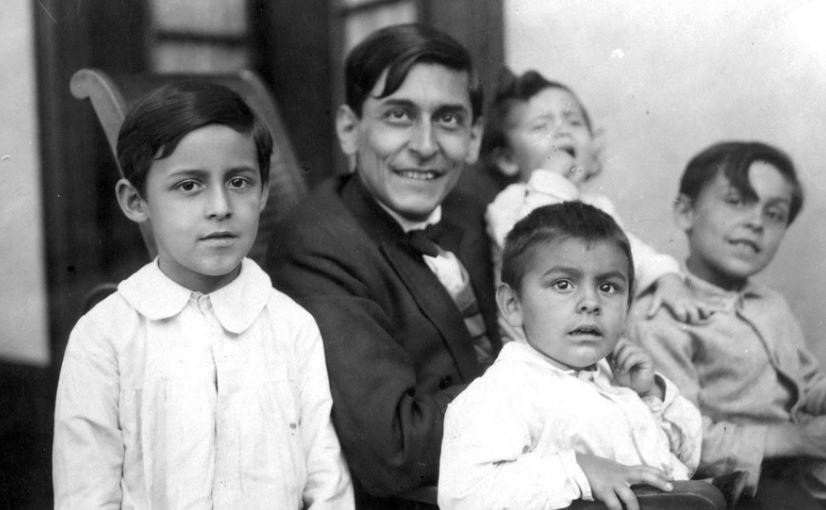
José Carlos Mariátegui with his children a few months before his death.
Latin America’s first, most original Marxist thinker was born on June 14, 1894, in Peru’s southern department of Moquegua. José Carlos Mariátegui (1894–1930) is remembered today as the rarest of radical intellectuals, Latin American or otherwise: a figure whose influence not only endures across the long arc of twentieth-century political thought but evolves apace with the most varied historical contexts. From dependency theory to liberation theology, from decolonial theory to the Latin American Pink Tide, the history of the region’s radical thought can, and has been, read as an extended exegesis on the writings of José Carlos Mariátegui, or “the Amauta,” as he was known to comrades.
There’s no better entrée to Mariátegui than his Seven Interpretive Essays on Peruvian Reality, an unprecedented work of Latin American Marxist theory whose ninetieth anniversary this year is the perfect excuse to revisit his legacy.
The Amauta’s life was brief as it was intense. A life-threatening illness kept the young Peruvian bedridden for large parts of his youth and deprived him of almost any formal schooling. Nevertheless, those years of convalescence saw Mariátegui developing into a formidable autodidact with a forceful, some might say melancholic, disposition. Still only a teenager, Mariátegui began writing in Lima’s periodicals as a means to support his family, and by 1918, inspired by the far-flung Russian Revolution and a local strike wave, he declared himself a committed socialist.