Zohran’s Mayoralty Can Advance the Cause of Socialism

Beyond his marquee campaign promises on affordability, Mayor Zohran Mamdani and the movement behind him have the opportunity to expand popular participation in politics and push for reforms that democratize economic life.
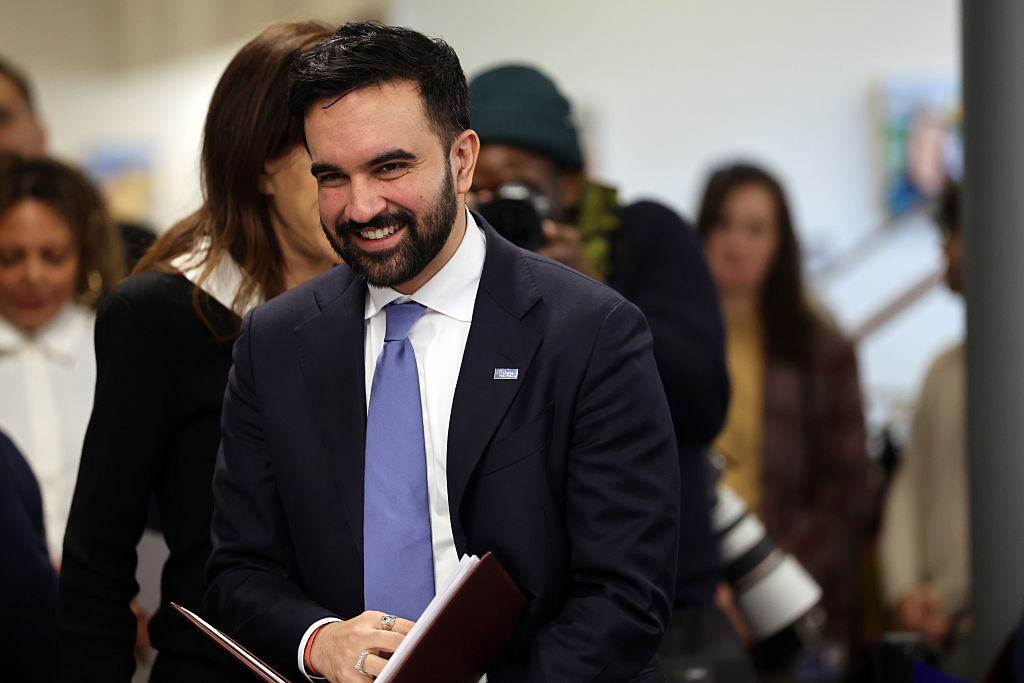
For Zohran Mamdani’s mayoralty to succeed, delivering on affordability won’t be enough. He needs to engage working-class New Yorkers in politics in a new. (Spencer Platt / Getty Images)

Today, what to many on the Left felt like a pipe dream less than a year ago is becoming a reality: democratic socialist Zohran Mamdani is being sworn in as mayor of New York City.

It will not be an easy job. The political and fiscal challenges the mayor will confront in enacting his affordability agenda are numerous. To raise taxes to fund promised programs like universal childcare and free buses, Zohran will need the support of the state legislature in Albany as well as Governor Kathy Hochul, who has said she is opposed to tax increases (though she has softened on this question recently). He will have to deal with budgetary constraints created by outgoing mayor Eric Adams. He will have to deal with fierce opposition from the political establishment as well as New York’s economic elite. And despite his apparent success in charming Donald Trump, it is possible and even likely that the president will revert to his prior stance of hostility and attempt to undermine Mamdani through federal funding cuts or repressive police action.

Overcoming these obstacles to govern effectively and pass his agenda, or even just substantial chunks of it, will be a tall order in its own right. And Zohran making good on his campaign promises is extremely important for building popular support for progressive economic policy and the socialist movement. Working to enact that agenda therefore ought to be a priority of the Mamdani administration as well as of the broader left.

Building Popular Power

Still, it would be a mistake for socialists to focus too narrowly on Zohran’s redistributive policy agenda, however transformative it would be. For one thing, to pass those policies and to defend them against counterattacks, and to build and maintain support for Mamdani and his movement in the near and longer term, the Left needs to organize and activate ordinary people on a wide scale. By organizing and mobilizing people en masse between elections, Zohran and his supporters can exert pressure on political opponents and help inoculate the public against hostile media narratives and potential elite-driven economic disruption.

Thankfully, New York City’s left is taking this lesson to heart. The local chapter of the Democratic Socialists of America (NYC-DSA) is actively strategizing about how to support Mamdani’s agenda and “co-govern” with the mayor; it has launched a “Tax the Rich” campaign to build pressure for Zohran’s proposed tax raises in Albany. And Our Time, an organization that grew out of Zohran’s mayoral campaign, is attempting to keep the campaign’s volunteers active and mobilize them in support of the affordability agenda.

But enacting Zohran’s platform isn’t the only reason to care about popular participation in politics, and our vision of what such participation looks like shouldn’t be limited to legislative door-knocking campaigns. “At its core,” Gabriel Hetland and Bhaskar Sunkara wrote recently,

democratic socialism is a project to build working-class power through popular struggle, both to win immediate reforms and to lay the basis for a society beyond capitalism. It aims not only to improve living standards through redistribution and public provision, but to increase the capacity of workers to collectively shape the decisions that shape their lives.

To that end, they argue that as mayor Zohran should spearhead the creation of popular assemblies at the neighborhood and borough level throughout New York City, where ordinary people could come together to deliberate and make decisions to help shape the mayor’s approach to governing. These assemblies would empower working-class people to collectively determine the future of their city, potentially building enthusiasm for Zohran’s project as well as expanding democracy to more spheres of social life.

Power on the Shop Floor

Historically, socialists have placed great importance on building a base in the labor movement: both because workers have a strong interest in establishing a postcapitalist society and because workers’ position at the point of production gives them collective structural power over the economy. Building a socialist future, in New York City and beyond, will likely require the support of a large, militant, and democratic labor movement. It is for that reason that socialists are attempting to join, build, and reinvigorate the labor movement through organizations like the Rank and File Project, the Emergency Workplace Organizing Committee, and DSA’s Workers Organizing Workers program.

Yet labor unions in the United States have been on the decline for decades, with union density now around 10 percent. The situation is slightly less bleak in New York, where nearly 20 percent of workers belong to unions. But union density is falling in New York City too, and unions here have largely been complacent when it comes to new organizing and fighting for good contracts. (This complacency was reflected in most unions’ support for Andrew Cuomo during the Democratic primary.)

Mayor Mamdani, however, will have many opportunities to help strengthen labor in New York City. That includes using his bully pulpit to educate workers about their right to organize and agitating in support of unionization drives and contract fights (as he has done recently, supporting New York nurses’ contract demands and joining Starbucks workers’ picket line), supporting new city council legislation to make it easier for Amazon drivers to unionize, and fortifying and expanding existing city agencies tasked with enforcing worker protections.

But pro-union policy is only part of the battle in building a stronger labor movement, as labor scholar Eric Blanc has pointed out. Another major issue is that union leaderships are mostly risk-averse and “lethargic.” So “while it’s important for the Mamdani administration to work closely with union officials around contract fights and potential unionization campaigns,” Blanc writes, “he shouldn’t hesitate to use his bully pulpit and policies to encourage organizing that does not wait for permission from lethargic institutions.”

In other words, Mayor Mamdani can be on the lookout for opportunities to support and empower rank-and-file organizing and contract fights even when they do not have the support of, or face opposition from, union officialdom.

Our Time Is Now

Zohran’s mayoralty will hopefully see the introduction of badly needed and transformative redistributive policies like free childcare. But socialists can and should hope for more than that. By building a mass movement for affordability, creating spaces for ordinary people to participate meaningfully in city government, and empowering workers on the shop floor, the Mamdani administration can point the way toward a broader democratization of economic life.

Those efforts can in turn support more ambitious policy initiatives that bring more of society’s productive assets under public and worker control and that weaken capital’s economic and political power. Mamdani and his allies in the state legislature could support the creation of a public bank and reap massive city savings by transferring the city’s deposits there. Zohran can also support the development of cooperative and public enterprise and social housing to reduce New York’s fiscal dependence on the wealthy; his plans for building more public housing and for piloting city-owned grocery stores are moves in this direction.

Some on the Left have been quick to criticize Mamdani for perceived failures or betrayals, for instance, for not adopting stronger rhetoric on Israel, or for making tactical realpolitik concessions to the center, like keeping on Jessica Tisch as police commissioner to avoid an unwinnable showdown with the New York Police Department. Our critical energies are better spent less on matters of symbolism or second-guessing every tactical decision and more on trying to form a holistic assessment of how the administration is moving the needle in favor of working people — and joining in the project of building up the forces that aid that needle-moving.

But that is not just a matter of enacting the affordability agenda. We should also ask whether and how the Mamdani administration can help build working-class power and expand democracy. If it succeeds in doing so, that will not just be a victory for affordability or progressive governance. It will show average people around the city, country, and world that a more just, democratic, and better world is possible, and that democratic socialism is the vision for achieving that world.