Brazil on the Brink
Lula's persecution represents a narrowing of Brazilian democracy with far-reaching consequences.
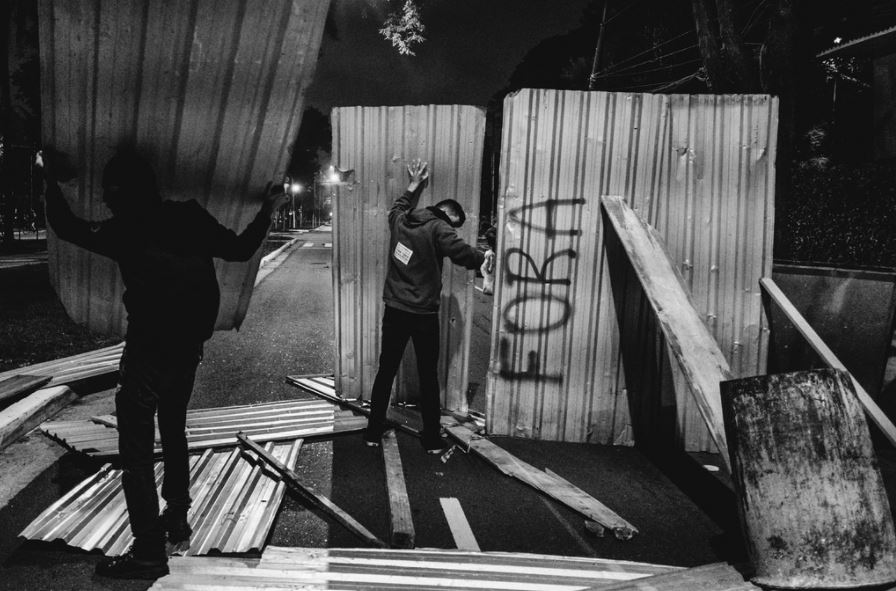
Protesters during a general strike in São Paulo, Brazil on April 28, 2017. Mídia NINJA / Flickr
On January 24, 2018, former Brazilian president Luiz Inácio Lula da Silva was sentenced to twelve years in prison by a court of appeal that maintained Judge’s Moro’s decision from last year. The judgment was an extremely controversial one, the evidence deemed fragile and formally inadequate by a number of Brazilian law experts and international observers. It has been in fact a highly unusual judicial process: politically charged from the beginning, with judges acting publicly as moral crusaders against corruption, and moving impressively fast by Brazilian standards, indicating that the case has been fast-tracked for political reasons.
All this reinforces the impression, strong in large sections of the Brazilian population, that the purpose of the process was to prevent Lula from running as a presidential candidate in October. Lula still leads every poll, with Jair Bolsonaro, the authoritarian pro-dictatorship right-wing candidate, running in a distant second place. If Lula is, in fact, barred from running, it is easy to see it as another chapter of an extended soft coup, following the impeachment of Dilma Rousseff — dubbed a parliamentary coup by its critics — in August 2016.
In that case, the aim was to remove the Workers’ Party (PT) from government, applying a radicalized neoliberal agenda that PT itself was not willing to pursue — at least not at the pace and intensity demanded by capital. Dilma Rousseff’s impeachment, unconstitutional and divisive as it was, has perhaps struck a fatal blow to Brazil’s relatively young democracy. Preventing Lula from running and sending him to jail, on such a weak and disputed basis, is even more serious. It escalates the institutional crisis and jeopardizes the political arrangement that has prevailed for the last three decades.