Policing Black Radicalism
The US state has long sought to monitor and undermine black resistance movements.
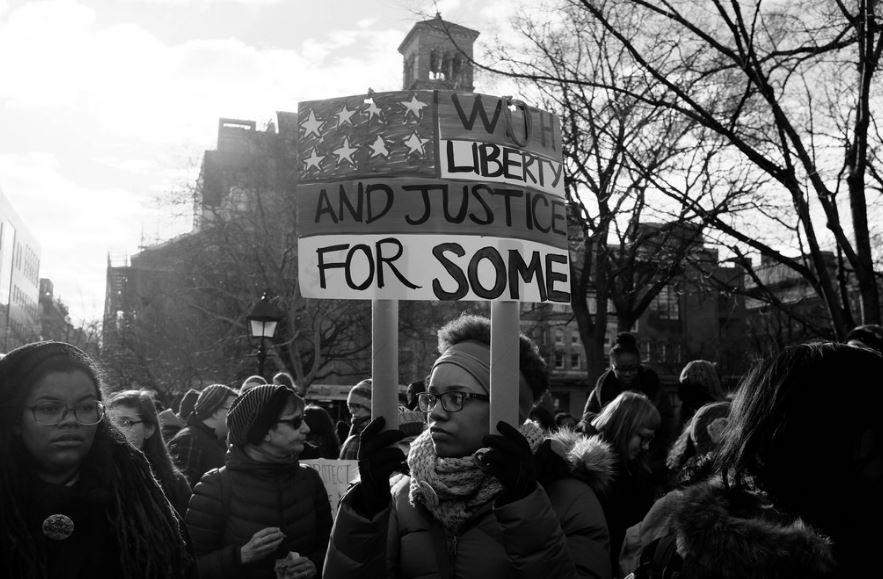
The Millions March in New York, New York on December 13, 2014. B.C. Lorio / Flickr
The most prominent image of Micah Johnson comes from his Facebook: arrayed in a purple patterned dashiki, fist raised, expression somber. Reports after the Dallas shooting heavily emphasized the symbolism in the photograph. The dashiki and fist — widespread artifacts of black power, love, and resistance — became suggestions of motive, red flags that should have brought on police scrutiny sooner.
These symbols, summoned as indicators of motive for Johnson’s murder of five Dallas police officers, telegraph something important about our regime of policing: whiteness is the baseline for lawfulness; and assertions of political and cultural identity in communities of color are abnormal, suspect deviations.
That is how Johnson’s military training and participation in the US war in Afghanistan become less explanatory of his shooting than his dashiki.