West Point’s Honor Code Taught the Military to Lie
General Douglas MacArthur was determined that West Point graduates would uphold the most romantic definitions of honor. Instead his credo fostered a culture of duplicity and institutional subterfuge, leading to real-world military fiascos.
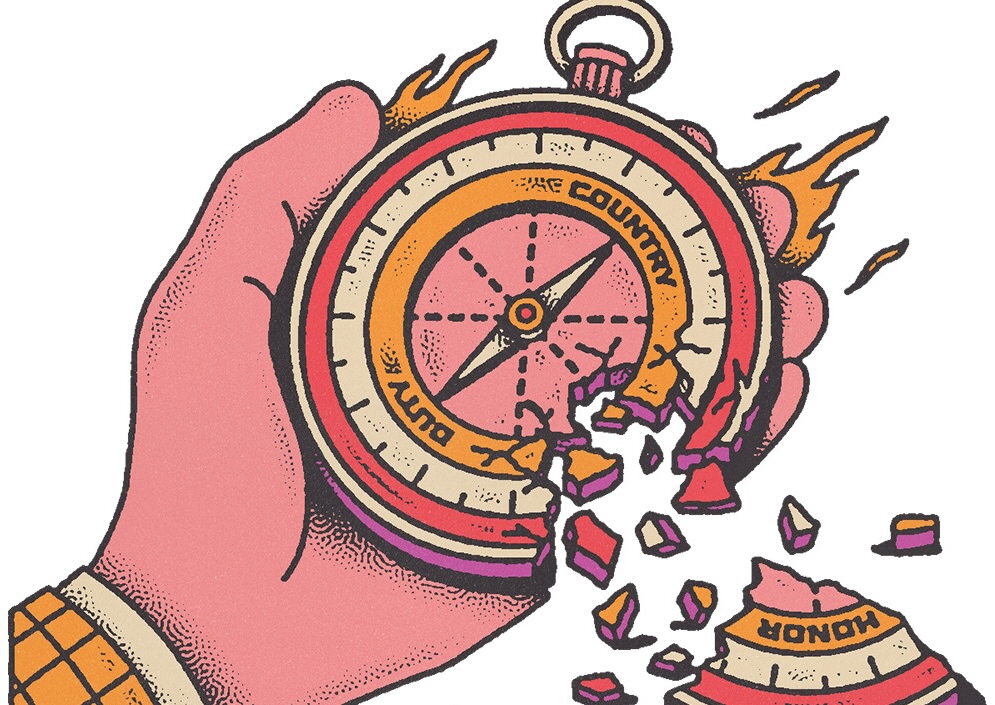
West Point’s honor code promised integrity. Jasper Craven traces how it produced secrecy, hazing, and a military culture better at protecting itself than telling the truth. (Rakhmat Jaka Perkasa / Jacobin)
On May 12, 1962, General Douglas MacArthur strode into the West Point mess hall and delivered a stirring farewell address before an audience of more than two thousand cadets. It had been just over a year since another famed former general, President Dwight D. Eisenhower, had famously delivered his own closing warning about industry’s capture of the Pentagon. Now MacArthur seemed worried about the corruption of the American soldier’s soul — the death of honor itself.
Honor was everything to MacArthur. Between 1919 and 1922, as West Point superintendent, he built cadet life around the academy’s hallowed motto, “Duty, Honor, Country.” He further instituted a cadet honor code and attendant honor boards, a quasi-judicial trial system meant to discourage unethical behavior and promote a culture of leadership among fledgling recruits.
While honor is traditionally equated with honesty, integrity, and accountability, it doesn’t require any of these things by definition. Rather, it denotes fidelity to an institution’s core rites and standards, making it a fragile, fungible concept whose strictures shift depending on who is giving the orders.