How Will We Get People to Work Under Socialism?
Under capitalism, people are often motivated to work by the threat of destitution. A feasible and desirable socialist system has to get people to work while respecting individual freedom.
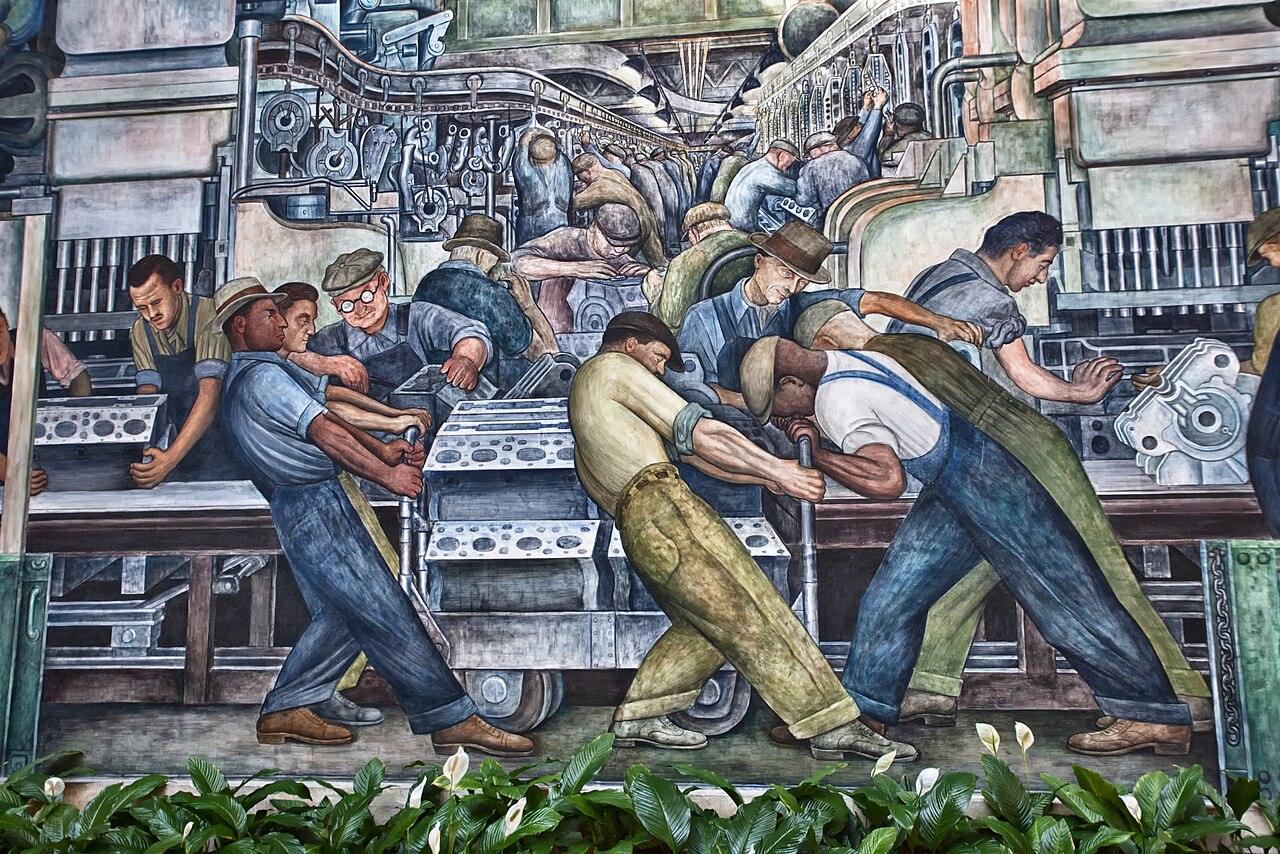
Socialists have to grapple with what work will look like after capitalism — without relying on far-fetched assumptions about human psychology or the liberating effects of technology. (Carptrash / CC BY-SA 3.0)
- Interview by
- Neal Meyer
With Zohran Mamdani’s rise to the mayoralty of the United States’s largest city and democratic socialists winning more and more elected offices at all levels across the country, there is renewed interest in and excitement about the idea of democratic socialism. But among socialists, there is little consensus on the content of that ideal. Many on the Left describe socialism in terms of greater income redistribution or an expanded public sector, with some socialists even describing their vision as compatible with capitalism.
But we are seeing a growing number of proposals for feasible postcapitalist futures, distinct from both the social democratic welfare states and the state socialist systems of the twentieth century. In a recent article for Catalyst: A Journal of Theory and Strategy, Jacobin editor Nick French tackles the question of how a just postcapitalist society could get people to work. French argues that a just socialist society would recognize and enforce a general obligation to work while also protecting individual freedom; he argues that labor markets are the best institutional means to achieving these goals.
Jacobin contributor Neal Meyer recently sat down with French to talk through the case for labor markets, including arguments against “postwork” visions of life after capitalism and appeals to moral motives, and what sort of economic inequalities might persist under socialism. You can listen to their conversation here. This transcript has been edited for length and clarity.
The Duty to Work
Neal Meyer
We could start by talking about why you think people should work. It sounds like a preposterous question, but it actually is an important intervention. You and I are basically the same age; when we were in our twenties, the anarchist, libertarian left milieu was quite popular. I remember, as I was getting politicized, people talking about how people should have the right to be lazy, that we want to live in a postwork future. But in your article, you’re making an argument that people should work — that people have a duty to work.
Nick French
I’ll have something to say about these advocates of postwork socialism or postwork communism. But first, on the idea of a duty to work: it’s very intuitive to most people. In order to produce the things that we need, individually and collectively, we have to engage in labor. That often means doing things we don’t want to do, or spending our time such that we would rather be doing something else. It means exercising our capacities for particular ends to serve social needs. This is a kind of burden, a very significant burden, that is placed on people.
My argument is trying to develop the intuitive idea that there are duties of fairness to other members of society. Insofar as you’re able to work — you’re not significantly disabled, or we can make accommodations for people to work — we all have an obligation to contribute to society through our labor.
Maybe the more interesting questions about a duty to work are about how we might implement it. Also, people have a lot of objections to the idea that there’s a duty to work based around very valid worries, or even revulsion, at the way the work ethic is deployed in our capitalist society, which is brutally unjust. Oftentimes the reason people are not working is not because they don’t want to, or because they’re just lazy. It’s because they’re actually excluded from the labor market; there’s not enough work to go around. Or they’re not working because they haven’t been provided with adequate educational opportunities, or they’re sick or disabled, and so on.
I’m not trying to make the argument that, in our actually existing society, people who aren’t working are immoral, or that we ought to shame people who are unemployed. Rather, the argument is: if we were to construct a fair society, where people have basic economic security, where everybody has equal access to high-quality education, where there are institutions that really do give everybody who can work a shot at getting a good job that pays well and treats them with dignity — in that ideal situation, we should expect everyone to contribute.
Neal Meyer
This is very much a conversation about the obligations we would have to each other in a future society, not our current society.
Nick French
Right. This is an argument in what philosophers sometimes call “ideal theory,” about the principles that would apply in a society that is basically just.
Freedom of Occupational Choice
Neal Meyer
Part of the conception of justice you advance regarding labor is this idea that people should have a right to choose their occupation. Can you say more about that? And then, what’s the contrast you’re trying to draw here? Are there societies where that’s not the case?
Nick French
This is another idea that is intuitive to most people, but it’s important to articulate it clearly. Because when we start trying to come up with a detailed vision of what socialism might look like, it’s important as a North Star to block certain authoritarian possibilities.
The idea of freedom of occupational choice is based in the notion that individual freedom, or autonomy, is an overriding value. This is something that’s common ground between the Marxist socialist tradition and the left-liberal philosophical tradition, chiefly as represented by people like John Stuart Mill and John Rawls, who I draw on a lot in this article. It’s very important that we be able to choose how we spend our time and how we exercise and develop our productive, creative, and intellectual capacities.
Part of how we do that is with the traditional civil liberties: freedom of speech, freedom of movement, freedom of assembly, freedom of association, the kinds of things people are familiar with from the US Bill of Rights. But freedom of choice of occupation is really important too.
In formulating an idea of how I want to live my life, I’m crucially thinking about how I want to contribute to society. What sort of productive capacities do I want to develop and exercise? Do I want to be an engineer or a mechanic, an artist or a writer? These are fundamental to people’s identities in contemporary society. And that’s a kind of liberty that we should hope a socialist society would not just preserve but maximize.
When it comes to the potential contrasts or alternatives I have in mind, I’m thinking of societies where people are either prevented from taking on certain occupations or forced to take on certain jobs or occupations in an extensive way, where there’s not much room for people to set their own course in life. There’s formal legal discrimination, when employers discriminate openly on the basis of race or sex. That obviously is a major violation of freedom of choice of occupation. Again, most people in contemporary society would already reject such discrimination; the right to freedom of choice of occupation protects against it.
But it also protects against a vision of a more coercive or Stalinist-style socialism, where you have a central authority assigning people to certain jobs because that’s where they are supposedly most needed. We should guard against that as well.
Neal Meyer
You mention in the article that that’s not even how state socialist societies actually handled the labor obligation problem. People had the freedom to choose their occupations to a large extent.
Nick French
That’s right. These societies did have what were called “parasite laws.” The constitutions of the Soviet Union and other state socialist countries enshrined a duty to work, and they had laws on the books that would criminalize not working. If you refused to work at all, you would be punished. But in general, they didn’t tell people they had to work in certain occupations. This is more of a theoretical possibility than something that was actually implemented on a large scale.
Can a Basic Income Free Us From Work?
Neal Meyer
Your article sets up these goals and then walks through a couple of models that you disagree with before presenting your desired option. The first idea you criticize is what people will probably be most familiar with, which is the universal basic income (UBI).
Nick French
To be clear, I’m not arguing against UBI as a policy. I think something like a UBI would be an important part of a socialist institutional framework. What I’m arguing against is the idea that a UBI could free people from the need to work, which is how postwork theorists present it. People might still work out of the goodness of their hearts, or intrinsic joy in certain activities, but there would be no compulsion, or no duty or necessity, to work.
Here I’m drawing on Alex Gourevitch, who had a great piece in Catalyst a few years ago arguing against this postwork idea at length. His basic thought is, if nobody’s working because everybody is just taking a UBI, then no one is producing the goods that people would buy with that UBI. So it’s a fantasy that the UBI could free people from having to work.
One argument that some postwork thinkers emphasize is that automation can come in, the robots can come in, to do all the work that was formerly done by humans. That’s how we could have no one working and everyone just taking the UBI, because the machines are producing everything we need. I started working on this project before AI was at the top of everyone’s minds, and maybe now a lot of people think it’s more plausible that at least a lot of kinds of work are going to be automated out of existence in the foreseeable future.
But I still think — and here again I agree with Gourevitch — that we’re always going to have some people working. Crucially, we’re always going to need people to make decisions and oversee the machines that are doing labor. I also think there are lots of kinds of work, especially care work or “connective labor,” that seem to essentially involve human-to-human interaction: whether that’s health care or childcare or therapy, or the kind of interactions that we take for granted at, say, a bar or a restaurant or a coffee shop.
Now, under capitalism a lot of those workers are horribly exploited and not paid enough. But I don’t think an ideal socialist society would get rid of service work. I think those kinds of jobs can and should persist under socialism; workers should just be paid better and treated better and have more say over their working conditions. So even if AI and automation get rid of a lot of work, I think there will still always be work to do, and we need to have an idea of how we’re going to divvy that up and get people to do it.
Can Moral Motivation Do the Job?
Neal Meyer
The second argument you take on is this idea that moral motivation can be a substitute: that people should be exhorted to work harder to do these jobs, and that in a socialist society, these kinds of moral appeals will be sufficient to get people to do the necessary work. What problems do you see here?
Nick French
A natural thought is that, if people have to work and we accept that there’s a duty to work, in a socialist society, we don’t want people to be motivated either by the threat of force or by “the dull compulsion of economic relations,” as Karl Marx put it — i.e., if you don’t work, you’ll starve. Instead, the idea is that we all come together, we democratically decide what work has to get done, and then, because we all see the value in contributing to the social project, we’ll all be motivated by the goodness of our hearts or our sense of duty to do what needs to be done.
My view is this seems to imply a very big change in human motivation from what we see today, and that there’s an unrealistically altruistic or moralistic conception of human nature and human psychology at play. Again, to go back to the original argument for a duty to work: work is often something that we don’t want to do. It imposes significant burdens. In choosing to work, I’m often choosing to do something where, if I’m left to my own devices, I would rather do something else.
The idea that you’re going to rely on these kinds of intrinsic moral motivations across a whole national or international economy, bringing together people who have no connection to each other, or maybe even have historical conflicts with one another — that you’re going to get them all to work out of a sense of duty — is just unrealistic.
I’m not saying it’s impossible. But in setting forward a vision of socialism, we shouldn’t rely on assuming unrealistic changes in human psychology. We should present something that is feasible given human beings as we know and understand them.
Coercion and Compulsion
Neal Meyer
Before we move on to your positive argument, I wanted to go back to the topic of coercion. You’re not saying that all attempts to get people to work are necessarily immoral or wrong or unjust. There are cases where some amount of compulsion may be necessary.
Nick French
I want to separate two issues here. The first goes into the positive case I make for labor markets. We can imagine a just society in which people are motivated in part by monetary gain. There’s not necessarily anything wrong with trying to realize compliance with a duty to work by having a basic income or some social minimum that everyone is guaranteed, but then saying, “Hey, if you want to make more than that, you do have to work.” Then you have different jobs that are paying people different amounts of money. But I’ll come back to that.
The second issue is there might be certain jobs that, for various reasons, not enough people want to do, even if you pay them a lot of extra money — either because they require rare skills or talents, or because they involve a lot of drudgery, or because they’re especially hazardous. The classic example is sanitation workers. Maybe the robots will solve that one day; they don’t seem to be doing it yet. But until then, we’re still going to need people to collect and sort garbage. It’s drudgery, and it’s very hazardous work. We don’t want the market to assign that to whoever happens to want to take those jobs.
I’m very sympathetic to recent proposals by folks like Lucas Stanczyk and Jan Kandiyali that people might be forced to take these jobs. I’m especially sympathetic to this idea when it comes to a kind of limited rotation. Maybe everyone should have a year or two of national civil service where they have to work as a sanitation worker, or they have to work cleaning hospitals, or something like that — work that involves more drudgery or is more hazardous. That’s a way of fairly sharing more extreme burdens of work. It’s also a way of inculcating a sense of civic duty and solidarity, that we’re all in this together.
Where I would draw the line is when it gets to a point that you’re really interfering with freedom of choice of occupation, where you’re forcing people to work for long periods of time, where you’re no longer allowing them to autonomously set the direction of their lives and decide how they want to develop and exercise their creative capacities.
There’s some room for a kind of coercive work regime in the kind of socialism I’m envisioning, but it has to be limited so that we are still respecting freedom of choice of occupation.
Neal Meyer
One of the interesting questions, when thinking about the difference between a socialist society and a capitalist society, is: What kinds of jobs do people need to be incentivized to take? Under capitalism, the assumption is people need to be incentivized to take jobs that require a lot of training, or a lot of autonomy and decision-making, or a lot of organizational skills or people skills. These are jobs that, in a socialist society where there was greater equality of opportunity, a lot of people would have the opportunity to get and would want to take. You can think of a whole list of occupations today that people get paid a lot of money to do that have their own intrinsic rewards besides the financial incentive.
Under socialism, I would imagine those jobs are not going to pay as much, because a lot of people are going to be willing and able to do them. The jobs that are going to pay a lot are going to be the ones that require a lot of physical labor, that put you at risk, that are onerous or undesirable for many reasons. There’s going to be a kind of flipping of what needs to be incentivized in a transition from capitalism to socialism.
Nick French
That’s how I’m thinking about it. If you have an institutional framework in which firms are collectively owned, where people have equal opportunity in terms of access to high-quality education, and society is really trying to make jobs available to everyone, and also you do have a generous welfare-state social minimum, so that when people are unemployed it’s not an absolute personal disaster — they have that extra leverage. They can walk away from jobs; they’re not desperate to take the first offer that comes into view. We wouldn’t expect as many people to be forced by the market into the more difficult jobs.
The Case for Labor Markets
Neal Meyer
We’ve cleared out some of the alternative ideas about how to handle the work problem in a better society. You come to the conclusion that labor markets have a really important role to play. Could you define what you mean by “labor markets,” and why you think they’re an important part of a vision for socialism?
Nick French
By a labor market, I mean that you have firms — whether they’re public sector firms or cooperatives that are owned or managed by their workers — where people can be attracted to those positions by the offer of a certain wage, and they take those jobs because they offer a certain wage. There can be pay differentials to attract people to jobs and firms where they’re most needed. This fits into a broader vision of market socialism.
The core case for this is provided by the moral arguments we discussed, and also the case against the alternatives. Because there is a duty to work — people need to work, and they ought to do so, and we ought to share that burden equally — and because people’s freedom of choice of occupation should be respected, the best way of realizing both of those principles is a labor market.
To clarify what I have in mind: Again, this is a socialist society. Obviously, we all have a lot of objections to the way labor markets work under capitalism, which we’ve already talked about. People are forced to take certain jobs because if they don’t, they’ll be on the street; they’ll starve. Also, when they take those jobs, they’re submitting to the tyranny of bosses who are not accountable to them in any way, who are following their own unconstrained profit imperatives. Again, I’m imagining a situation in which the relevant employers are democratically worker-managed firms, or public sector enterprises that are democratically accountable to the public, where workers have strong collective bargaining rights and protections.
Once you have those things in place, and once you have a strong social minimum provided by a welfare state — decommodified health care, free, high-quality education, and something like a universal basic income, so even if you’re not working, you have money to spend on clothes, shoes, and so on — I don’t think there’s any objection per se to a labor market.
Now, there are practical concerns that you might have about how this all works that I talk about in the paper. One of them is: If you have a really generous welfare state, or a generous basic income, what’s the incentive going to be for people to actually take jobs? We already said we’re not legally forcing people to take certain jobs. If that mute compulsion of economic relations isn’t there, is this really feasible?
I point to the evidence from really existing, generous social democracies, in the Nordic countries for example, that seems to show that having more robust welfare states doesn’t negatively affect people’s participation in the labor force or economic growth. So we have good reason to be optimistic that having a very generous social minimum is compatible with a dynamic labor market.
That said, I would acknowledge that if you make that social minimum too generous, then at some point you will lose that motivation that’s provided by offering people extra pay to take certain jobs. There’s always going to be some sort of balancing act. Probably, in our ideal socialist society, we’re going to have to do some trial and error to find where exactly that ideal social minimum lies. But I’m confident that we can ensure everyone a dignified existence.
Neal Meyer
People might ask, well, what about those people who can’t work, for whatever reason, or who retire? Presumably they would be offered a higher-than-minimum income.
Nick French
Yeah. Again, actually existing welfare states point in the direction of what a socialist society should do too, which is: if people have disabilities that prevent them from working, or if they’ve reached retirement age, they get an additional stipend above and beyond what they would get if they were working age and not judged to be disabled. That’s a fair way of managing things: to think that there’s some population we define as working age and capable that receives that basic dignified social minimum but also experiences an economic pressure to join the labor force.
Neal Meyer
One thing that might be worth also clarifying here is that, in your version of a labor market for socialism, we’re not talking about the kind of society we live in, where there’s no limit to the amount of income that someone can accumulate. The idea is to have a much more egalitarian wage structure.
Nick French
Definitely. My thought is that you want to allow inequalities insofar as that is necessary for providing everyone the means to flourish. I’m not coming down hard on an exact view about what the most just income distribution looks like. But I do think something like John Rawls’s difference principle is really compelling: you allow for inequalities in wealth and income insofar as those benefit the worst off.
Now, the kinds of inequalities that would exist because of pay differentials to get people to take certain jobs are going to be way smaller than exist under capitalism. There are a few reasons for that. One is that I do think people will be more intrinsically motivated in a society that is more solidaristic and where there’s more equality of opportunity. And when more of the economy is under public ownership and less driven by the profit motive, when you have collective bargaining regimes in place that guarantee workers certain minimums and sectoral benchmarks, as we’ve seen in places like Sweden, you’re not going to see runaway pay for executives. We’ve gotten rid of the capitalist class, so you don’t have capitalists hoarding wealth as individuals. So, there’s still inequality, but way less.