The Iran War’s Most Embarrassingly Wrong Pundits

Being disastrously wrong about virtually every aspect of the Iran war has not stopped an army of hawkish pundits from continuing to try to shape US policy on the matter. From Ben Shapiro to Mark Dubowitz, here are eight of the wrongest.
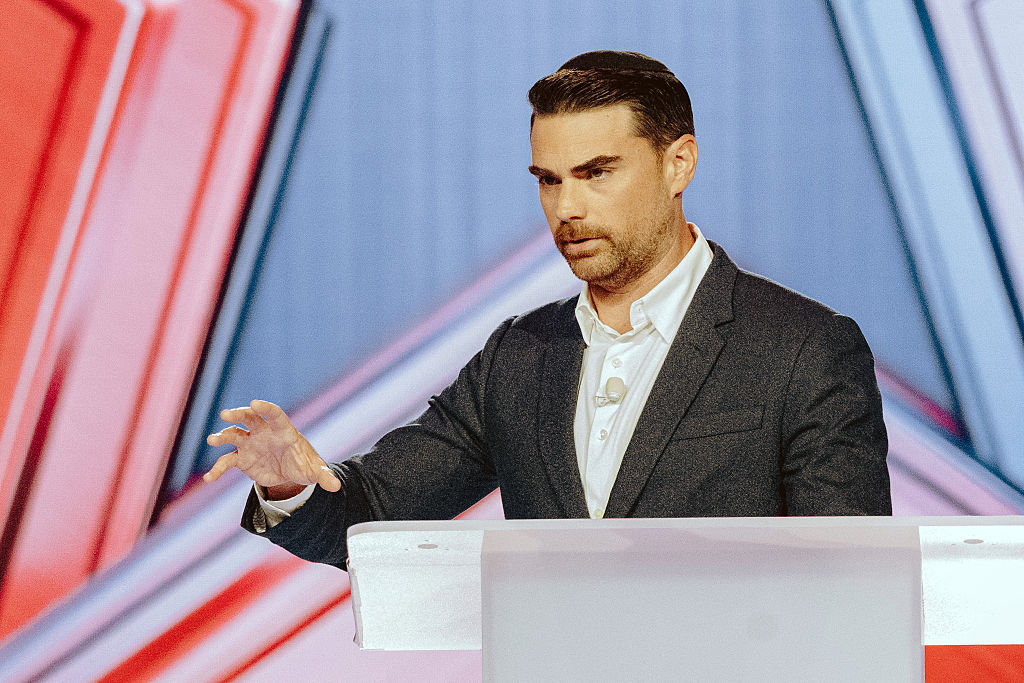
US conservative political commentator Ben Shapiro speaks during Turning Point's annual AmericaFest conference in remembrance of late right-wing political activist Charlie Kirk, in Phoenix, Arizona on December 18, 2025.

The Iran war had plenty of cheerleaders in the media. We shouldn’t forget how spectacularly, destructively wrong they were. (Olivier Touron / AFP)


Everyone at this point understands Donald Trump’s war with Iran is a debacle. The nearly two-thirds of Americans who think the United States didn’t win the war understand it. Trump himself, spinning and lashing out as he tries to get out of it, seems to understand it. And the clown car of war hawks who have been whining and moaning about the deal he’s struck to make this exit understand it.

The war failed at its goal of regime change, instead keeping the regime in place with new, more hard-line leadership. The economically vital Strait of Hormuz, open for all the decades before this, has been shut for months and is now under active Iranian control for the foreseeable future. Iran’s military capability has not been nearly as degraded as the White House claims and is being reconstituted faster than US officials expected. Iran still has its nuclear material, and it is extremely unlikely the US military will or even can extract it by force. Meanwhile, US military assets and munition stockpiles have been destroyed and heavily depleted.

It’s a pretty sorry state of affairs, especially for the aforementioned clown car of pro-war pundits who had relentlessly, confidently talked the country — and in some cases, the president — into war by asserting that we would get, or even are getting, the polar opposite of all of these outcomes. Not humbled by being embarrassingly wrong about all of it, they’re now still trying to give advice to the president they duped and push him back into war. Here are eight of the wrongest.

8. Max Abrahms

In a conservative movement that’s become markedly more skeptical of US intervention, Max Abrahms, a terrorism expert at Northeastern University, has become a prominent and especially belligerent pro-war attack dog against those on the Right he sees as too skeptical of war — or, as he scurrilously labels them, the “Iran lobby.”

Abrahms was really feeling himself after Trump’s attacks on Iran last year, which largely avoided spiraling into disaster only because of how limited US involvement was and because of Iran’s restraint at the time. He decided to take this as confirmation that the risks were nonexistent and that anybody who had ever warned about them was wrong, kicking off a months-long victory lap aimed at war skeptics.

Max Abrahms
Max Abrahms, a terrorism expert at Northeastern University, has become a prominent and especially belligerent pro-war attack dog against those on the Right he sees as too skeptical of war. (Elekes Andor)

In a debate over the war at last year’s National Conservatism conference, Abrahms assailed mostly conservative critics of the war as “empirical embarrassments” and mocked their “delusions,” which included the idea that a war with Iran would become a regime change war, that it would necessitate US ground troops, that it would be a protracted conflict, that it would kill Americans and hurt the US economy, and that it would deal a mortal blow to Trump’s presidency.

Remember, the idea was that this all meant to be laughably wrong.

Once Trump launched the second war this year, Abrahms proceeded to be constantly, embarrassingly wrong about it. He repeatedly predicted that civil war would break out in Iran. He insisted again and again that Iran had become more isolated than ever and that the war would be a “gift for the Abraham Accords” — meaning, it would bring the other Gulf states into closer alliance with Israel — and great for Israel’s standing in the region. (This did not happen). He maintained that Iran was “losing badly,” and that its military capability was being “smashed” and “crushed” and reduced to “nothing.”

By April, Abrahms was arguing that the “the United States has enhanced its military credibility through this war,” which was “actually going very well,” because “Iranian power measured in terms of its military capability, which is a standard way to look at power, is way, way down.” It was an odd argument to make, since Iran’s leverage by this point lay firmly in its closure of the Strait of Hormuz. But Abrahms assured us that Trump would “find a way to open it up,” before repeatedly suggesting the solution was regime change — the very thing he had earlier mocked war skeptics for warning would happen.

Abrahms concluded that the problem wasn’t that his cherished war was an idiotic idea but rather the US commentators who criticized it, and he announced that “American constituencies” had made it “almost impossible to win a war.” His poor track record is, ironically, probably best summed up with his own words, aimed at the antiwar side when he was flying high last year: “The most embarrassingly incorrect spasm of foreign policy punditry . . . that American society has ever seen.”

7. John Podhoretz and 6. Eli Lake

These two are really a package deal, owing to recent clips that went viral of the two lifelong Iran war enthusiasts losing it over the June ceasefire agreement.

“I honestly don’t know if it could be worse,” wailed John Podhoretz, longtime neocon editor of the conservative Commentary magazine. “[Trump] has choked. He has chickened out!”

“What’s going on?” squawked his fellow neocon Eli Lake, a Commentary contributor and columnist for both Bloomberg and Bari Weiss’s Free Press. “What’s going on?”

Eli Lake (left) and John Podhoretz (right).

Their dismay was a far cry from the war’s start a few months earlier, when Podhoretz had remarked that “things are looking pretty good” and that China would be “the big loser” of the war, and when Lake had deemed Iran a “paper tiger” that was “collapsing before our eyes” and claimed that the war had not been the “cascade of horribles” previous presidents had been told it would be.

Like Abrahms, Podhoretz had gotten himself to this point thanks to the “success” of the 2025 war. When that was launched, he announced how “thrilled” he was that his ninety-five-year-old, equally war-hungry father Norman, intellectual father of neoconservatism who had handed the Commentary editorship to his son, was “with us still to see this unfold” — because for the Podhoretzes, seeing a Middle Eastern country get bombed is the kind of beautiful milestone you live for that for any other family would be the birth of a grandchild. As he would later say about the famously brutal Iran-Iraq War, “I’m here for the corpses at the end.” Strange family.

In any case, as a result, Podhoretz spent the next eight months saying that Iran was now “about 1,000 times weaker,” and that it “had nothing in the tank but some Houthi missiles,” so it was time to “stop fearing shadows.” Once this year’s war kicked off with the mass slaughter of scores of schoolgirls by US missiles, Podhoretz simply asserted that “Iran blew up its own school” (it didn’t), before later maintaining that “there is no such thing as ‘civilian infrastructure’” in Iran — meaning everything and everyone was fair game to be bombed.

While Podhoretz contended that Iran was completely toothless, Lake’s approach was to blast out constant fake news about how the regime was about to collapse. It was “in a death spiral” and the “mullahs are teetering,” he said before the war, comparing their control of Iran to the Soviets’ control of Hungary in 1956 — only, he claimed, far weaker. Once the war was in full swing, Lake repeatedly announced the imminent end of the regime and claimed that the war was helping Iran’s opposition, when in reality it had neutered it.

5. Bret Stephens

You will be shocked to learn that the man who only three years ago penned a column titled “Twenty Years On, I Don’t Regret Supporting the Iraq War” also thought this latest Middle East misadventure was a good idea. Having pushed for and fantasized about war with Iran for years — as far back as 2018, Bret Stephens had predicted an Israel-Iran war “by the end of the year” — the New York Times’ resident neocon threw himself into spinning it into a triumph.

One day in, with the smoke at the girls’ elementary school in Minab barely clear, Stephens proclaimed that the United States and Iran were “garnering broad support” within Iran, before adding two more predictions that would prove humiliatingly inaccurate: that the Iranian regime, even if it survived, would be “under heavy internal pressure to modify its behavior as a pragmatic concession to reality,” like in Venezuela; and that Hezbollah had not joined the war out of fear, showing that “Israel and the Arab world are safer when Iran is weaker.” (Hezbollah began attacking northern Israel a day later, drawing Israel into a costly war there.)

“We are ending a forever war, not starting one,” Stephens claimed four days later, calling the war “spectacularly successful” before outlining the various possibilities ahead and how likely they were. Luckily — according to the made-up statistics Stephens pulled from thin air — there was only a 20 percent chance, he said, that the regime would hold on (though even then it would merely be “hobbling along until an uprising” later on).

Bret Stephens
Having pushed for and fantasized about war with Iran for years, Bret Stephens threw himself into spinning it into a triumph. (Grant Wickes)

On the other hand, he explained, there was a 30 percent chance of regime change and a whopping 50 percent chance of “regime modification” — meaning Iran’s leaders decide to agree to all of Trump’s demands and not just end their nuclear program but their support for regional allies like Hezbollah too, as well as dismantling their missile program to boot. It’s fun to play pretend.

Ironically, the “worst-case scenario” Stephens laid out in that interview — that “the bombing does not achieve its goals” while Iran retains “the capability to reconstitute [its nuclear] program” — was the closest to, and actually far less severe than, what has actually ended up happening. Didn’t matter. It was “flabbergasting” that critics of the war would say the war might “end badly for America” in terms of economic blowback and more, Stephens griped eleven days later. “The War Is Going Better Than You Think,” blasted the headline of one of his columns by the end of the month.

But Stephens could only keep up this Baghdad Bob routine for so long. Earlier this month, as Trump struck the ceasefire agreement that many on the pro-war side labeled a capitulation, Stephens finally declared the war a “debacle.”

But don’t worry: he doesn’t regret this one either.

It wasn’t a debacle “because the war, for all its costs or errors of execution, was a mistake,” he explained. It was because ending it was “an act of geopolitical self-harm that will haunt our standing in the world for years to come.”

4. Ben Shapiro

Like many on this list, Ben Shapiro used to be the most virulent of virulent Trump critics — “I will never vote for Donald Trump,” he declared in 2016 — only to transform into a groveling suck-up as soon as it became clear he might deliver this war. “President Trump is a uniquely testosterone-filled president; there’s no question about this,” he rhapsodized as the US bombing started. “That is a dude with cojones, for sure.”

You can practically see the deterioration of the war’s fortunes in the engagement-baiting headers on Shapiro’s YouTube channel. While the first few days saw titles like “Iran Admits Defeat?,” “We Are Winning,” “Iran Is Done For,” and “This Is How We DESTROYED Iran,” by the middle of March, those had soon turned to titles like, “They Are LYING To You About Iran,” “This Is NOT A Forever War,” and “Yes, We’re STILL Winning.” By mid-June, after a long absence of Iran-related content on his channel, we were getting, “Trump Declares End To War, WTH Is Going On?”

It was a rude awakening for Shapiro, whose outlet the Daily Wire had not long ago been a digital media empire that routinely dominated mainstream outlets like the Times and CNN on Facebook. He had used that perch to squeak out a variety of overly rosy predictions in the months prior to the war.

Ben Shapiro
You can practically see the deterioration of the war’s fortunes in the engagement-baiting headers on Ben Shapiro’s YouTube channel. (Gage Skidmore)

“Iran is collapsing,” he claimed in January, before playing down concerns about Iranian retaliation against the United States: that its leaders were “just bluffing” and didn’t have the “kind of overwhelming capacity” to kill thousands of Americans. And besides, if they ever struck back, “that would be the end of the regime bar none, end of story. So they’re, they’re, they’re not gonna do that in any serious way.” In reality, US casualties are now at more than four hundred after two months of fighting, even after large-scale evacuations.

But the worthless predictions really kicked into gear once the war actually started. It would only last “days or weeks” and was “not going to be a monthslong thing,” he assured listeners on March 4, updating the schedule to not “more than another two weeks” one week later. “The United States has lost no materiel over Iran,” Shapiro said on March 3, by which point the United States had lost literally billions of dollars worth of military equipment.

He also maintained, just as incorrectly, that “even just the defenestration of the ayatollah, by the way, means regime change definitionally, means regime change has already been effectuated,” and that it “will have massive repercussions. Massive repercussions.” Of course, taking out the very top figure in Iran’s power structure did nothing of the sort, so five days later, Shapiro told his viewers that “we’re not actually really talking about regime change” but rather “regime destruction or replacement.”

In any case, he said repeatedly on the same show, the “only failure” and the worst outcome that could come from the war, “is the re-enshrinement of the ayatollahs,” even playing a clip of Trump saying that very thing. “It is also the most unlikely thing here,” Shapiro asserted. Needless to say, the fact that that has been the exact outcome of the war presented a problem.

So Shapiro resorted either to a series of lame excuses, like that there “is a delay period” that means regime change will come much later, or that “people keep assuming” that regime change was the goal (where would they have gotten that idea?) when it never was, and you can “achieve all of the goals of the war” without it.

Otherwise Shapiro just blithely asserted, in the face of all evidence to the contrary, that Iran was “on its last legs,” in fatal disarray that meant this time it might finally fall to a popular uprising, and repeatedly said that Iran’s ballistic missile capacity had been almost entirely destroyed, a claim he made as early as March 3 and at least as late as April 17, neither of which times it was remotely true.

But it was Iran’s closure of the Strait of Hormuz that Shapiro seemed to really have difficulty with. On March 3, he said Iran’s leaders had “one play, and one play only” to respond to US attacks, which was to rely on antiwar commentators to undermine them. On March 10, he mocked people “freaking out about the Strait of Hormuz and the supposed Iranian threat to global oil supply.” On March 13, he waved away fears that Iran would close it, because it would “trigger an overwhelming American response.” On March 19, he stressed that “any prolonged disruption there would invite overwhelming international response.”

By the end of the month, during which the strait had been effectively closed the entire time, Shapiro declared the idea that Trump would end the war without opening it and leaving it in Iranian control “unlikely to happen” and “highly unlikely.” On April 17, when Iran tentatively agreed to reopen the strait in return for US concessions but kept it effectively closed for the next two months, Shapiro painted it as a “victory” for Trump, who had forced the “desperate” Iranians to open it. By June 15, Shapiro appeared to acknowledge that Iran’s control over Hormuz allowed it to threaten to “shut down the world economy again.”

It’s little wonder that Shapiro and the Daily Wire have seen their traffic and subscriber base crater over the past year and a half. But this is the wager he had made: to go all in on not just this catastrophic war but, for the sake of clicks and relevance, Trump himself, no matter how embarrassing it became or how badly he had to publicly contort himself to do it.

3. Mark Dubowitz

Now we’re really getting into the heavy hitters. Dubowitz sits in the coveted third spot because of the outsize role he and the think tank he heads, the Foundation for Defense of Democracies, played in convincing the president to go to war: lobbying the government, giving the White House its literal talking points, and even providing one of the members of its prewar negotiating team. It should also be noted that, despite accusations from others on this list that war critics are in cahoots with Tehran, only Dubowitz’s outfit started as an actual agent for a foreign government, having grown out of an organization that described its mission as “provid[ing] education to enhance Israel’s image in North America,” and employing numerous former Israeli security officials.

https://creativecommons.org/licenses/by/2.0/deed.en
Mark Dubowitz, photographed in 2023. (Taiwan Presidential Office)

Trump’s initial decision to go to war followed Dubowitz’s public rhetoric closely, like his insistence on the maximalist, poison-pill demand for zero uranium enrichment for Iran, or his incessant demand in the lead-up to the war that rather than negotiate, the president should start by “striking the regime first — then negotiate from leverage.” Dubowitz repeatedly suggested that regime change would be easier than talks: that “serious people know how to bring down the regime in Iran and have the capabilities to do it,” and that Trump should take out both Ayatollah Ali Khamenei and senior Iranian Revolutionary Guard Corps officials, who were “the major obstacles to a different Iran.”

The aptly named Dubowitz made a suite of dubious claims along the way to support what was in reality a more-than-decade-long personal goal of regime-changing Iran. He claimed that:

  • Iran’s leaders killed 40,000 protesters, a highly questionable figure based on thin sourcing that was roughly ten times the still horrific number reported by human rights groups;

  • “A new wave of popular anger is rising in Iran” that would lead to a second street uprising and, it was implied, could produce regime change once the United States intervened (none of which happened);

  • “I don’t think there’s anyone worse than Ayatollah Khamenei,” when asked if there was a risk someone worse could take his place when he’s killed (Iran’s new leadership is dominated by hard-liners);

  • The US military “have the firepower” for a sustained operation (the Pentagon had warned munitions were low before the war, and within just days alarmed sources were telling the Washington Post they were being rapidly drained) ;

  • “If you can decapitate the leadership,” you can force a Venezuela-style leadership change (this did not happen);

  • It was “nonsense” that attacking Iran would undermine protesters by creating a rally ’round the flag effect in the country (which is exactly what happened);

  • If the US military tried to destroy Iran’s missile program, Khamenei won’t respond “because he knows that if he attacks the United States, that’s the end of his regime” (the opposite happened as Iran did severe damage to US bases in the region);

  • Fears of a deadly regional war were unfounded because they hadn’t come true in earlier instances (Iran quickly expanded the war into regionwide attacks that have been devastating to Gulf states).

Naturally, this iffy track record continued once Trump acted on his advice, with Dubowitz assuring people that the war would last only “weeks, not months” and advising Trump to adopt the “strategy” of simply killing Iranian officials two by two until they agreed to his demands. Like many on this list who helped engineer this fiasco, Dubowitz persisted to the bitter end with the line that the war was going great, claiming that the war had proven that Iran’s “deterrent capital is spent” and was a bluff all along, and that its closure of Hormuz had been ineffective — even as Trump himself said last month that if the strait weren’t reopened, oil reserves would be emptied in weeks and there would be “bedlam.”

It’s all part and parcel of a much bigger history of mendacity from Dubowitz, all aimed at making this war happen. So in that sense, can we really say that spinning and outright falsehoods technically counts as being wrong?

2. Fox News

The Fox News pundits who were embarrassingly wrong about this war could fill a whole list on their own, so they get a special category. Given Trump’s TV-watching habits, it’s more than likely that Trump’s decision to launch the war was influenced by the drivel they spewed going into it.

Let’s keep this entry to just a few names for brevity’s sake, starting with Sean Hannity, who after the 2025 war had parroted Trump’s claim that the strikes had “eliminate[d]” Iran’s nuclear sites and enrichment program but now shamelessly contradicted himself half a year later to sell the war. In one February 27 segment, the day before the war, he did this in literally the same breath.

“The radical Islamic fascists in Iran cannot have nuclear weapons ever, hence he [Trump] wiped out and obliterated their nuclear facilities,” Hannity said, before adding ten seconds later: “What weapons will this radical regime have in six months? In a year? In two years? . . .  They, they want a nuclear weapon to hit the continental USA. We can’t take that risk.”

Hannity typically had on guests to wishcast about the regime being moments away from falling. But he was no slouch at serving up his own dreadful predictions, whether assuring viewers that “the mullahs” were “losing their grip on power as we speak,” that they were “preparing to leave” the country, or that “military action’s going to work, one way or another,” leaving the Iranian people free “within the next few weeks.”

Donald Trump and Sean Hannity.
Sean Hannity was no slouch at serving up his own dreadful predictions about the Iran war, whether assuring viewers that “the mullahs” were “losing their grip on power as we speak,” that they were “preparing to leave” the country, or that “military action’s going to work, one way or another.” (Gage Skidmore)

Then there’s Mark Levin, the whimper-voiced neocon who has improbably become one of Trump’s favorites and who had already personally talked the president into the 2025 war. With his tendency to start suddenly yelling parts of his script at random, Levin’s show is a little like watching Seinfeld’s Frank Costanza presenting a cable news show if, instead of Festivus, he evangelized mass murder.

Levin was also part of the club of Fox pundits who treated Iran’s nuclear program like Schrödinger’s cat: at once both successfully destroyed and a grave and active threat, depending on the needs of the moment. So after the 2025 strikes, when he needed to slobber over Trump and what a great man he was, Levin claimed Trump had prevented a nuclear-armed Iran and even left its conventional weapons “all but destroyed” — only to start screeching about how Iran was going to use both once he had to fearmonger a second war into existence.

“If this Islamic, Nazi, terrorist, mass-killing regime gets a nuclear weapon, will it use it? The answer’s yes,” he creaked out the day before the war began. “Peace is better than war, but war is better than nuclear annihilation,” he intoned fifteen days in. Then, with the country firmly embroiled in war, he just as suddenly went back to praising Trump for having supposedly already prevented a nuclear-armed Iran in 2025 (“What would we do today, Martha, if they had a nuclear weapon? They’d control the straits, and there’s not a damn thing we could do about it,” he bleated this past April).

It was so hard to keep straight, even Levin himself got confused. In a January 23 interview with the anti-regime Iran International, Levin charged that “we took out their nuclear weapons,” then just nine seconds later warned that “if they put a nuclear warhead on” their new intercontinental ballistic missile (which Levin had made up, according to US intelligence), “they could hit New York.” By the way, that was far from the first time Levin invented phantom Iranian nukes that Trump had supposedly eradicated.

When he wasn’t talking up the “existential” and “imminent threat” that Iran posed to the United States, Levin was, paradoxically, stressing how weak Iran was and how a war with it would be a cakewalk. “It has no air force effectively; it has no navy. . . .  They have no effective ground-to-air missile systems,” he said in mid-February, a month before Trump claimed he destroyed the first two, and a month and a half before Iranian forces downed two expensive US military jets.

Mark Levin.
Mark Levin in 2019. (Gage Skidmore)

But arguably the worst of the Fox News talking heads has been retired four-star General Jack Keane, whose Fox News appearances over the past seven months may well single-handedly make you question whether military rank means anything. Keane earned this ignominy not just because of his status as a “senior strategic analyst” doling out supposedly expert analysis but because he’s been directly advising Trump on this fiasco.

Keane’s specialty is straight-facedly, in real time, adjusting his predictions and commentary in the face of being constantly wrong, often so seamlessly most viewers would hardly realize he had flatly contradicted himself from a month or so earlier.

So on January 16, he insisted that “the objective of this attack has never been you’re going to go collapse this regime and get regime change,” before just three weeks later saying, “We can put kinetic means in place to absolutely force the collapse of this regime. That’s the pathway forward.” (To be fair, Keane hedged his bets, also repeatedly saying that US strikes would put and were putting the Iranian regime “on the pathway to collapse,” which also didn’t come true).

Despite laying this out as the goal over and over again, by March 16, Keane again reversed himself and claimed “there are no plans here to do what [Vladimir] Putin is doing” in Ukraine and “change the political order, put a stooge in place.” It was the Israelis who wanted to collapse the Iranian regime, he said, while the White House merely aimed to “take away their offensive capability,” which he claimed the war had “stripped away pretty much almost 90 percent of” together with having “just destroyed their manufacturing capability as well.” (As we’ve covered, neither would be borne out as fact in the months that followed).

“The idea that this is going to be a regional war — people who are saying that don’t really understand facts,” Keane told viewers on February 1, before blaring exactly a month later that “the war is being expanded. It’s now a regional war.” The Gulf states Iran was retaliating against were “adequately defending themselves,” Keane went on, and he claimed secret knowledge that three of them were about to join the war on the US-Israeli side, none of which was the case.

The campaign would “last two to three weeks,” Keane repeatedly assured viewers on the first day of the war, February 28, before telling viewers “it may take longer” than “a few more weeks” ten days later. “About three weeks and we’re finished,” Keane estimated two weeks after that.

Then, when a ceasefire was agreed to roughly two weeks after that, the United States still needed two more weeks to finish Iran off, according to Keane. He still uses that two-week estimate today, even after having claimed that Iran had only a tenth of its offensive capability left and that “we are about at the end of the task” of destroying their ability to make more weapons. That was on March 19.

“I don’t think, from a military objective point, I don’t think the Straits [sic] of Hormuz is as relevant as what the goal of this operation has been, which is to take away Iran’s offensive capabilities,” Keane said on March 10 when asked about how to reopen the strait, dismissing its closure as merely a media obsession and a bit of whining over gas prices. The Iranians want the United States to “focus principally on the Straits [sic] of Hormuz” and so “distract ourselves” from more important tasks, he said on March 19. Then by April, Keane was saying that rather than agree to a ceasefire, the United States “should take control of the Straits [sic] of Hormuz ourselves,” and that the “need to clear and secure” the strait was something that “needs to be done.”

Jack Keane receiving the Medal of Freedom from President Donald Trump in 2020.
Arguably the worst of the Fox News talking heads has been retired four-star General Jack Keane, whose Fox News appearances over the past seven months may well single-handedly make you question whether military rank means anything. (The White House)

When Trump put in place a blockade during the ceasefire, Keane was thrilled. The United States now had “significant leverage” that meant “everything changed,” because “we are now holding in our hands Iran’s complete economic viability as a nation,” and this was “going to bring Iran to its knees” and result in “major, major concessions” from its leaders. Within two weeks, Keane then admitted that Iran’s leaders “fully intend to ride this out” and that “we have a stalemate here,” because they were convinced they “could outlast us” while piling economic pressure on Trump.

You get the idea. This list barely scratches the surface of everything Keane has been stunningly, confidently wrong about over the past few months. But given the cable network’s commitment to keeping the president and other viewers misinformed about this war, don’t expect that or Keane’s glaring, undisclosed conflict of interest to stop Fox from continuing to treat him like he knows what he’s talking about.

1. Marc Thiessen

As the speechwriter who helped George W. Bush’s defense secretary, Donald Rumsfeld, make the fraudulent case for war with Iraq, Washington Post columnist Marc Thiessen already helped lie the country into one famously disastrous war. The fact that this in no way stopped him from doing it again two decades later is either a genuinely impressive feat on his part, an indictment of the political culture in Washington, or both.

Thiessen is top of this list because he achieved an important double whammy: not only has he been abysmally wrong about almost everything about the war, but he’s done it while having the ear of the one man who could act on his god-awful advice. Over the past year or so, Thiessen has been in regular contact with Trump, having phone calls and even dining with him and the First Lady, while clearly tailoring his Washington Post columns and Fox News appearances calling for various wars around the world to speak directly to the president.

That’s been no more evident than on Iran. With Trump having publicly drawn a line around the Iranian government’s killing of protesters, Thiessen zeroed in on this factor as a way to nudge him into pulling the trigger on war.

He claimed that Iran’s protesters “are now waiting for the bombing to return and finish the job” and cleverly baited the president by warning that a “failure to enforce his redline” on the killing of protesters would be a Barack Obama–like move — but of course that wouldn’t happen, he said, since “Trump is not Obama,” and he won’t “flinch like Obama did.” He added that Iran’s leaders were at a moment of weakness and that the best way to negotiate a deal would be to kill their leaders and impose terms on whoever was left.

“Even if the regime does not fall, Trump will own its remnants” like he does with Delcy Rodriguez in Venezuela, Thiessen assured Trump. Rodriguez is “utterly subservient to Trump,” he wrote, and he could similarly “reach a nuclear deal with an Iranian transitional leader.”

Of course, that’s not remotely what happened, but you have to hand it to Thiessen: according to reports in Israeli media, the regime’s killing of protesters was a major factor in Trump’s decision to go to war. Thiessen cannily exploited it, reminding Trump as he mulled over what to do that Iran’s leaders had “killed thousands of innocent civilians,” a figure that magically inflated in Thiessen’s public utterances the worse the war effort went, climbing to 30,000 in early March, then 45,000 a month later. Later Thiessen would dip back into the Bush-era well and claim that al-Qaeda was “in Iran right now” and that its leadership would give the terrorist group the uranium to make a dirty bomb.

Donald Rumsfeld and Marc Thiessen in 2003.
As the speechwriter who helped Donald Rumsfeld make the fraudulent case for war with Iraq, Marc Thiessen already helped lie the country into one famously disastrous war. (Department of Defense)

Bombing Iran would “have the opposite effect of a forever war” by quickly changing its leadership, he tweeted on February 19, a claim he repeated once the war’s kickoff meant he had to go into cheerleader mode, now stressing that by starting the war, Trump was actually ending a forever war. (Thiessen must have been reading off the same memo as fellow list member Bret Stephens, who also used this line.)

Thiessen managed a troika of takes in that column that aged like raw fish on the pavement, writing that we could “expect this campaign to last for weeks,” that there would be “no need for a US invasion force,” especially since “the Iranian people are the boots on the ground,” and that Trump was “controlling events” within Iran by killing its officials, something he could simply do forever and ever until he got a government to his liking.

Needless to say, this will all be news to anyone reading this five months later and beyond.

Equally wrong was a Post column eight days later, in which Thiessen purported to explain why the war was “on its way to a massive success.” Trump was “well on his way” to eliminating not just Iran’s military capability but its production capacity too, Thiessen wrote, and “soon, Iran’s ability to strike the U.S. and its allies will be eliminated.” (Wrong.) He also predicted that “the regime will begin to fracture from within” and that someone would come forward to strike the Venezuela-like deal Thiessen had promised. Eventually, he concluded, Iranians would “probably heed Trump’s call and return to the streets,” like Germans bringing down the Berlin Wall.

That’s zero out of eight so far, for those counting. If Thiessen were an NBA player, he would’ve been benched with that shooting percentage. Fortunately the standards for a Jeff Bezos–run newspaper are lower than when it comes to tossing a ball through a hoop.

Amid reports that Trump, realizing the mess he’d gotten himself into, was trying desperately to get out, Thiessen assured his readers on March 26 that this wasn’t true, and that he knew for a fact “that Trump has never been more determined to see this military campaign through to completion.” In fact, he was “on the cusp of achieving all of the military objectives he has set,” Thiessen wrote, and once he reopened the Strait of Hormuz and took control of Iran’s oil export center on Kharg Island — easy-peasy — he would simply “impose terms of surrender.”

“We are closer to the end than the beginning,” concluded Thiessen, predicting all of these military accomplishments and more, including setting the stage “for eventual regime collapse,” would happen in the following three weeks. In that time, the war would end in “their total defeat,” he said in a podcast episode. And if the regime survived, it would not be “the regime that existed on the start of the operation” but rather one “whose head is in a vise” that the White House would dictate terms to.

Instead, less than two weeks later, a desperate Trump agreed to a ceasefire, having achieved none of this, and with Iran having rejected his maximalist demands.

As the war dragged on, Thiessen alternated between obsequiously flattering Trump and writing fan fiction about how he could still simply force Iran’s leaders to surrender and accept whatever terms he gave them. How? Thiessen’s genius plan, as laid out in columns and tweets, was simple. Remember all those military goals Thiessen had mentioned in late March (reopening the Strait, taking Kharg Island, seizing the enriched uranium, collapsing the regime, and so on) which Trump had balked at doing or simply been unable to achieve? Well, this time he should just achieve them, win the war, “and then RUN ON IT IN THE MIDTERMS!”

As his increasing use of all caps suggested (“end the cease fire and KILL THE ONES WHO DON’T WANT A DEAL!!” he tweeted), Thiessen was, as the kids say, posting cope. But it was hard to say on whose behalf he was coping for: was it for his readership, for the president he’d talked into this mess, or for himself?

Either way, with the war looking less and less like the “the greatest military campaign the United States has waged since the American Revolution,” as Thiessen had told Fox viewers it would be at the end of March, he simply retreated to a world of self-made facts.

In this alternate reality, the US military had been a mere fourteen days away from total victory when Trump spared the Iranians by “paus[ing] the war at the 5-yard line” and giving them “a chance to capitulate,” but he could and should restart the war whenever and be done with it in a couple of weeks. Iran’s leaders only “think” they have cards to play because Trump let them, but the regime was really “on the ropes” and needed a deal far more than Trump did, which meant he could simply “kill the ones who don’t want a deal.” After all, the US military “now has twice as much firepower at its disposal as it did at the start of the war,” a literally incredible claim recycled from fellow fake news peddler Jack Keane.

This looks to be the way Thiessen will square his ardent backing for another failed and idiotic war ending in an unsatisfactory peace deal: that Trump had been winning the war but ended up snatching defeat from the jaws of victory by agreeing to a ceasefire apparently out of the goodness of his heart, and that this was all his vice president’s fault. You would think, given Thiessen’s dismal track record and his direct role in getting Trump into this — not to mention Trump’s hatred of criticism — that this would be the end of Thiessen’s influence within the White House, but it’s entirely possible this gambit is enough to keep him in Trump’s good graces.

The System Works

It would almost be comical how utterly, miserably wrong these figures have been about this war — almost, if not for the fact that it caused the deaths of thousands of innocent people in Iran, killed and injured hundreds of US service members, and plunged the country and possibly the entire world economy into crisis.

You would think it would be a problem that what are meant to be “experts” and informed commentators — who command large audiences, shape the public’s understanding of this war, and in some cases directly advise the White House — clearly have no idea what they’re talking about and just say whatever, to the point of potentially spreading deliberate falsehoods. And yet there is little sign that any of them will face accountability, either in terms of being slapped down by editors and other higher-ups, or in terms of the president deciding not to listen to them anymore.

It almost seems like a broken system, that you can be this unremittingly, stupidly wrong about something as consequential as war and still keep your megaphone. Maybe the scarier possibility is that it is exactly their willingness to dissemble and mislead on this subject that explains why they still have it.