Iran Is Prepared for a Return to War and Wary of US Talks

Neither the US nor its allies are ready to deal with the consequences of an escalation of their war with Iran. Yet Donald Trump has painted himself into a corner, and it’s unclear whether he has a face-saving way out.
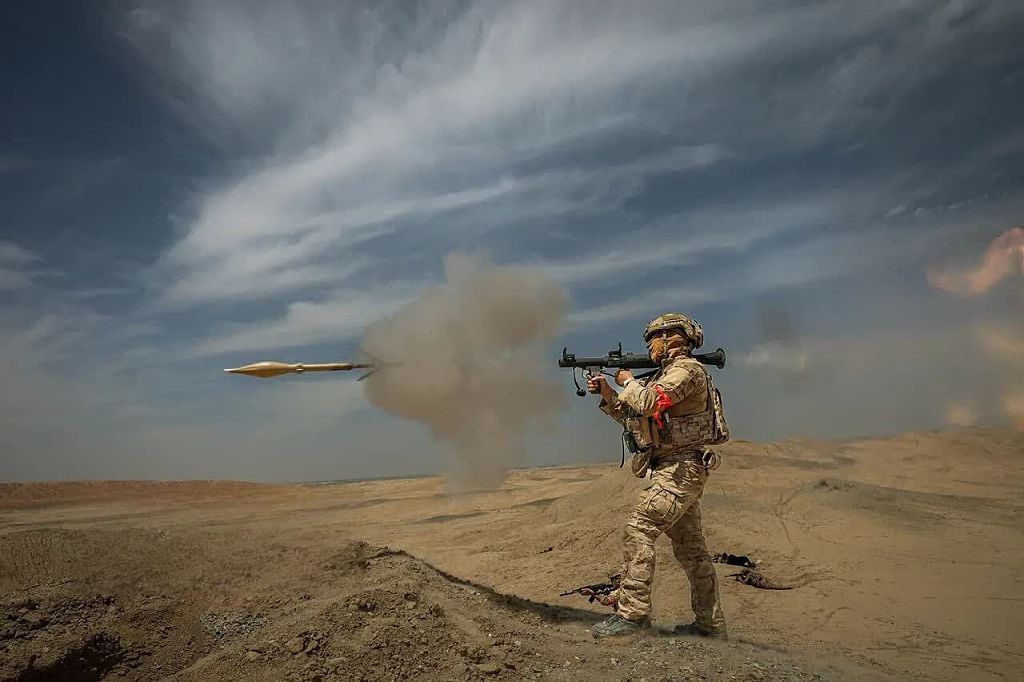
A member of the Islamic Revolutionary Guard Corps participates in a military exercise aimed at "increasing combat capabilities" in Tehran province, Iran, on May 12, 2026.

Iran has signaled that it is willing to make concessions around its nuclear program in exchange for a guarantee of long-lasting peace. Donald Trump seems too delusionally committed to an unwinnable war he started to accept this proposal. (Islamic Revolutionary Guard Corps / Anadolu via Getty Images)


Iran is bracing itself for a second round of US and Israeli hostilities following a swirl of bellicose social media posts from Donald Trump. On May 17, the president posted an AI image of himself with his hand on a large red button and made another post warning Iran that “the clock is ticking,” before claiming on May 18 to have called off a planned attack due to lobbying by Saudi Arabia, the United Arab Emirates (UAE), and Kuwait.

These Gulf nations had, Trump said, requested “two or three days, a short period of time” for negotiations taking place via Pakistan between Washington and Tehran to bear fruit. While nothing Trump says can now be taken at face value, the wild rhetorical maneuvering implies either an imminent breakthrough in the negotiations now taking place through Pakistan or, more likely, a deadlock.

Disclosures from Tehran and Washington give the impression that both sides remain far apart. The United States has suffered a strategic defeat in Iran, which has gained economic leverage over the US by asserting control within its maritime waters in the Strait of Hormuz, creating a bottleneck it controls that has affected 20 percent of the world’s oil trade.

Tehran has three related aims: to force the United States and Israel into a permanent ceasefire that extends to Lebanon, international recognition of its sovereignty, and durable sanctions relief. Policymakers in Tehran desire a deal with the US that grants economic freedom to Iran, whose citizens have seen a terrible deterioration in their livelihoods since 2012 thanks largely to sanctions. They also want to avoid becoming part of Israel’s growing figurative lawn, which can be arbitrarily “mowed.”

The problem is that Tehran does not trust Trump to follow through on any deal. For this reason, it wants a US concession in advance of any talks as a sign of seriousness. Iran has said that it refuses to address the United States’ concerns about its nuclear program unless the war is first formally ended, its assets are unfrozen, and it receives recognition of its sovereignty over the Strait of Hormuz.

On the nuclear program itself, the Islamic Republic has signaled it is prepared to accept concessions unprecedented since 2003, such as ending enrichment for twelve to fifteen years and downblending a significant proportion of its 60 percent enriched uranium stockpile. However, the United States refuses to make significant concessions, offering only partial repatriation of frozen assets, demanding Iran surrender all of its nuclear stockpile, and the end of enrichment, which is Iran’s right under the Nuclear Non-Proliferation Treaty, for twenty years.

In light of this impasse, Iran has adopted a policy of relying on the economic impact of the partial closure of the Strait of Hormuz to increase its leverage. “Both sides need a deal,” a senior figure within Iran’s state media told Jacobin:

The big question for us is whether Trump really wants a deal. No one knows what Trump wants except a face-saving victory, which is difficult to give someone who is losing the war. He posts fifteen, some nights twenty times in the middle of the night; he changes his discourse; he reverses himself. How should Trump be dealt with? He’s not a stable person — everyone knows that.

With no trust and little clarity on US intentions, Tehran has assumed a policy of waiting for the economic disruption to transform domestic politics in the United States and assuming a state of combat readiness at home. In the first, kinetic half of the three-month conflict launched by the United States and Israel on February 18, Iran demonstrated a powerful and resilient counterstrike capacity even as US attacks degraded its missile and air defense systems. According to opposition media, Iran lost fifty-two of its military leaders, but it succeeded, allegedly with the assistance of Russian and Chinese intelligence, in destroying sixteen US bases in eight countries across West Asia, most of which had been evacuated before the war began.

Recent releases of formerly suppressed satellite images reveal strikes against US military assets whose scale is comparable to the losses the United States suffered during the Vietnam War. By harrying a few oil tankers, Tehran spooked the commercial operators and insurers, seizing control of the Strait of Hormuz and the flow of oil, fertilizers, and other goods to the global economy, a maneuver that until then had only been a dream for the most hard-line officials and pundits in the Islamic Republic. Establishment voices inside Iran calling for concessions to the United States have been overrun by state propaganda.

According to Iran’s foreign minister, Tehran has used the six-week ceasefire called by Trump on April 8 to restore its missile reserves to “120 percent” of their original capacity. Iran has consistently signaled that if the United States and Israel attack its energy infrastructure, which they have largely avoided, it will retaliate against its neighbors across the Gulf.

An attack of this kind would make life unsustainable in states like Saudi Arabia and the United Arab Emirates. Iran is particularly incensed by the UAE, which secretly hosted Benjamin Netanyahu during the war, for its close and growing ties to the United States and Israel.

It is difficult to exaggerate the effect an American escalation of the war could have on the Persian Gulf’s coastal states and, by extension, the US itself. In the worst-case scenario, much of the region could become uninhabitable if Iran’s attacks extend to the Gulf states’ energy and desalination infrastructure. The United States’ global position would also be significantly weakened.

So far, the economic effects of the war have been limited. Markets have been calmed by the president’s talk of an end to the war and a return to normalcy. But if the conflict were to escalate and take 20 percent of the global oil supply off the market, it would have a permanent and almost irreversible effect on prices, not just of oil but many of the petrochemicals and fertilizers that flow through the Strait. In this scenario, it’s impossible to know how the world economy would react.

While Iran has a strong hand to play, its strategy is not pain-free. Since the April 8 ceasefire, the United States has attempted to counter Tehran’s new control of the Strait of Hormuz by instituting its own naval blockade of Tehran’s blockade of shipping leaving the ports of America’s Persian Gulf allies. While significant quantities of Iranian oil have bypassed the siege and oil prices remain relatively stable despite to the crisis, the blockade has caused a spike in inflation within Iran.

Annual inflation now exceeds 50 percent, the greatest increase in five decades. Even before the war, Iran’s parliament released a report that indicated half of the population was consuming significantly less than the recommended daily calorie intake. Poverty is increasingly widespread in Iran and worse than it has been in generations.

Like most countries, Iran is heavily dependent on imports, which makes it vulnerable to sanctions and blockade. Iranians who spoke to Jacobin on condition of anonymity said that the price of imported rice, a central barometer of the food market, has doubled since the war started, after doubling the year before. On top of this, layoffs are happening across the country at an unprecedented scale. Formerly decently paid middle-class professionals are driving taxis to make ends meet. The prices of plastic and steel have risen significantly because the United States and Israel have targeted Iranian petrochemical plants and two major steel factories, including the largest in West Asia.

For decades, Iran has suffered from the consequences of an economic war waged by the US and industrial sabotage carried out in the shadows by Israel. It has now responded horizontally in kind against the United States and its allies in West Asia. Perhaps the most revealing admission made by the US about the conflict was Trump’s claim that he was personally surprised by Iran’s attack.

For decades, US intelligence services have warned that Iran is not worth the risk because it is prepared for an asymmetric war on its own territory that the US could not win. Trump’s refusal to listen seems partly to be a function of his own co-option by Israels intelligence services — Mossad director David Barnea has been instrumental in selling this war both to Netanyahu and Trump. But the president also appears to be motivated by his own idiosyncratic intuitions. Iran responded to Trump’s assassination of its most celebrated general, Qasem Soleimani, in January 2020 in a remarkably muted manner, telegraphing its attack in advance and firing on an evacuated US base in Iraq. Trump perhaps interpreted this response as a sign of weakness and smelled blood. It is also possible, as Trita Parsi has argued, that Tehran’s refusal to speak to the US president directly has been read as another sign of weakness.

Whatever the cause of the United States’ intransigence, its effects are clear: over 3,400 dead in Iran, 3,000 dead in Lebanon, and perhaps 75,000 dead in Gaza, although Israel’s refusal to cooperate with human rights organizations has made these figures unreliable.