Heated Rivalry and Modest Fantasies for Monstrous Times
An obscure 19th-century Russian novel about love and class and a 21st-century gay hockey romance might seem worlds apart. But both Heated Rivalry and Molotov offer the same thing: small parables of tenderness and bravery in overwhelming times.
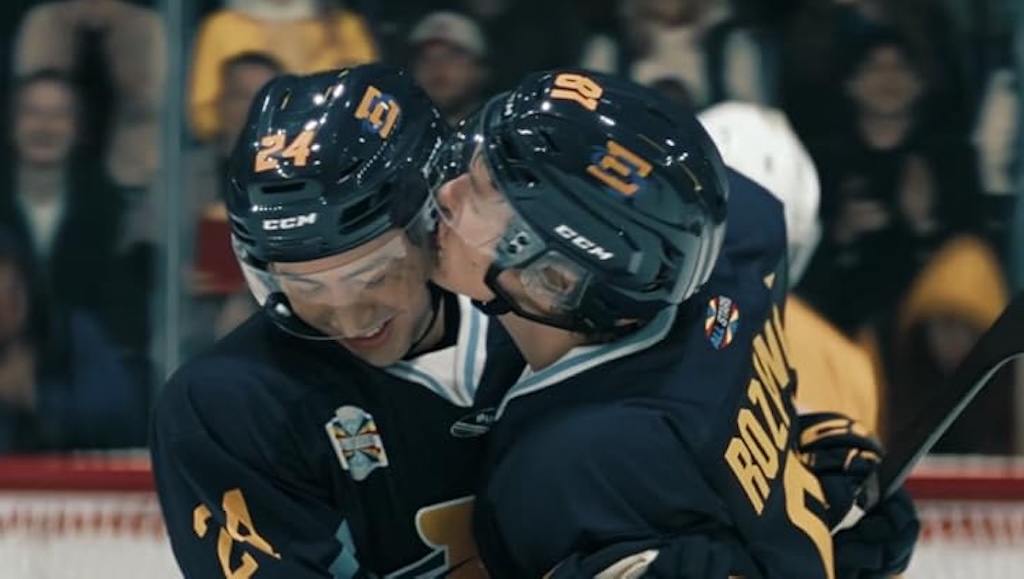
At their most modest, happy-ending romance stories like Heated Rivalry soothe troubled minds amid social turmoil. At their most radical, they expand who gets to imagine themselves living well in an unjust society. (Accent Aigu Entertainment / Bell Media)
The appeal of the Canadian gay hockey romance show Heated Rivalry isn’t hard to understand. Its young stars are beautiful and appealing, and their romance is sexy and sweet. But perhaps most appealing of all, in this era of performative cruelty, it is a television show in which the central characters’ fears — that if they reveal their true feelings they will be romantically rejected, and that if their homosexual love affair is discovered they will be disowned and ruined — are ultimately unfounded. We wait the entire show for the other shoe to drop, and this anxiety lends the romance a special charge, but ultimately nothing bad happens at all.
The world of Heated Rivalry is just a little bit better than the one that exists, but entirely imaginable from where we currently stand. The way to get there appears easy. A few people just have to be decent to each other, to carve out space to live well within the structures and institutions that exist. It’s nothing revolutionary, but the show has been devoured with an urgency that suggests this image of an ever-so-slightly better reality was sorely needed.
Romance is a genre built on fantasy, of course. But there’s something poignant and telling about Heated Rivalry’s breakout popularity cresting against the backdrop of US imperial aggression, domestic authoritarianism, and disturbing revelations about private abuses of power among the political and financial elite. Perhaps this vision of kind and handsome boys in love is helping viewers cope with a degraded present — inviting them into an alternative world where the biggest problems can be overcome through personal bravery and interpersonal tenderness.