Ehud Barak Had a Very Close Friendship With Jeffrey Epstein
The recent release of more Epstein files only provide more evidence about just how close former Israeli prime minister Ehud Barak and billionaire pedophile Jeffrey Epstein were to each other, despite Barak’s protestations to the contrary.
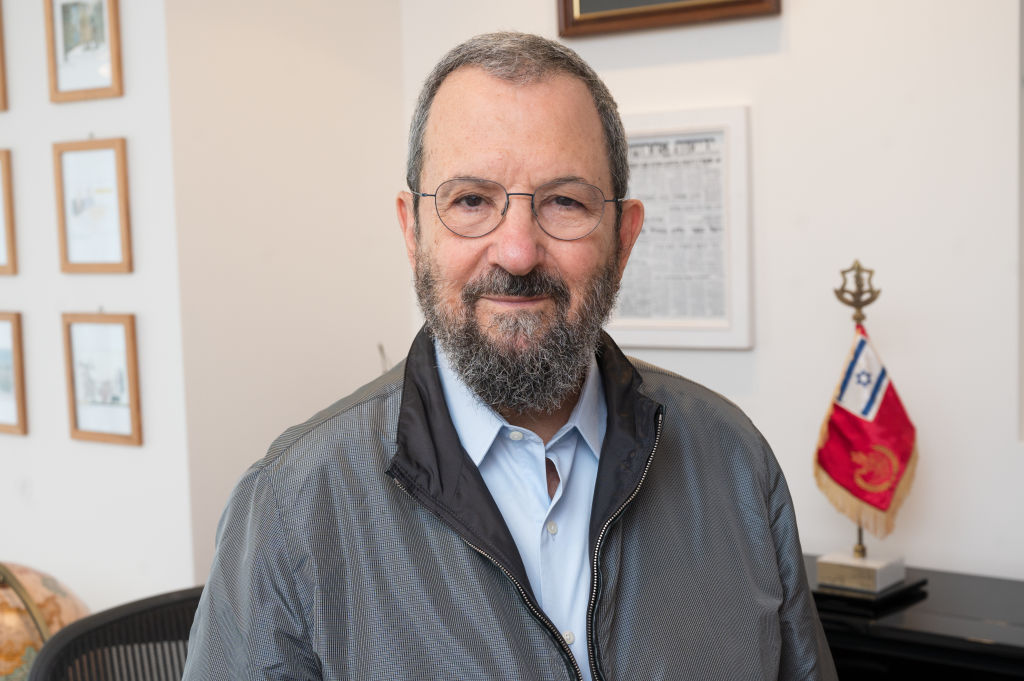
Former Israeli prime minister Ehud Barak is no longer proud to be associated with Jeffrey Epstein. Yet for many years, new documents show, the pair enjoyed a warm, even intimate friendship. (Noam Galai / Getty Images)
“We are joining in wishing you Happy Birthday and all that you wish for yourself,” Ehud Barak emailed Jeffrey Epstein on January 20, 2014, the billionaire pedophile’s sixty-first birthday, as he explained how a surprise gift he and his wife, Nili Priel, had tried to arrange had fallen through. “I’m proud to be able calling [sic] you my friend.”
“Thank you. Look forward to seeing you, lots to talk about,” Epstein replied.
Barak and Epstein did have much to talk about — so much, in fact, that the pair met in person dozens of times over the course of the previous decade to talk in person, a perusal of the Justice Department’s latest release of files on the late sex offender show.
Jacobin looked at more than one thousand documents from the latest trove and identified more than sixty instances between September 2010 and March 2019 in which Barak and Epstein arranged to meet face to face — usually in New York, other times in Florida, Boston, Paris, or even Epstein’s infamous private island, Little St James. At least seven of those meetings took place while Barak was still serving as minister of defense for Israel.
That count does not include the dozens more times where the two arranged or tried to arrange to talk over the phone or via video call, nor their frequent email exchanges to each other. It also does not necessarily include the more than two dozen times in that period that Barak stayed at one of Epstein’s properties, typically the Upper East Side apartment building on 301 East 66th Street that he owned, which his staff referred to internally as simply “301.”
Since the thousand or so files are just a fraction of the total number of Barak-related documents in the trove, it is entirely possible these are undercounts. Yet the more than sixty meetings between the two is roughly double the number of times that Barak and Epstein had earlier been thought to have met, according to a previous Wall Street Journal report. And that report only went as far back as 2013, leaving out several years of meetings that Barak had with Epstein while he was still serving in Israel’s government.
The disclosures add to the recent stream of explosive revelations about Epstein’s relationship to Barak and, in turn, to the Israeli state. Epstein, long rumored to have ties to Israeli intelligence, has in a series of stories by Drop Site News been revealed to have worked with Barak to broker security agreements and arms sales on Israel’s behalf. Last year, Jacobin revealed that Epstein had privately claimed to have been behind Barak’s 2019 political comeback in Israel — revelations that, after being tweeted by current prime minister Benjamin Netanyahu, caused a firestorm in the country.
Now it turns out that Epstein’s relationship with Barak and the government he served in are even more extensive. Jacobin has reached out to Barak for comment and will update the article should we receive a response.
“Ehud Would Like to Talk to Jeffrey”
Barak is no longer as proud to be associated with Epstein, who he said last month he “deeply regret[s] having any association with.” Yet for many years, the documents show, the pair enjoyed a warm, even intimate friendship, in spite of the fact that, by this point, Epstein was a registered sex offender who had pled guilty in 2008 to soliciting prostitution from a minor after investigators discovered numerous underage victims who said he sexually abused them. As late as November 2018, less than a year before the billionaire sex offender was arrested and died in prison, Barak referred to Epstein as a “great friend.”
“R U Ok? Long time no hear. We’re missing you,” read one August 2, 2014 email from “Ehud & Nili,” Barak’s wife of, at that point, seven years, through whom many of his meetings with Epstein were scheduled.
Epstein and Barak regularly reached out to meet or talk, inquired about each other’s travel plans, or informed each other where they were, in case it meant they could meet. Epstein got regular email alerts and reminders that Barak was in town. Barak contributed a personalized “birthday letter” for Epstein before his sixty-third birthday, and Epstein, in turn, sent gifts and packages to Barak. The billionaire even appeared to have the former Israeli prime minister’s MRI result on file.
Typically, the two met one-on-one, for breakfast, lunch, or dinner. The frequency of their meetings appears to have grown over time. In one ten-month stretch from January to October 2016, the pair had at least one meeting every single month. In seven of the months in that period, emails show that Barak stayed at Epstein’s Upper East Side apartment building at some point in the month.
Sometimes they met multiple times a month. In September 2013, the two had at least seven meetings over the course of a few days with a variety of figures, including banker Ariane de Rothschild, then French presidential adviser Olivier Colom, billionaire couple Bill and Melinda Gates, former Clinton official and then chancellor of New York City’s Department of Education Joel Klein, and Terje Rød-Larsen, the architect of the Oslo Accords.
The fact that the pair were meeting and communicating while Barak was Israel’s defense minister, a post he officially left in March 18, 2013, is particularly concerning, raising the possibility that Epstein was able to exert influence over Israeli government policy. At least one text exchange between the two, from January 2013, suggests Barak was seeking out and incorporating Epstein’s ideas while serving in the post, with the two arranging to talk over the phone as Barak prepared to apparently coordinate something related to that year’s coming World Economic Forum in Davos.
“At the end of today lets [sic] review responses,” Epstein texted.
“hi Jeff I’m exhausted . spent several hours on my present(still) job over the secure phone. re Davos it goes quite well. but still embryonic and hard to predict . details tomorrow,” Barak texted him the following day.
“thx for your advice on the approach. it was very important and timely,” Barak added.
Barak continued to lean on Epstein for advice once he became a private citizen. Barak sought Epstein’s opinion on opinion pieces he wrote, on the business ventures he pursued, and on the draft and even title of his 2018 book.
Multiple times, he requested to speak to Epstein urgently, as when, upon visiting Washington, DC, in early May 2018, Nili emailed Epstein’s account that her husband “would like to have an urgent short meeting with Jeffrey” (emphasis in original) the very day they arrived back in New York from the capital. “Of course,” replied Epstein. Emails show the two ended up meeting on the date and window of time that Nili proposed. It’s not clear exactly what they discussed, although the day after Nili’s email, Donald Trump pulled out of the Iran nuclear agreement, a decision Barak publicly commented on in the days that followed.
When Barak got an invite in September 2014 from a couple named Bill White and Bryan Eure to a private fundraiser with then president Barack Obama, he immediately turned to Epstein.
“Ehud would like to know if you have any information or knowledge about them and is it worthwhile to meet them next time he is in NY?” Nili wrote to Epstein. Epstein replied that he did not know them, but included what seems to have been an extract copied-and-pasted from White’s Wikipedia page about his involvement in a state pension fund pay-to-play scandal years earlier. “Thanks,” replied Nili.
Who’s Who
On many occasions, Epstein and Barak met with others. At least two of Barak’s meetings with Epstein also featured Donald Trump adviser Steve Bannon, who, emails show, Epstein and his team took pains to introduce to Barak — despite Bannon’s openly playing footsie with the far right, and the fact that he was accused by his ex-wife of holding antisemitic views.
In September 2010, three years into Barak’s tenure as Israeli defense minister, the duo were joined for a private dinner by another Epstein associate: the now-disgraced Larry Summers, then still serving as the National Economic Council director for Barack Obama. “Jeffrey wants to make sure you know the dinner party on Tues. Sept. 21 is ‘100% off-line,’” Epstein’s longtime executive assistant Lesley Groff wrote to Summers before the dinner.
Emails show that Epstein had tried to entice others to attend the dinner, which was described to invitees as “very private, no agenda,” including pro-Israel billionaire Len Blavatnik and Walter Isaacson, president and CEO of the foreign-policy-focused Aspen institute. While they couldn’t make it, one man who did appears to have been Jes Staley, a Wall Street titan and longtime Epstein friend whose career was ended by his association with the pedophile.
Epstein, Barak, and Staley got together again years later at a February 2015 meeting, where they were joined by private equity billionaire Leon Black. Other notable names who met with the duo over the years include billionaire and future Trump fundraiser and official Tom Barrack, Obama’s ex–White House counsel Kathy Ruemmler, newspaper tycoon Mort Zuckerman, leftist intellectual Noam Chomsky, Fire and Fury author Michael Wolff, famed former talk show host Dick Cavett, and Tom Pritzker, billionaire hotel magnate and executive chairman of the hawkish Center for Strategic and International Studies.
There are occasional hints that not all of these events were your run-of-the-mill gatherings of the rich and powerful. In one August 2013 email exchange, Barak and another Epstein associate, Bill Gates adviser Boris Nikolic, discussed where they could meet in person, with Barak mentioning he would be in New York that September for the “Clinton GI [Global Initiative].”
“I will be in NYC that whole week and I look forward to seeing you and catching up — most likely at Jeffrey’s — it is more interesting there than at CGI ;),” Nikolic replied.
No Man Is an Island
But whether Barak was meeting with Epstein or not, he and his wife, Nili, appeared to have an open invitation to stay at Epstein’s Manhattan apartment building, which they frequently did. Sometimes they stayed for only a few days. Sometimes they stayed for five. Sometimes they stayed for eight or even as many as twelve days. On at least four occasions, they had multiple stints at “301” in a single month.
Epstein appeared to grant the couple free rein in the property. “[Nili] can use my house to make a small dinner with any people that ehud would like to talk to privately,” Epstein instructed one of his assistants to pass on to Barak’s wife in an undated email.
Barak and Nili stayed so often at Epstein’s Upper East Side property that even the billionaire’s assistants remarked on the extent to which they had made themselves at home there.
“Jeffrey is asking if you can get faster internet for apt 11J…Ehud is requesting it…,” Groff emailed in October 2015. “looks like this is slowly becoming his apartment!….” The request was fulfilled twenty minutes later.
When Barak was set to visit at the same time as several other influential friends of Epstein in September the following year — namely physicist Lawrence Krauss and Rød-Larsen — Groff informed a staff member that “Ehud will be in his regular apt.” While she arranged welcome letters to be placed in the apartments that Krauss and Rød-Larsen would be staying in, she made clear that “Ehud does not need a welcome letter…”
Emails show that by 2017 and 2018 Barak’s wife was directly emailing staff and personally requesting that the apartments be cleaned in accordance with when they were coming and going.
At one point, in December 2014, Barak and his wife appear to have visited Epstein’s infamous private island. That month, Epstein emailed his assistants that “ehud should stay at the ritz in st thomas,” referring to the luxury hotel on the Caribbean island just northwest of Epstein’s own private island.
The email prompted confusion from staff, who were unaware Barak would be visiting St Thomas and didn’t know whether they would be making the hotel reservation on Epstein’s card. The next day, Epstein confirmed he would be picking up the tab for the couple’s stay, and at his request, staff made arrangements for their travel between the Ritz-Carlton and the St Thomas airport.
“ehud coing [sic] to island this weekend,” Epstein emailed Melanie Spinella, adviser to his friend and fellow billionaire Leon Black, the following day.
An Inconvenient Trove
The voluminous documentation of Barak’s contacts and close friendship with Epstein is inconvenient to several people. First and foremost, it’s inconvenient to Barak, who insisted for years that he only saw Epstein “on occasion” and more recently denied Epstein’s claim, which we at Jacobin unearthed in last year’s government disclosures, that he had been behind Barak’s return to Israeli politics in the country’s 2019 election.
But it is also inconvenient to the emerging media narrative that Epstein was a Kremlin spy or otherwise an intelligence asset for the Russian government and nothing else. Simply put, there is no Russian equivalent in Epstein’s life to Ehud Barak, a former prime minister and defense minister of Israel who these disclosures show was meeting with and taking advice from the pedophile while he was serving in the Israeli government, and whose friendship with him dramatically deepened in the years that followed.
Epstein is now widely acknowledged, even by one of his own friends and a current Trump official, as having used blackmail against powerful people — or, in the words of the New York Times, “keeping notes on some of his contacts” and “revel[ing] in claiming to know his friends’ secrets” and how they “might empower him.” Yet the fact that this might have involved one of Israel’s most prominent political figures continues to be strangely unspeakable in mainstream political discourse.