Iran’s Protests Are a Turning Point for the Islamic Republic
Iran’s rulers have managed to contain a wave of protest for now. But the nature of the unrest and the state’s lethal response make this an unprecedented moment since the 1979 revolution, with the threat of a US attack still hanging over the country.
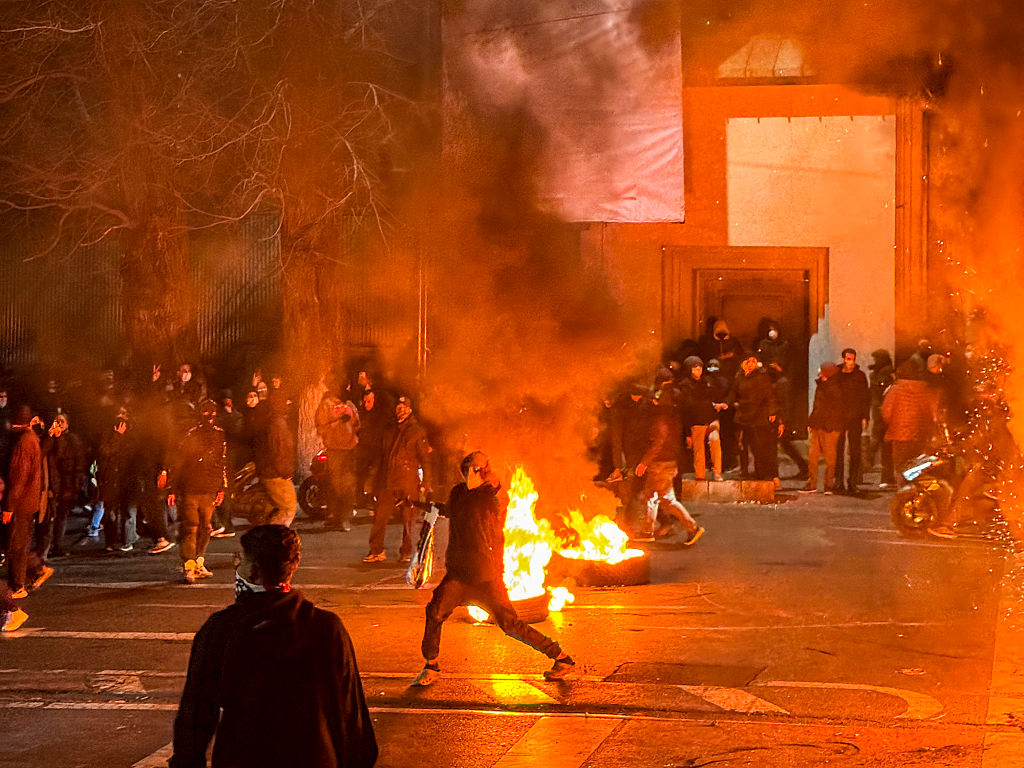
The recent protest wave in Iran constitutes one of the most significant developments in the Islamic Republic’s history, with casualties far in excess of previous upsurges. Though the protests have been contained for now, the political impasse persists. (MAHSA / Middle East Images / AFP via Getty Images)
The recent wave of protests in Iran constitutes one of the most significant developments in the history of the Islamic Republic. Although the Iranian authorities imposed an internet blackout to contain the flow of information, there is clear evidence that the state security forces killed several thousand people, far in excess of the casualties during previous upsurges in 2009 or 2022–23.
For now, Donald Trump has backed away from the prospect of ordering another US attack on Iran in the hope of precipitating the fall of the regime, but that may yet change over the coming weeks and months. In order to understand the significance of the latest development for Iran’s domestic politics and its relations with the United States, we need to see them against a long-range historical backdrop, dating back to the revolution of 1979.
The Embassy Crisis
Almost half a century ago, on November 4, 1979, student followers of Iran’s revolutionary leader, Ayatollah Ruhollah Khomeini, seized control of the US embassy in Tehran and took its staff hostage, releasing them 444 days later when Ronald Reagan was inaugurated US president. Khomeini had come to power a few months before as the undisputed leader of a popular uprising that overthrew Mohammad Reza Pahlavi, Iran’s shah or king, who had been installed on his throne in 1953 through a military coup orchestrated by the CIA.