As Protests Engulf Iran, Israel Sees an Opportunity
The protests sweeping through Iran are not the first of their kind. But the threat of a continuation of the Israel-US war has led Tehran to see them as an existential threat.
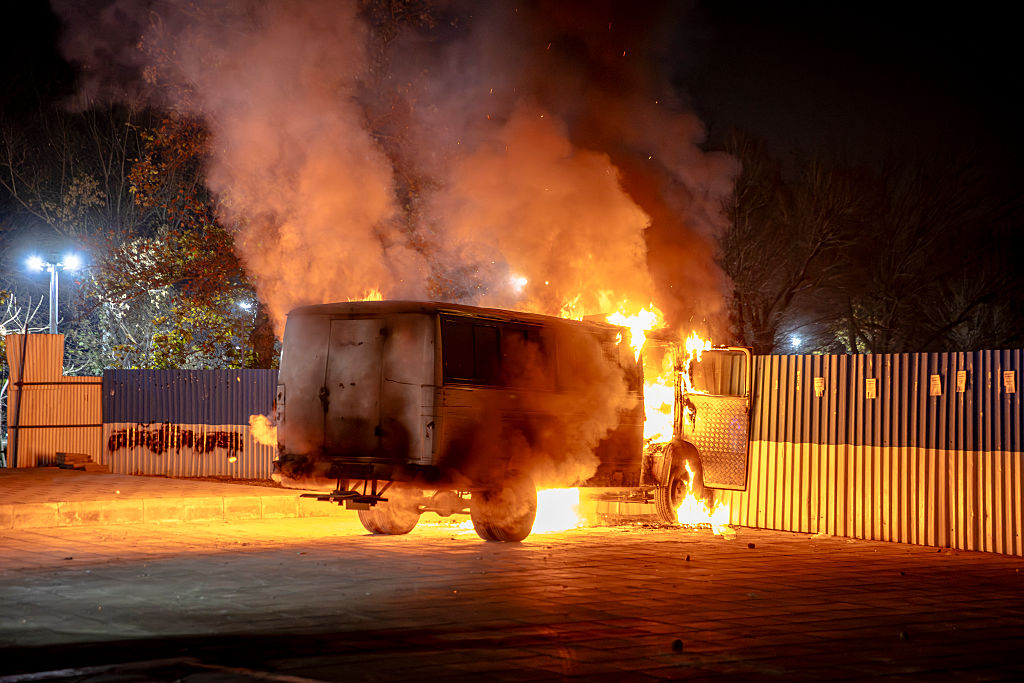
Iran has experienced mass protests before, but never at a time of what it describes as “total war” with Israel, the United States, and Europe. The current wave risks becoming a new front in this war. (Khoshiran / Middle East Images / AFP via Getty Images)
Antiestablishment demonstrations across Iran escalated this weekend as reports emerged of large-scale violence by protesters and security services alike. Over half of the country’s thirty-one provinces are convulsed in protests, which first erupted on December 28 in the electronics section of Tehran’s central bazaar.
Traders had come out onto the streets in response to a sudden 16 percent crash in the rial, whose value has dropped 84 percent over the past year. Iran’s currency has experienced severe volatility since US sanctions, which have cut its oil revenues and deprived its central bank of access to much of the revenue it still retains, were imposed in 2011. Economic ruin has destroyed much of Iran’s middle class and plunged around a third of its citizens into poverty. Rearmament spending following Israel’s June attack has only made the crisis more acute.
This is the sixth time the Islamic Republic has experienced significant mass uprisings in its history. Each time the fuse has been lit by a set of economic and cultural issues. The current protests are on the scale of many previous episodes. But they are unique in that they are occurring at a time when Tehran is engaged in what it describes as “total war” with the United States, Israel, and Europe.