Twenty Years Ago, the Iraq War Changed Everything — and Taught Elites Nothing
The ripple effects of the disastrous Iraq invasion still course through the Middle East and domestic US politics decades later. Yet there’s little evidence those in power have learned anything from it.
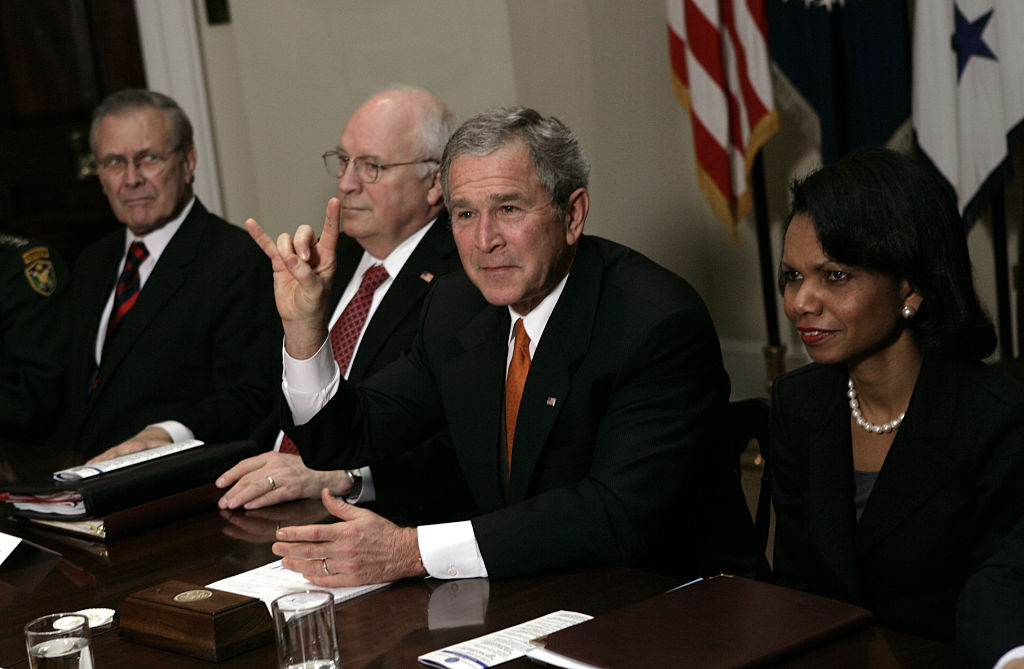
President George W. Bush with Secretary of Defense Donald Rumsfeld, Vice President Dick Cheney, and Secretary of State Condoleezza Rice after a meeting about the Iraq War in the White House in Washington, DC, January 5, 2006. (Brooks Kraft LLC / Corbis via Getty Images)
The first thing to remember about the Iraq War is that it was only meant to be the beginning.
You don’t have to take the word of former general Wesley Clark, a man who once nearly started World War III, and his claim that there existed a secret memo outlining plans for war on “seven countries in five years,” starting with Iraq and ending with Iran. The Bush administration’s own behavior, rhetoric, and later admissions made it abundantly clear that this was the idea.
Of course, George W. Bush’s invasion fell to shambles so quickly that he never had the chance to put this plan into action. Rather than being the starting gun for a series of US wars in the Middle East, the attack on Iraq instead became merely the signature disaster of the Bush presidency and — at least until recently — the entire twenty-first century, a Vietnam-like black hole insatiably pulling human lives, neighboring countries, and trillions of dollars into its death vortex.