The Coronavirus Crisis Is Political
In 2008, they told us not to “politicize” the crash. We ended up with a decade of austerity. The coronavirus crisis will reshape the economy in profound ways — now is the time to make socialist arguments about how to respond.
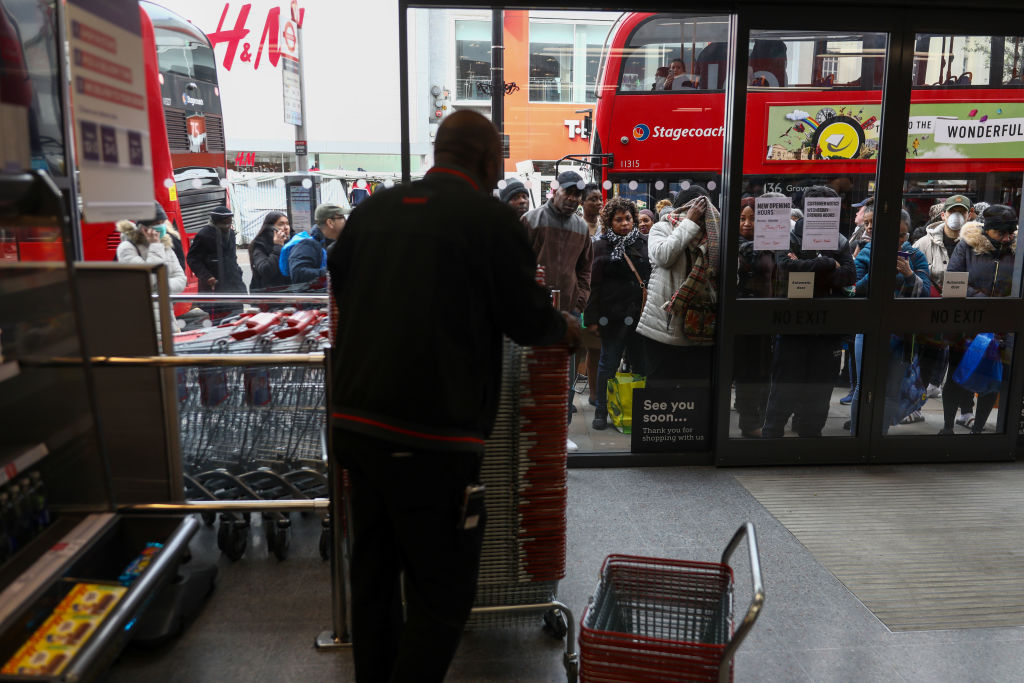
Shoppers wait on the street for the general opening of the store, during a time set aside for elderly and vulnerable members of the community to shop, at an Iceland Foods Ltd. store in London, UK, on Wednesday, March 18, 2020. Simon Dawson / Bloomberg via Getty
The last time we faced an economic crisis anywhere near as severe as the one we are about to encounter was in 2008, when the global banking system began to collapse under the weight of its own excesses.
When the US government’s decision to allow Lehman Brothers to fail sent financial markets into freefall, world leaders realized it was time to step up. At first, they provided trillions of dollars worth of short-term liquidity (effectively short-term loans) to the world’s biggest banks, but they soon realized that the banks were not simply illiquid (out of cash), but insolvent (completely unable to pay their debts). At this point, they threw their weight behind their financial systems with bailouts that saw states becoming significant shareholders in many of the world’s largest financial institutions.
In the several years that followed, many countries adopted fiscal stimulus measures aimed at limiting the impact of the financial meltdown on the real economy. Initially, the United States and the UK both implemented large stimulus programs aimed at absorbing job losses and preventing the kind of Keynesian downward spiral in demand that gave us the Great Depression. But it was China that saved the global economy from another depression, with a stimulus package worth nearly 20 percent of GDP at its peak. Huge state investment protected both the Chinese economy and the economies of its major trading partners.