Our Public Health Infrastructure Is Losing a Fight With Capitalism
COVID-19 teaches us why Medicare for All should be the floor of our demands, not the ceiling. As an epidemiologist argues, we need to radically rebuild our entire public health infrastructure.
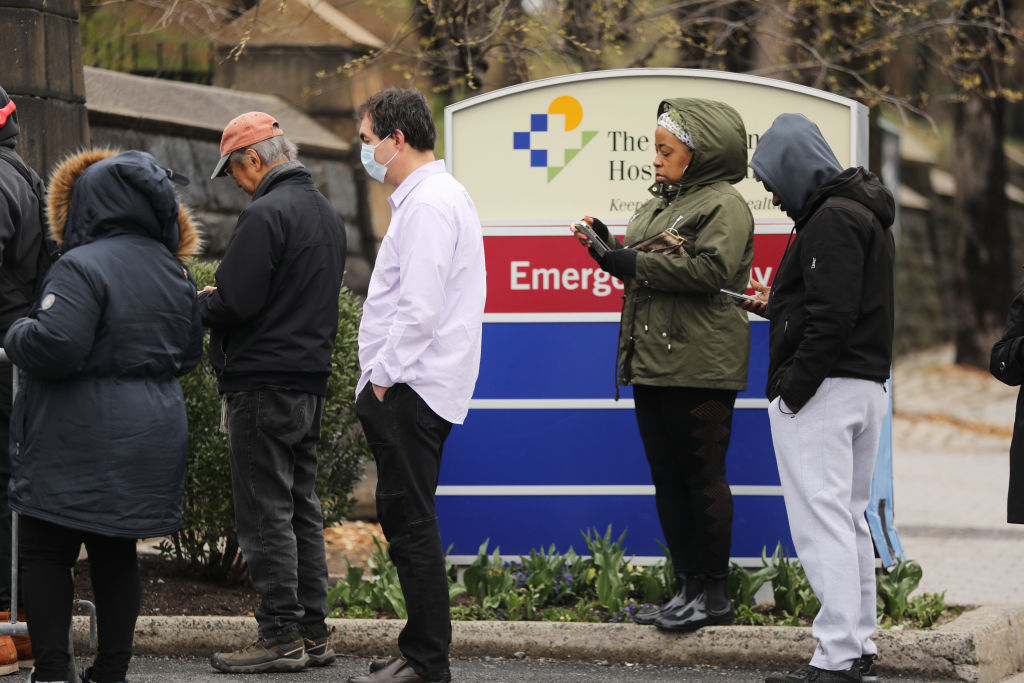
People wait to be tested outside of the Brooklyn Hospital Center where testing for the coronavirus has started on March 19, 2020 in New York City.Spencer Platt / Getty
Medicare for All would not have saved us from this disaster, but it would’ve softened the blow. The global public health crisis ushered in by the COVID-19 pandemic reminds us that single payer is a vital necessity but not a magical solution to our health care problems.
COVID-19 has revealed the long-standing fragmentation of our public health infrastructure. It has also confirmed how much of it, beyond direct clinical care, is controlled by the private sector (no coincidence Trump had corporate executives at the helm of this week’s Coronavirus Task Force press conference). Calls to reform and rebuild our public health infrastructure and liberate it from the shackles of capitalism need to be as resounding now as calls for Medicare for All.
As opposed to clinical care which centers treatment in the singular clinician-patient interaction, public health focuses on prevention and tracking of disease and provision of care in a broader sense. We should seize that difference. In the throes of this pandemic, usual protocols of care can become quickly obsolete, and this uncertainty opens up the opportunity to reexamine the undergirding (data, hospitals, health care providers, safety nets, housing) that make population health possible and in many cases, impossible.