A Week After the Coup in Bolivia, There’s Still No Proof of Electoral Fraud
Mainstream commentators continue to assert that Evo Morales oversaw a fraudulent election in Bolivia that led to his resignation. But the “resignation” was a coup — and there’s still no proof the election was even fraudulent.
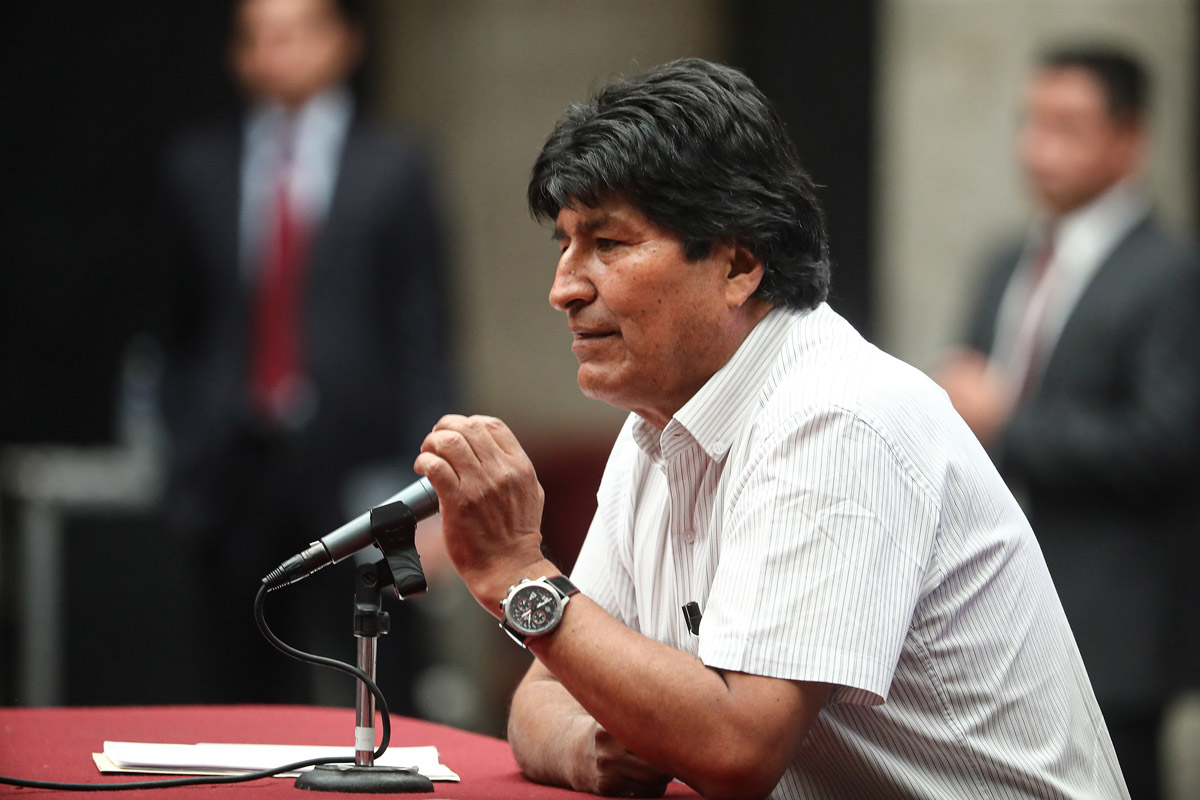
Former president of Bolivia Evo Morales speaks during a press conference at Museo de la Ciudad de Mexico on November 13, 2019 in Mexico City, Mexico. (Hector Vivas / Getty Images)
On November 10, Bolivian president Evo Morales was ousted in a military coup. Increasingly violent protests calling for Morales’s departure had rocked the country for three weeks, following contested presidential elections. Police forces of major cities declared themselves in mutiny, leading to even greater chaos. Finally, the military high command insisted that Morales resign. He did so and then, facing threats to his life, fled to Mexico, where the government of Andrés Manuel Lopéz Obrador offered him asylum.
The Washington-based Organization of American States (OAS) — whose motto is “democracy for peace, security, and development” — played no small role in sparking the chain of events that rapidly led to Morales’s toppling.
But, first, a little background.