Latin America’s Pink Tide Isn’t Over
In today’s Bolivian election, Evo Morales is running for a historic fourth term as president. Vice President Álvaro García Linera spoke to Jacobin about how their Movement for Socialism can make their revolution permanent — and stop the rise of the far right in Latin America.
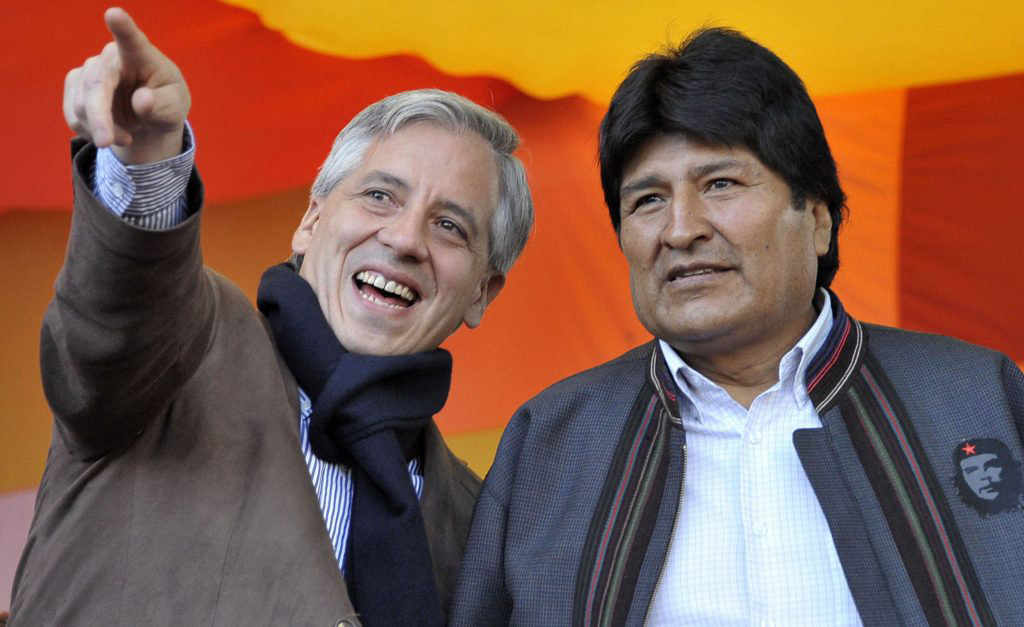
Bolivian vice president Álvaro García Linera (left) with President Evo Morales.
This year is proving to be a decisive one in Latin America. On the one hand, various conservative and far-right governments have been mired in crises. These have ranged from the mounting protests against Jair Bolsonaro in Brazil after the Amazon fires, to the popular uprising against Lenín Moreno’s turncoat government in Ecuador and its IMF-sanctioned economic reforms, and continued setbacks for Mauricio Macri’s neoliberal administration in Argentina.
On the other hand, progressive and left-wing forces are still regrouping after years of coups, electoral defeats, and continued media onslaught. There are some positive signs: AMLO’s government in Mexico is making crucial reforms to the state and investigating the disappearance of forty-three students in Guerrero state, while in Argentina the left-Peronist “Front for All” seems assured of electoral victory after a strong showing in August’s primaries. Yet Uruguay’s “Broad Front” faces an uphill battle in the coming elections, and despite promising changes in Chile heralded by Camila Vallejo’s fight for a forty-hour workweek and the political rise of Daniel Jadue, the Communist mayor of Recoleta, the Left remains divided.
The other key electoral battleground is a land at the heart of the recent Pink Tide in Latin America, namely Bolivia, which heads to the polls today. President Evo Morales, the country’s first indigenous leader since Túpac Katari in the eighteenth century, is seeking his fourth consecutive term. The man who began his political life as a trade union activist and the leader of the coca growers’ union has so far proven to be one of the most successful presidents in the country’s history.