The Two Bolivias
Controversy over Bolivia’s election reflects deep fissures in the country.
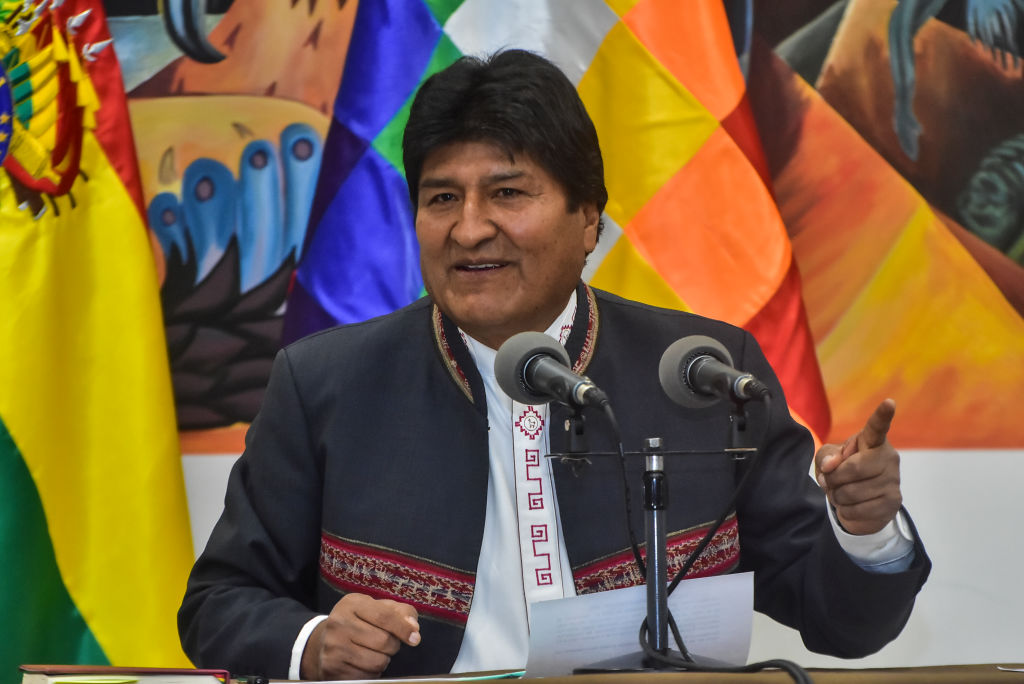
President of Bolivia Evo Morales speaks during a press conference on October 24, 2019 in La Paz, Bolivia.Javier Mamani / Getty
Preliminary results suggest that Evo Morales secured victory in Bolivia’s presidential elections on Sunday. While he didn’t win an absolute majority, with 95.6 percent of the vote counted, Morales has 46.9 of the total. His closest rival, Carlos Mesa, is at 36.7 percent. If Morales’s advantage stays over 10 percent, he’ll avoid a potentially tricky runoff.
However, opposition parties are accusing the government of vote rigging, continuing a string of controversy that has surrounded the election since a 2016 referendum, which proposed constitutional amendments to allow Morales to run for a third term. When the president narrowly lost that referendum, he refused to recognize the result, relying on the country’s supreme court to make the constitutional change regardless, removing all presidential term limits.
The governing Movement Towards Socialism (MAS) argued that fake news about a phantom child belonging to the president swung the referendum vote, while an enraged opposition called for a coup d’état if Morales were to win October’s election.