The 1917 Peasant Revolutions
In Russia 1917, ordinary rural people took direct action to remake their world.
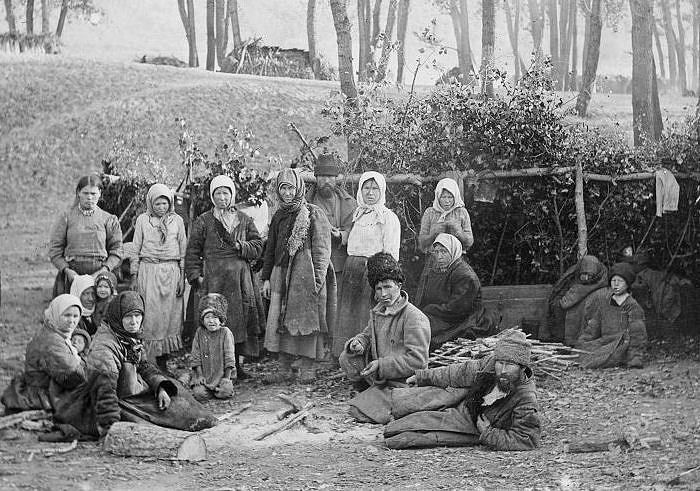
Russian peasants in the early 1900s.
Peasants were political game changers in 1917. They defined politicians’ responses to national challenges; they produced, controlled, and dictated food supplies; armed and uniformed peasants served as soldiers, making and breaking political power; and, as the majority of Russia’s urban residents, they played key roles in urban uprisings.
Yet when we talk about peasant revolutions, we usually mean the rural battles over land use and ownership. And, though more than 80 percent of Russia’s population lived in non-urban areas in 1917, scholars often marginalize peasants’ experience of, and participation in, the Russian revolution, focusing instead on urban labor and the intelligentsia.
The diversity and complexity of rural uprisings dispel any assumptions we might have about the nature of peasant action. They also reveal the revolution’s extraordinary creativity and transformative nature.