When Texas Cowboys Fought Private Property
Cattle barons carved up Texas with barbed wire in the late 19th century, separating poor farmers and landless cowboys from vital resources for their struggling cattle herds. So the cowboys formed fence-cutting gangs to preserve the open range.
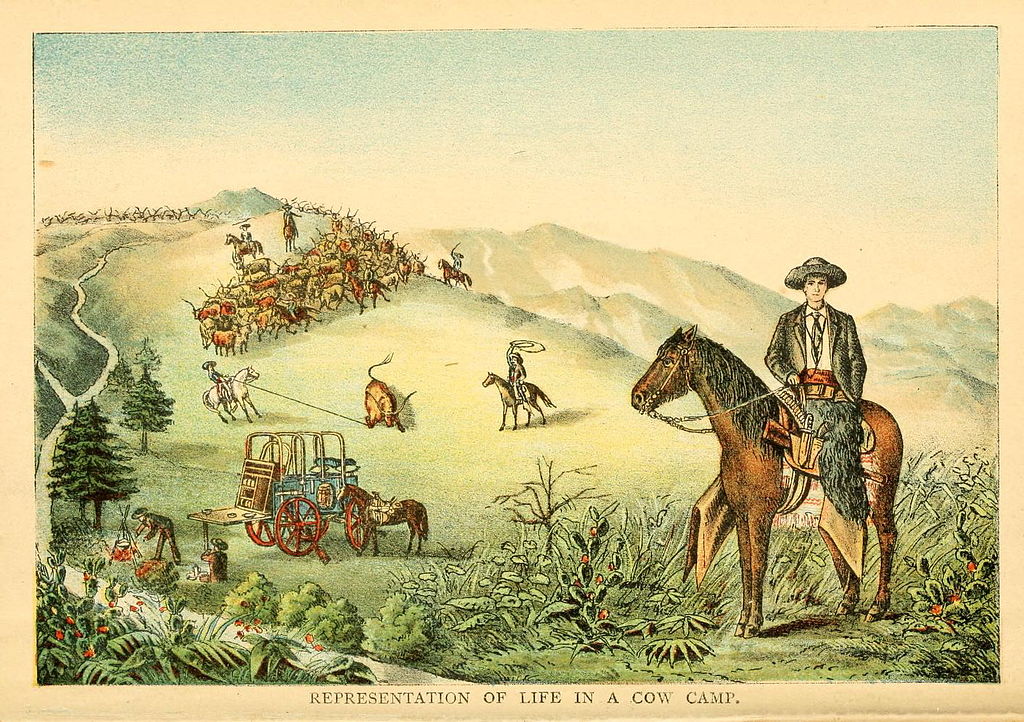
An 1886 illustration of a cowboy and cow camp. (Library of Congress via Wikimedia Commons)
When barbed wire arrived in the late 1800s, it fundamentally changed the Texas landscape. The famous rancher Charles Goodnight once recounted a run-in with the Pueblo chief Standing Deer, who, returning to Taos, New Mexico, from a trading trip with the Kiowa, became lost and ended up on Goodnight’s land. When Goodnight asked Standing Deer how he got lost, considering Standing Deer had “lived in this country all [his life],” Standing Deer replied, “Si, señor! Pero alambre! alambre! alambre! todas partes!” (“But wire! wire! wire! everywhere!”)
Native Americans called barbed wire the “devil’s rope.” Poor farmers and cowboys called it the “devil’s hatband.” They all recognized it as a tool of dispossession.
The wire was meant to protect the grazing land of wealthy ranchers. As their cattle herds flourished, others collapsed. In the cattle industry, a two-tiered system was developing: landed cattle barons enjoyed protected access to the best water sources and grazing land, while poor farmers and often-landless cowboys struggled to navigate the newly partitioned terrain. Herds cut off from water by the new fencing died of dehydration. The earliest forms of barbed wire had brutally sharp barbs, and in bad conditions cattle could get snagged on wire and die by the thousands.