The English Peasants’ Revolt Gave Birth to a Revolutionary Tradition
In 1381, English peasants and the urban poor rose up against feudal domination and briefly took control of London. Their revolt against the established order was crushed by brutal force, but it left behind the idea of a world without masters.
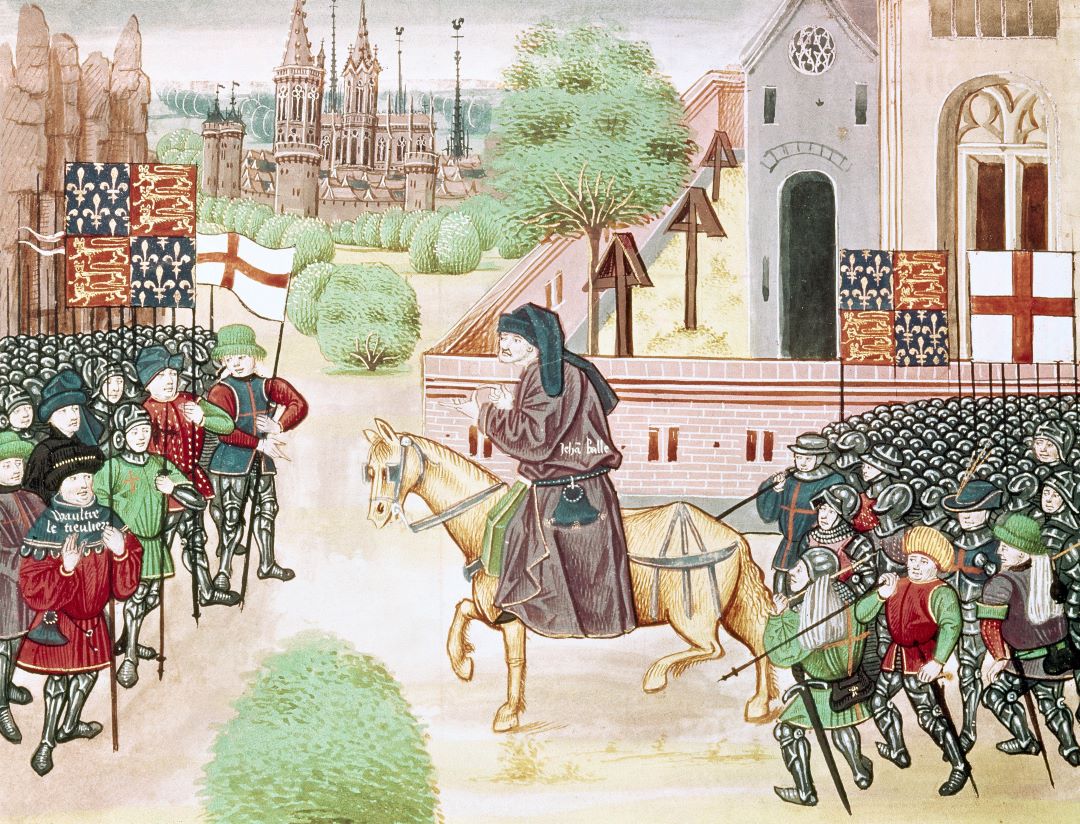
Depiction of the peasants’ revolt led by Wat Tyler in 1381. A meeting between Wat Tyler and the revolutionary priest John Ball is depicted. Detail, miniature of the fifteenth century by Jean Froissart. (Prisma / UIG / Getty Images)
The English Rising of 1381 saw peasants and townspeople rebel against the poll tax imposed to pay for the king’s wars in France. The rebels converged rapidly on London, mainly from Essex and Kent, and for a brief time were able to impose themselves on the government of the realm.
Their demands were not confined to the abolition of the tax. They wanted the end of serfdom, and effectively of the whole secular and religious aristocracy, barring the king himself. If they had won, this would have turned England into a kind of peasant confederation, with the monarchy stripped of its feudal power, reduced to the role of arbiter between autonomous local communities.
There was to be “no law within the realm save the law of Winchester,” the rebels proclaimed, apparently meaning the abolition of all but local government. This was an ambitious, not to say revolutionary, program, and one that appears to be without precedent in popular demands before this point.