The Baku Commune
The story of the Baku Commune’s leaders, who pursued power democratically and nonviolently, belies many of the myths of the Russian Revolution.
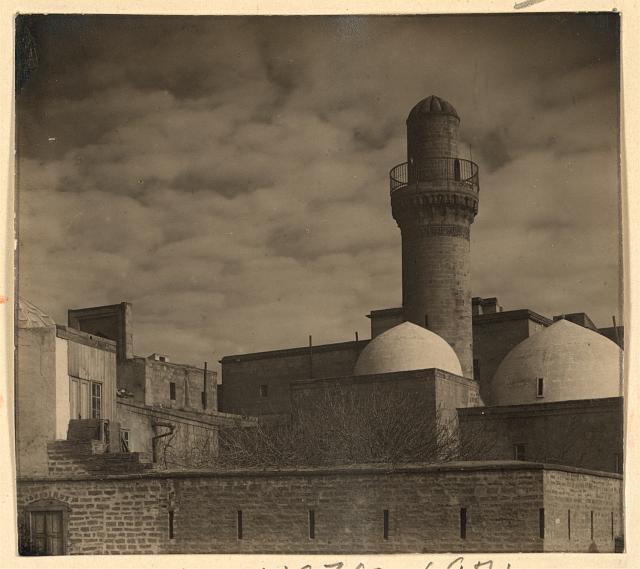
Mosque of the Shirvanshahs’ Palace in Baku, circa 1910.Sergeĭ Mikhaĭlovich Prokudin-Gorskiĭ, / Library of Congress
Most accounts of the Russian Revolution tell the story of one city — Petrograd, where the Romanov regime collapsed in February and the Bolsheviks came to power in October. As decisive as the workers, women, and soldiers were in the capital, people all over Russia launched their own revolutionary movements throughout this revolutionary year.
Fifteen hundred miles to the southeast, in Baku, ethnicity, religion, and class divided the population, altering the course of history and influencing the decisions revolutionary leaders made. There, in a metropolis built on oil, October would arrive late.
When it did, the Caucasian Lenin, Stepan Shahumian, tried to win power for the people democratically and nonviolently. The story of the Baku Commune he built provides an important perspective on the Russian Revolution and the subsequent civil war.