Early Soviet Art and Architecture Thrived Out of the Ruins of War
In the 1920s, Soviet artists and architects were inspired by grand visions of a new society. But years of civil war tumult had left the country’s productive capacity in ruins. So they made do with little — and a new aesthetic was born.
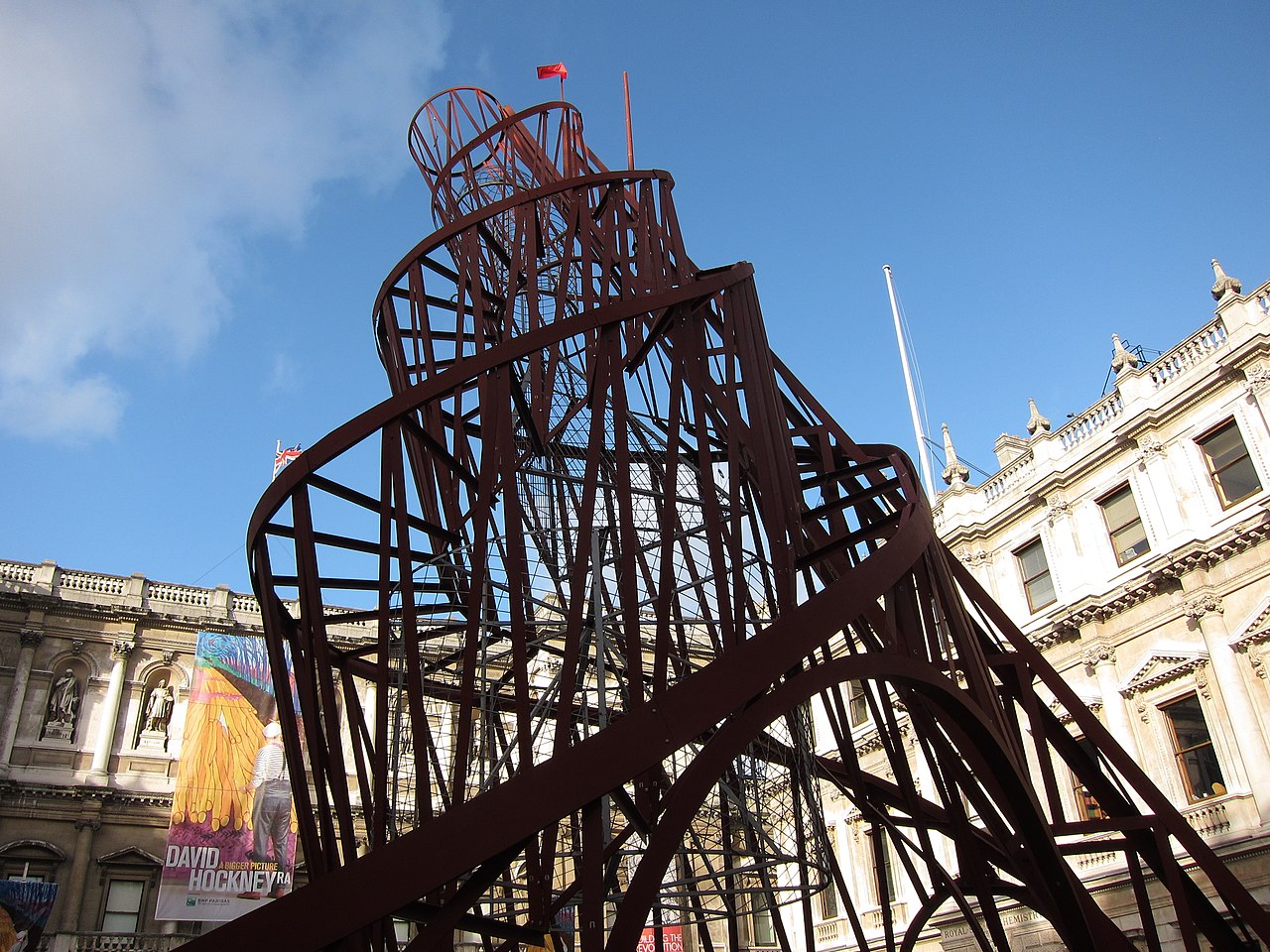
Vladimir Tatlin’s Monument to the Third International, which was never built, was emblematic of a broader tension in the newly formed Soviet Union. (bluebus/Flickr)
Vladimir Tatlin’s Monument to the Third International was supposed to be a triumph of both industrial production and machine aesthetics.
Designed in 1919 as a celebration of the Bolshevik revolution two years earlier, the building was a radical departure from Western architectural norms. Rotating the main steel structure of the tower 23.5 degrees while removing all unnecessary supports, the colossus on the banks of the Neva was conceived as both a symbolic monument and functional skyscraper for the newly formed Communist International, or Comintern.
If built, it would have been a modern marvel. But the tower was impossible to build. Not only was there a steel shortage in the Soviet Union, but in Petrograd there were scarcely enough nails to complete the timber maquette.